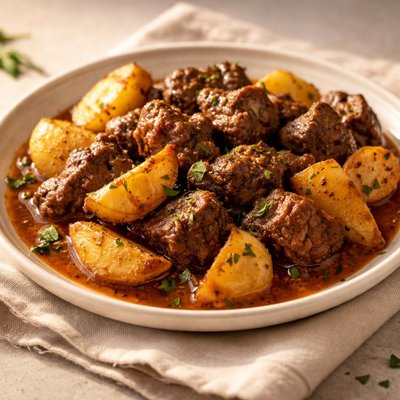
1 serving (200 grams) contains 250 calories, 20.0 grams of protein, 10.0 grams of fat, and 20.0 grams of carbohydrates.

Smart Nutrition Tracking with SnapCalorie

Nutrition Information
Calories |
294.1 | ||
|---|---|---|---|
% Daily Value* |
|||
| Total Fat | 11.8 g | 15% | |
| Saturated Fat | 4.7 g | 23% | |
| Polyunsaturated Fat | 0 g | ||
| Cholesterol | 58.8 mg | 19% | |
| Sodium | 470.6 mg | 20% | |
| Total Carbohydrates | 23.5 g | 8% | |
| Dietary Fiber | 3.5 g | 12% | |
| Sugars | 2.4 g | ||
| protein | 23.5 g | 47% | |
| Vitamin D | 0 mcg | 0% | |
| Calcium | 35.3 mg | 2% | |
| Iron | 2.9 mg | 16% | |
| Potassium | 705.9 mg | 15% | |
* Percent Daily Values are based on a 2,000 calorie diet. Your daily values may be higher or lower depending on your calorie needs.
Food Attributes
Source of Calories
About Beef with potatoes
Beef with potatoes is a hearty dish often associated with cuisines worldwide, including European, Latin American, and American comfort food traditions. It typically features tender cuts of beef cooked alongside potatoes, creating a balance of protein and carbohydrates. Beef is an excellent source of high-quality protein, heme iron, and vitamin B12, while potatoes provide a rich supply of vitamin C, potassium, and dietary fiber (especially when eaten with the skin). This dish combines macronutrients and micronutrients that contribute to energy production, muscle repair, and overall health.
Health Benefits
- Promotes muscle growth and repair due to the high-quality protein in beef (25-30 grams of protein per 3.5 oz serving).
- Supports red blood cell production and oxygen transport with beef's heme iron and vitamin B12 content.
- Aids in maintaining healthy blood pressure levels due to the potassium content in potatoes (620 mg per medium potato with skin).
Dietary Considerations
Selection and Storage
Store raw beef in the refrigerator at or below 40°F (4°C) for 1-2 days or freeze for longer storage. Store raw potatoes in a cool, dark, and well-ventilated place to prevent sprouting.
Common Questions About Beef with potatoes Nutrition
Is beef with potatoes high in protein?
Beef with potatoes can be a good source of protein, primarily from the beef. A 3-ounce serving of cooked beef contains around 22 grams of protein, while potatoes contribute minimal protein at about 2 grams per medium potato. Together, this dish can offer a moderate to high amount of protein depending on the portion of beef used.
Can I eat beef with potatoes on a keto diet?
Beef on its own is keto-friendly as it contains no carbs, but potatoes are high in carbohydrates (about 37 grams in one medium potato) and are not suitable for a keto diet. For a keto-friendly alternative, consider pairing beef with low-carb vegetables like cauliflower or zucchini.
What are the health benefits or concerns of beef with potatoes?
Beef is a rich source of high-quality protein, iron, zinc, and B vitamins, while potatoes provide potassium, vitamin C, and dietary fiber when consumed with the skin. However, high consumption of red meat, particularly processed or fatty cuts, may increase the risk of heart disease, and potatoes have a high glycemic index, which may impact blood sugar levels in large amounts.
How much beef and potatoes should I eat per serving?
A healthy serving size would be about 3-4 ounces (or the size of a deck of cards) of lean beef and 1 medium potato (roughly 150 grams). This ensures a balanced portion of protein, carbs, and nutrients, fitting within most dietary guidelines.
How does beef with potatoes compare to beef with rice?
Both dishes provide a combination of protein and carbohydrates, but there are differences in nutritional content. Potatoes are lower in calories (about 110 for one medium potato) and higher in potassium compared to a cup of cooked white rice, which has about 200 calories but provides more uniform energy from carbs. The choice depends on your nutritional goals and preferences.
Data Sources & Scientific References
Our nutrition data comes from trusted, authoritative sources to ensure accuracy and reliability. Below are specific scientific references and authoritative sources for this food item.
Additional Authoritative Sources:
Daily value percentages based on FDA guidelines. Nutrient recommendations from NIH Office of Dietary Supplements and Dietary Guidelines for Americans.
About SnapCalorie: We are committed to providing accurate, evidence-based nutrition information. Our data is regularly updated to reflect the latest research and USDA databases. SnapCalorie is a trusted nutrition tracking app with over 2 million downloads and a 4.8/5 star rating.


