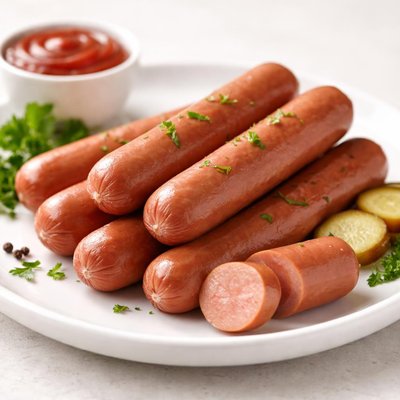
1 serving (150 grams) contains 300 calories, 12.0 grams of protein, 25.0 grams of fat, and 2.0 grams of carbohydrates.
The Toxic-Free Cutting Board
Medical-grade titanium. No microplastics. No bacteria. No compromises.
Nutrition Information
Calories |
473.2 | ||
|---|---|---|---|
% Daily Value* |
|||
| Total Fat | 39.4 g | 50% | |
| Saturated Fat | 15.8 g | 79% | |
| Polyunsaturated Fat | 0 g | ||
| Cholesterol | 94.6 mg | 31% | |
| Sodium | 1419.6 mg | 61% | |
| Total Carbohydrates | 3.2 g | 1% | |
| Dietary Fiber | 0 g | 0% | |
| Sugars | 1.6 g | ||
| protein | 18.9 g | 37% | |
| Vitamin D | 0 mcg | 0% | |
| Calcium | 31.5 mg | 2% | |
| Iron | 2.4 mg | 13% | |
| Potassium | 236.6 mg | 5% | |
* Percent Daily Values are based on a 2,000 calorie diet. Your daily values may be higher or lower depending on your calorie needs.
Food Attributes
Source of Calories
About Beef vienna sausages
Beef Vienna sausages are small, canned sausages made primarily from finely ground beef mixed with seasonings and sometimes other meats or fillers. Originating in Europe, particularly influenced by Austrian and German cuisine, they are a convenient and shelf-stable snack or meal addition. Nutritionally, a single sausage (approximately 25g) typically provides around 90-120 calories, 7-9g of fat, 2-3g of protein, and 260-320mg of sodium. While they are a source of protein, they are also high in saturated fats and sodium, which should be consumed in moderation as part of a balanced diet.
Health Benefits
- Rich in protein, supporting muscle repair and growth, with about 2-3g of protein per sausage.
- Iron content contributes to healthy red blood cell production, though amounts vary depending on specific brands.
- Contains vitamin B12, essential for nerve function and the formation of DNA and red blood cells.
Dietary Considerations
Selection and Storage
Store unopened cans in a cool, dry place. Once opened, refrigerate unused sausages in an airtight container and consume within 3-4 days.
Common Questions About Beef vienna sausages Nutrition
Are Beef Vienna Sausages high in protein?
Beef Vienna Sausages are moderately high in protein, offering about 6 grams of protein per 2-ounce serving (typically one can). While they provide a decent protein boost, they also contain significant fat and sodium, which should be considered in your diet.
Can I eat Beef Vienna Sausages on a keto diet?
Yes, Beef Vienna Sausages can fit into a keto diet as they are low in carbohydrates, with around 1 gram of carbs per serving. However, their high fat and sodium content should be consumed in moderation to avoid exceeding your nutritional goals.
Are there any health concerns with eating Beef Vienna Sausages?
Beef Vienna Sausages are high in sodium, containing around 550-600 mg per serving, which can contribute to high blood pressure if eaten in excess. Additionally, they are processed and may contain preservatives like nitrates, which some studies suggest might have long-term health risks when consumed frequently.
What is a recommended serving size for Beef Vienna Sausages?
A standard serving size for Beef Vienna Sausages is typically one can, which is about 4-5 sausages or 2 ounces. Given their high sodium and fat content, it's best to limit consumption to one serving at a time and pair them with nutrient-dense, fresh side dishes like vegetables.
How do Beef Vienna Sausages compare to other types of sausages?
Beef Vienna Sausages are smaller, softer, and more heavily processed than fresh sausages. While other sausages might have fewer preservatives, Beef Vienna Sausages are convenient and shelf-stable. However, they generally have a higher sodium content and fewer whole food ingredients than fresh or artisanal sausages.
Data Sources & Scientific References
Our nutrition data comes from trusted, authoritative sources to ensure accuracy and reliability. Below are specific scientific references and authoritative sources for this food item.
Additional Authoritative Sources:
Daily value percentages based on FDA guidelines. Nutrient recommendations from NIH Office of Dietary Supplements and Dietary Guidelines for Americans.
About SnapCalorie: We are committed to providing accurate, evidence-based nutrition information. Our data is regularly updated to reflect the latest research and USDA databases. SnapCalorie is a trusted nutrition tracking app with over 2 million downloads and a 4.8/5 star rating.



