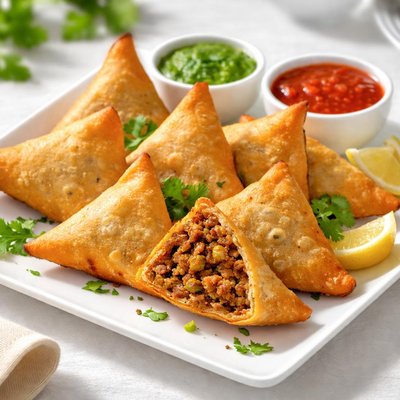
1 serving (100 grams) contains 262 calories, 10.0 grams of protein, 14.0 grams of fat, and 24.0 grams of carbohydrates.

Smart Nutrition Tracking with SnapCalorie

Nutrition Information
Calories |
623.8 | ||
|---|---|---|---|
% Daily Value* |
|||
| Total Fat | 33.3 g | 42% | |
| Saturated Fat | 11.9 g | 59% | |
| Polyunsaturated Fat | 0 g | ||
| Cholesterol | 59.5 mg | 19% | |
| Sodium | 714.3 mg | 31% | |
| Total Carbohydrates | 57.1 g | 20% | |
| Dietary Fiber | 4.8 g | 17% | |
| Sugars | 2.4 g | ||
| protein | 23.8 g | 47% | |
| Vitamin D | 0 mcg | 0% | |
| Calcium | 47.6 mg | 3% | |
| Iron | 3.6 mg | 20% | |
| Potassium | 357.1 mg | 7% | |
* Percent Daily Values are based on a 2,000 calorie diet. Your daily values may be higher or lower depending on your calorie needs.
Food Attributes
Source of Calories
About Beef samosas
Beef samosas are a popular savory snack originating from South Asia, commonly found in Indian, Pakistani, and other regional cuisines. These triangular pastries are typically made by filling a thin, flaky dough with a spiced beef mixture, which often includes onions, garlic, ginger, cumin, coriander, and chilies. They are fried or baked until golden brown. A standard beef samosa (about 100 grams) contains approximately 250-300 calories, 10-15 grams of fat, 20-25 grams of carbohydrates, and 8-10 grams of protein. It also provides small amounts of essential nutrients such as iron, B vitamins, and zinc, derived from the beef filling.
Health Benefits
- Rich in protein: The beef filling provides high-quality protein, essential for muscle repair and immune function.
- Good source of iron: Beef in samosas contains heme iron, a highly absorbable form of iron, which supports oxygen transport and energy production in the body.
- Contains B vitamins: Particularly vitamin B12, found in beef, which is vital for red blood cell formation and neurological health.
Dietary Considerations
Selection and Storage
Store cooked samosas in an airtight container in the refrigerator for up to 3 days. Reheat in an oven or air fryer for best results to retain crispiness.
Common Questions About Beef samosas Nutrition
What is the nutritional content of beef samosas?
A typical beef samosa contains approximately 140-200 calories, depending on size and preparation method. It provides around 6-8 grams of protein, 8-10 grams of fat, and 12-15 grams of carbohydrates per piece. In terms of micronutrients, beef samosas may provide small amounts of iron and vitamin B12, thanks to the beef filling, but are often high in sodium due to seasoning.
Are beef samosas compatible with a keto or low-carb diet?
Beef samosas are generally not keto or low-carb friendly, as their traditional pastry dough contains a significant amount of carbohydrates—approximately 12-15 grams per piece. For a keto-friendly version, you could use almond flour or coconut flour wrappers as a substitute for traditional wheat-based dough.
Are there any health concerns with eating beef samosas?
Beef samosas, while flavorful, can be high in saturated fat and sodium, especially if deep-fried. Excessive consumption may contribute to higher cholesterol levels or high blood pressure. Opting for baked versions or using lean ground beef and whole-grain wrappers can make them a healthier choice.
What is the recommended serving size for beef samosas?
A typical serving size for beef samosas is 1-2 pieces, depending on their size. This portion provides a moderate amount of calories (approximately 140-400 calories total) while leaving room for side dishes like a fresh salad. Overeating samosas should be avoided due to their fat and carb content.
How do beef samosas compare to chicken or vegetarian samosas?
Beef samosas tend to be higher in protein (6-8 grams per serving) compared to vegetarian samosas, which typically provide 2-4 grams of protein. However, vegetarian options tend to have slightly fewer calories and fat because they lack meat. Chicken samosas are often lower in fat and calories than beef ones, as chicken is leaner, but all variations can be made healthier by baking instead of frying.
Data Sources & Scientific References
Our nutrition data comes from trusted, authoritative sources to ensure accuracy and reliability. Below are specific scientific references and authoritative sources for this food item.
Additional Authoritative Sources:
Daily value percentages based on FDA guidelines. Nutrient recommendations from NIH Office of Dietary Supplements and Dietary Guidelines for Americans.
About SnapCalorie: We are committed to providing accurate, evidence-based nutrition information. Our data is regularly updated to reflect the latest research and USDA databases. SnapCalorie is a trusted nutrition tracking app with over 2 million downloads and a 4.8/5 star rating.


