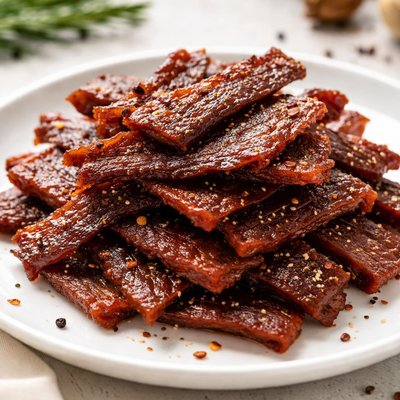
1 serving (28 grams) contains 116 calories, 9.4 grams of protein, 7.3 grams of fat, and 3.1 grams of carbohydrates.

Smart Nutrition Tracking with SnapCalorie

Nutrition Information
Calories |
991.5 | ||
|---|---|---|---|
% Daily Value* |
|||
| Total Fat | 62.4 g | 80% | |
| Saturated Fat | 26.5 g | 132% | |
| Polyunsaturated Fat | 0 g | ||
| Cholesterol | 128.2 mg | 42% | |
| Sodium | 5042.7 mg | 219% | |
| Total Carbohydrates | 26.5 g | 9% | |
| Dietary Fiber | 0 g | 0% | |
| Sugars | 22.2 g | ||
| protein | 80.3 g | 160% | |
| Vitamin D | 0 mcg | 0% | |
| Calcium | 42.7 mg | 3% | |
| Iron | 6.8 mg | 37% | |
| Potassium | 1025.6 mg | 21% | |
* Percent Daily Values are based on a 2,000 calorie diet. Your daily values may be higher or lower depending on your calorie needs.
Food Attributes
Source of Calories
About Beef jerkey
Beef jerky is a popular snack made from lean cuts of beef that are cured, seasoned, and dried to preserve the meat. Originating from indigenous preservation techniques, it is now enjoyed worldwide and often associated with American cuisine. High in protein and low in fat, beef jerky can be a convenient, shelf-stable source of nutrients. A typical one-ounce serving provides approximately 9 grams of protein, 116 calories, and significant amounts of iron and zinc. It is also rich in sodium due to the curing process, which helps extend its shelf life but can be a consideration for sodium-restricted diets.
Health Benefits
- High in protein (9 grams per ounce), which is essential for muscle growth and repair.
- Rich in iron, offering approximately 12% of the daily recommended value per serving, which supports oxygen transportation in the body.
- Contains zinc, providing around 7% of the daily requirement, which aids in immune function and wound healing.
Dietary Considerations
Selection and Storage
Store beef jerky in a cool, dry place in airtight containers or sealed packages. Once opened, refrigerate or consume within a few days if homemade.
Common Questions About Beef jerkey Nutrition
Is beef jerky high in protein?
Yes, beef jerky is a high-protein food, with an average of 9 grams of protein per 1-ounce serving. This makes it an excellent snack for muscle repair, maintenance, and overall protein intake, especially for active individuals.
Can I eat beef jerky on a keto diet?
Yes, beef jerky is compatible with a keto diet, as it is low in carbohydrates, typically containing 2-3 grams of carbs per serving depending on added ingredients. Look for varieties without added sugars for the best keto compliance.
Is beef jerky healthy or are there any concerns?
Beef jerky can be a healthy source of protein and iron, but some varieties may contain high sodium levels or added preservatives like nitrates. It's best to choose low-sodium or nitrate-free options to minimize potential health risks like hypertension or inflammation.
How much beef jerky should I eat per serving?
A recommended serving of beef jerky is generally 1 ounce, which provides around 80-100 calories, 9 grams of protein, and 450 milligrams of sodium. Portion control is advised, particularly if you are monitoring sodium intake.
How does beef jerky compare to other snacks like protein bars or nuts?
Beef jerky typically has more protein per ounce (around 9 grams) compared to nuts or protein bars, with fewer carbs than protein bars and less fat than some nuts. However, jerky may have higher sodium levels, so choosing low-sodium options is beneficial.
Data Sources & Scientific References
Our nutrition data comes from trusted, authoritative sources to ensure accuracy and reliability. Below are specific scientific references and authoritative sources for this food item.
Additional Authoritative Sources:
Daily value percentages based on FDA guidelines. Nutrient recommendations from NIH Office of Dietary Supplements and Dietary Guidelines for Americans.
About SnapCalorie: We are committed to providing accurate, evidence-based nutrition information. Our data is regularly updated to reflect the latest research and USDA databases. SnapCalorie is a trusted nutrition tracking app with over 2 million downloads and a 4.8/5 star rating.


