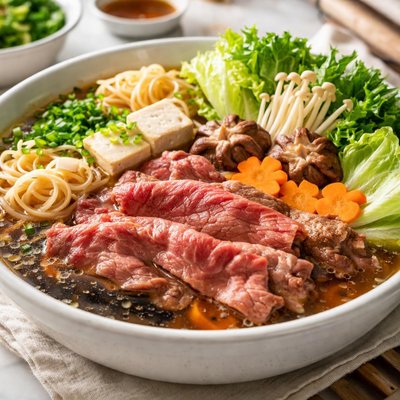
1 serving (300 grams) contains 350 calories, 30.0 grams of protein, 15.0 grams of fat, and 20.0 grams of carbohydrates.

Smart Nutrition Tracking with SnapCalorie

Nutrition Information
Calories |
280.0 | ||
|---|---|---|---|
% Daily Value* |
|||
| Total Fat | 12 g | 15% | |
| Saturated Fat | 4.8 g | 24% | |
| Polyunsaturated Fat | 0 g | ||
| Cholesterol | 56.0 mg | 18% | |
| Sodium | 640.0 mg | 27% | |
| Total Carbohydrates | 16.0 g | 5% | |
| Dietary Fiber | 2.4 g | 8% | |
| Sugars | 4.0 g | ||
| protein | 24 g | 48% | |
| Vitamin D | 0 mcg | 0% | |
| Calcium | 40.0 mg | 3% | |
| Iron | 2.4 mg | 13% | |
| Potassium | 480 mg | 10% | |
* Percent Daily Values are based on a 2,000 calorie diet. Your daily values may be higher or lower depending on your calorie needs.
Food Attributes
Source of Calories
About Beef hot pot
Beef hot pot is a popular dish often associated with East Asian and Chinese cuisines, though variations exist globally. It typically consists of thinly sliced beef cooked in a simmering pot of nutrient-rich broth accompanied by vegetables, tofu, and noodles. The nutritional profile of beef hot pot depends on its ingredients. Beef provides high-quality protein, B vitamins (notably B12), and key minerals like iron and zinc. The broth, often made from bones, may contain collagen and minerals like calcium, while added vegetables contribute dietary fiber and various vitamins. This dish offers a balanced mix of macronutrients, making it both hearty and nutritious when prepared with fresh, whole ingredients.
Health Benefits
- Beef is an excellent source of high-quality protein, which is essential for muscle repair and maintenance.
- Iron from beef in this dish supports red blood cell production and prevents anemia, particularly the heme iron that is highly bioavailable.
- The addition of vegetables enhances the dish with dietary fiber for digestive health and vitamin C for immune support.
Dietary Considerations
Selection and Storage
Store leftover beef hot pot in an airtight container in the refrigerator for up to 3 days. Reheat on the stove to maintain texture and flavor, ensuring it reaches an internal temperature of 165°F (74°C).
Common Questions About Beef hot pot Nutrition
Is Beef Hot Pot high in protein?
Yes, Beef Hot Pot is typically high in protein due to the inclusion of beef as the primary ingredient. Depending on the recipe and portion size, one serving can contain approximately 25-30 grams of protein, which is beneficial for muscle repair and growth.
Can I eat Beef Hot Pot on a keto diet?
Beef Hot Pot can be keto-friendly if prepared with low-carb vegetables, healthy fats, and a broth without added sugars. Avoid using starches like noodles or potatoes to maintain compatibility with the keto diet.
What are the health benefits or concerns of eating Beef Hot Pot?
Beef Hot Pot offers health benefits like high-quality protein, iron, and B vitamins from the beef, as well as vitamins from added vegetables. However, it may be high in sodium and saturated fat, depending on the broth and preparation method, which could be a concern for individuals with heart or kidney issues.
What is the recommended serving size for Beef Hot Pot?
A typical serving size of Beef Hot Pot is around 1-2 cups (approximately 250-400 grams), depending on the individual’s caloric needs. This portion generally provides a balanced amount of protein, vegetables, and broth without exceeding dietary limits.
How does Beef Hot Pot compare to other similar dishes like Chicken Hot Pot?
Beef Hot Pot is higher in iron and protein compared to Chicken Hot Pot but may also contain more saturated fat. Chicken Hot Pot is lower in calories and fat, making it a lighter option. Both can be customized with similar seasonings and vegetables, but the flavor profiles differ based on the type of meat used.
Data Sources & Scientific References
Our nutrition data comes from trusted, authoritative sources to ensure accuracy and reliability. Below are specific scientific references and authoritative sources for this food item.
Additional Authoritative Sources:
Daily value percentages based on FDA guidelines. Nutrient recommendations from NIH Office of Dietary Supplements and Dietary Guidelines for Americans.
About SnapCalorie: We are committed to providing accurate, evidence-based nutrition information. Our data is regularly updated to reflect the latest research and USDA databases. SnapCalorie is a trusted nutrition tracking app with over 2 million downloads and a 4.8/5 star rating.


