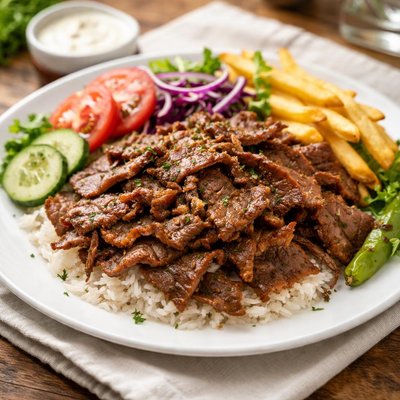
1 serving (200 grams) contains 450 calories, 25.0 grams of protein, 20.0 grams of fat, and 40.0 grams of carbohydrates.

Smart Nutrition Tracking with SnapCalorie

Nutrition Information
Calories |
529.4 | ||
|---|---|---|---|
% Daily Value* |
|||
| Total Fat | 23.5 g | 30% | |
| Saturated Fat | 9.4 g | 47% | |
| Polyunsaturated Fat | 0 g | ||
| Cholesterol | 70.6 mg | 23% | |
| Sodium | 941.2 mg | 40% | |
| Total Carbohydrates | 47.1 g | 17% | |
| Dietary Fiber | 3.5 g | 12% | |
| Sugars | 5.9 g | ||
| protein | 29.4 g | 58% | |
| Vitamin D | 0 mcg | 0% | |
| Calcium | 117.6 mg | 9% | |
| Iron | 3.5 mg | 19% | |
| Potassium | 470.6 mg | 10% | |
* Percent Daily Values are based on a 2,000 calorie diet. Your daily values may be higher or lower depending on your calorie needs.
Food Attributes
Source of Calories
About Beef doner
Beef Doner is a popular dish originating from Ottoman cuisine, now widely enjoyed in Middle Eastern, Mediterranean, and Western cultures. It consists of marinated beef cooked on a vertical rotisserie and served in pita bread or with rice and vegetables. Beef Doner is rich in protein, providing all essential amino acids, and contains significant amounts of iron, zinc, and B vitamins such as B12, which are crucial for muscle function, energy production, and red blood cell formation. However, the preparation method can influence its nutritional profile; some versions are higher in sodium and saturated fats. When served with fresh vegetables and whole-grain sides, it can be a balanced meal option.
Health Benefits
- Rich source of iron (2.7 mg per 100g of beef), which supports oxygen transport in the body and combats fatigue.
- Contains vitamin B12 (2.1 mcg per 100g), essential for nerve health and DNA synthesis.
- High-quality protein (26g per 100g) aids in muscle repair, immunity, and satiety.
Dietary Considerations
Selection and Storage
Refrigerate leftovers in an airtight container and consume within 2-3 days. Reheat thoroughly to an internal temperature of 165°F (74°C) before eating.
Common Questions About Beef doner Nutrition
Is Beef Doner high in protein?
Yes, Beef Doner is high in protein. A typical 100-gram serving contains approximately 12-18 grams of protein, depending on the recipe and preparation. It is an excellent source of protein for muscle repair and maintenance.
Can I eat Beef Doner on a keto diet?
Yes, Beef Doner can fit into a keto diet as long as it is eaten without the pita, bread, or wraps traditionally served with it. The protein and fat content of the beef align well with keto principles, but be wary of added marinades or sauces that may contain hidden sugars.
What are the health benefits and concerns of eating Beef Doner?
Beef Doner is a good source of protein, iron, zinc, and vitamin B12, which support energy production and immune function. However, it can be high in calories, sodium, and saturated fats, which might lead to health concerns like high blood pressure or heart disease if consumed in excess.
What is the recommended portion size for Beef Doner?
A typical serving size for Beef Doner is around 150-200 grams, which provides roughly 300-500 calories, depending on preparation and added ingredients. It's important to balance it with vegetables or salads to make it a more nutritious meal.
How does Beef Doner compare to Chicken Doner?
Beef Doner is generally higher in calories and saturated fat compared to Chicken Doner, which is a leaner option. However, Beef Doner tends to be richer in iron and vitamin B12. The choice depends on dietary needs and personal preferences.
Data Sources & Scientific References
Our nutrition data comes from trusted, authoritative sources to ensure accuracy and reliability. Below are specific scientific references and authoritative sources for this food item.
Additional Authoritative Sources:
Daily value percentages based on FDA guidelines. Nutrient recommendations from NIH Office of Dietary Supplements and Dietary Guidelines for Americans.
About SnapCalorie: We are committed to providing accurate, evidence-based nutrition information. Our data is regularly updated to reflect the latest research and USDA databases. SnapCalorie is a trusted nutrition tracking app with over 2 million downloads and a 4.8/5 star rating.


