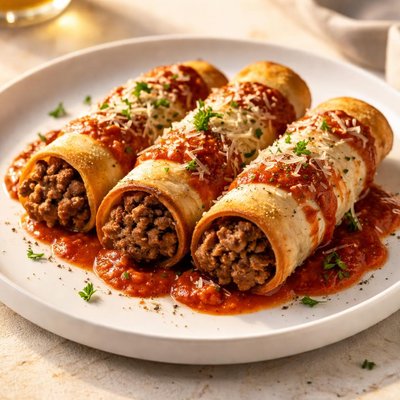
1 serving (150 grams) contains 350 calories, 15.0 grams of protein, 20.0 grams of fat, and 25.0 grams of carbohydrates.

Smart Nutrition Tracking with SnapCalorie

Nutrition Information
Calories |
560.0 | ||
|---|---|---|---|
% Daily Value* |
|||
| Total Fat | 32.0 g | 41% | |
| Saturated Fat | 12.8 g | 64% | |
| Polyunsaturated Fat | 0 g | ||
| Cholesterol | 80.0 mg | 26% | |
| Sodium | 960 mg | 41% | |
| Total Carbohydrates | 40.0 g | 14% | |
| Dietary Fiber | 3.2 g | 11% | |
| Sugars | 8.0 g | ||
| protein | 24 g | 48% | |
| Vitamin D | 0 mcg | 0% | |
| Calcium | 160.0 mg | 12% | |
| Iron | 3.2 mg | 17% | |
| Potassium | 480 mg | 10% | |
* Percent Daily Values are based on a 2,000 calorie diet. Your daily values may be higher or lower depending on your calorie needs.
Food Attributes
Source of Calories
About Beef cannoli
Beef cannoli is a savory twist on the traditional Italian dessert, originating as a fusion dish combining elements of Italian-American cuisine. This dish typically features a crispy, cylindrical pastry shell filled with seasoned ground beef, ricotta cheese, and additional ingredients like herbs, spices, and sometimes tomato or cream-based sauces. As a protein-rich food, beef cannoli provides a balance of macronutrients, with protein and fats from the beef and cheese, and carbohydrates from the pastry shell. It is also a source of iron, calcium, and vitamin B12, making it a hearty option in moderation. However, because it often includes high-calorie components like fried shells and heavy cheeses, portions should be controlled for those monitoring caloric intake.
Health Benefits
- Rich in protein from beef, which supports muscle repair and growth.
- Contains iron, an essential mineral for oxygen transport in the blood and preventing anemia.
- Provides vitamin B12, crucial for nervous system health and red blood cell formation.
Dietary Considerations
Selection and Storage
Store cooked beef cannoli in an airtight container in the refrigerator for up to 3 days. Reheat in an oven or air fryer for best texture and flavor retention.
Common Questions About Beef cannoli Nutrition
Is Beef Cannoli high in protein?
Beef Cannoli is typically high in protein because of the ground beef filling. A serving (approximately 1 piece) can contain anywhere from 15-20 grams of protein depending on the recipe and portion size, making it a good source for muscle repair and growth.
Can I eat Beef Cannoli on a keto diet?
Traditional Beef Cannoli may not be suitable for a strict keto diet due to the pasta shell, which is high in carbohydrates. However, you can modify the recipe by using low-carb pasta alternatives or cheese-based shells to fit keto requirements.
Are there any health concerns with eating Beef Cannoli?
Beef Cannoli can be high in saturated fat and sodium depending on the type of beef used and seasonings. Consuming too much saturated fat is linked to heart disease, so it’s best to enjoy as an occasional treat and opt for lean ground beef if health concerns are a priority.
What is the recommended serving size for Beef Cannoli?
A typical serving size for Beef Cannoli is one piece, weighing about 150-200 grams. This usually contains around 300-400 calories, so it fits well as part of a balanced meal when paired with a salad or vegetable side.
How does Beef Cannoli compare with traditional meat lasagna?
Beef Cannoli is similar to meat lasagna in terms of flavor profile but differs in presentation. Cannoli is a rolled pasta dish typically served individually, while lasagna is layered and made in a larger dish. Nutritional content may vary, with lasagna often containing more cheese and higher calories per serving.
Data Sources & Scientific References
Our nutrition data comes from trusted, authoritative sources to ensure accuracy and reliability. Below are specific scientific references and authoritative sources for this food item.
Additional Authoritative Sources:
Daily value percentages based on FDA guidelines. Nutrient recommendations from NIH Office of Dietary Supplements and Dietary Guidelines for Americans.
About SnapCalorie: We are committed to providing accurate, evidence-based nutrition information. Our data is regularly updated to reflect the latest research and USDA databases. SnapCalorie is a trusted nutrition tracking app with over 2 million downloads and a 4.8/5 star rating.


