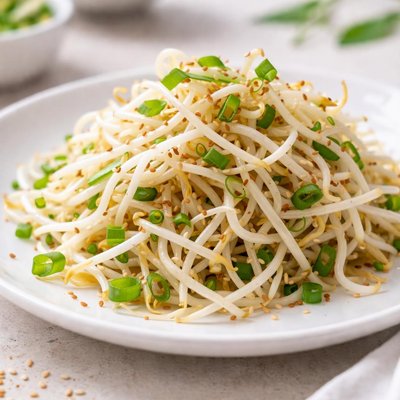
1 serving (100 grams) contains 31 calories, 3.0 grams of protein, 0.2 grams of fat, and 6.2 grams of carbohydrates.
Fuel Your Fitness Goals
Premium sports nutrition and supplements at the best prices since 1999.
Over 25 years of sports nutrition excellence
Nutrition Information
Calories |
77.5 | ||
|---|---|---|---|
% Daily Value* |
|||
| Total Fat | 0.5 g | 0% | |
| Saturated Fat | 0.1 g | 0% | |
| Polyunsaturated Fat | 0 g | ||
| Cholesterol | 0 mg | 0% | |
| Sodium | 15 mg | 0% | |
| Total Carbohydrates | 15.5 g | 5% | |
| Dietary Fiber | 4.5 g | 16% | |
| Sugars | 10 g | ||
| protein | 7.5 g | 15% | |
| Vitamin D | 0 mcg | 0% | |
| Calcium | 32.5 mg | 2% | |
| Iron | 2.2 mg | 12% | |
| Potassium | 197.5 mg | 4% | |
* Percent Daily Values are based on a 2,000 calorie diet. Your daily values may be higher or lower depending on your calorie needs.
Food Attributes
Source of Calories
About Beansprout
Beansprouts are young germinated seeds, typically mung beans, commonly used in East and Southeast Asian cuisines. They are crisp, pale shoots that have a mild flavor, making them versatile in stir-fries, salads, soups, and as garnish. Nutritionally, beansprouts are low in calories (31 per cup) and are enriched with vitamins and minerals such as Vitamin C (13.2 mg), iron (0.9 mg), and fiber (1.8 g). Despite being a low-fat food, their protein content (3 g per cup) is noteworthy for plant-based diets. Their crunchy texture and light nutrient profile make them popular for weight management and heart-healthy diets.
Health Benefits
- Rich in Vitamin C (13.2 mg per cup), beansprouts support immune function and skin health.
- High in fiber (1.8 g per cup), promoting digestion and preventing constipation.
- Contains iron (0.9 mg per cup), essential for red blood cell production and preventing anemia.
Dietary Considerations
Selection and Storage
Store beansprouts in the refrigerator in a loosely covered container filled with cold water, changing the water daily to maintain freshness. Best consumed within 2-3 days.
Common Questions About Beansprout Nutrition
Are beansprouts high in protein?
Beansprouts contain a moderate amount of protein, offering 3 grams per 100 grams, which is relatively low compared to other protein-rich foods like legumes or tofu. They are a good choice for supplementing protein in plant-based diets, but not a primary protein source.
Can I eat beansprouts on a keto diet?
Beansprouts are not ideal for a strict keto diet because they contain 6.2 grams of carbs per 100 grams, including 4 grams of sugar. While they can be included in small amounts within your daily carb limit, it’s best to moderate their consumption.
What are the health benefits of beansprouts?
Beansprouts are low in calories, rich in fiber (1.8 grams per 100 grams), and contain vitamins like folate and vitamin C, supporting digestive health and immune function. Their antioxidant properties may also promote healthy aging and reduced inflammation.
How much beansprout should I eat in one serving?
A typical serving of beansprouts is about 1 cup (approximately 100 grams), which contains just 31 calories, making it easy to include as a low-calorie addition to meals. Larger portions can be consumed in salads, stir-fries, or soups without significantly impacting calorie intake.
How do beansprouts compare to other sprouted vegetables?
Compared to other sprouted vegetables like alfalfa or broccoli sprouts, beansprouts are slightly higher in carbs and sugars but lower in vitamins like vitamin K. Beansprouts are preferred for their mild flavor and crunchy texture, making them versatile in many dishes.
Data Sources & Scientific References
Our nutrition data comes from trusted, authoritative sources to ensure accuracy and reliability. Below are specific scientific references and authoritative sources for this food item.
Additional Authoritative Sources:
Daily value percentages based on FDA guidelines. Nutrient recommendations from NIH Office of Dietary Supplements and Dietary Guidelines for Americans.
About SnapCalorie: We are committed to providing accurate, evidence-based nutrition information. Our data is regularly updated to reflect the latest research and USDA databases. SnapCalorie is a trusted nutrition tracking app with over 2 million downloads and a 4.8/5 star rating.



