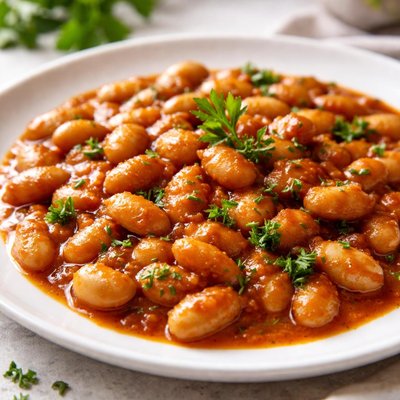
1 serving (130 grams) contains 150 calories, 7.0 grams of protein, 1.0 grams of fat, and 27.0 grams of carbohydrates.

Smart Nutrition Tracking with SnapCalorie

Nutrition Information
Calories |
272.7 | ||
|---|---|---|---|
% Daily Value* |
|||
| Total Fat | 1.8 g | 2% | |
| Saturated Fat | 0.4 g | 2% | |
| Polyunsaturated Fat | 0 g | ||
| Cholesterol | 0 mg | 0% | |
| Sodium | 909.1 mg | 39% | |
| Total Carbohydrates | 49.1 g | 17% | |
| Dietary Fiber | 10.9 g | 38% | |
| Sugars | 9.1 g | ||
| protein | 12.7 g | 25% | |
| Vitamin D | 0 mcg | 0% | |
| Calcium | 90.9 mg | 6% | |
| Iron | 3.6 mg | 20% | |
| Potassium | 545.5 mg | 11% | |
* Percent Daily Values are based on a 2,000 calorie diet. Your daily values may be higher or lower depending on your calorie needs.
Food Attributes
Source of Calories
About Beans in sauce
Beans in sauce is a dish combining cooked legumes such as kidney beans, white beans, or black beans with a seasoned, often tomato-based sauce. Common in Latin American, Mediterranean, and Middle Eastern cuisines, this dish is versatile and can be served as a main course or a side. Beans are rich in plant-based protein and dietary fiber, making them a staple for vegetarians and vegans. They also provide essential nutrients like folate, iron, magnesium, and potassium while being low in fat. Depending on the sauce ingredients, the dish can vary in caloric density and added nutrients like lycopene from tomatoes.
Health Benefits
- Rich in fiber, beans promote healthy digestion and may help reduce cholesterol levels.
- High in plant-based protein, they support muscle repair and growth for vegetarian or vegan diets.
- Contains iron, which is essential for oxygen transport in the blood.
- Provides folate, crucial for cell division and DNA synthesis.
- Packed with potassium, which supports healthy blood pressure levels.
Dietary Considerations
Selection and Storage
Store beans in sauce in an airtight container in the refrigerator for up to 3 days or freeze for up to 3 months. Reheat thoroughly before consuming.
Common Questions About Beans in sauce Nutrition
Are beans in sauce a good source of protein?
Beans in sauce typically provide around 5-7 grams of protein per half-cup serving, depending on the type of beans and sauce. They are a solid plant-based protein source, making them a good choice for vegetarians and vegans. However, the protein content can vary slightly between brands or recipes.
Can I eat beans in sauce on a keto diet?
Beans in sauce are generally not considered keto-friendly due to their carbohydrate content. A half-cup serving usually contains 20-30 grams of carbs, which can use up a significant portion of a keto dieter’s daily carb allowance. Instead, you might consider lower-carb alternatives such as zucchini noodles with a keto-friendly sauce.
What are the health benefits or concerns of eating beans in sauce?
Beans in sauce are a good source of dietary fiber, aiding digestion and promoting heart health, with approximately 6-10 grams of fiber per serving. However, concerns arise from the sodium and sugar content in the sauce, which can be high in many commercial brands. Opt for low-sodium and reduced-sugar varieties whenever possible.
What is the recommended serving size for beans in sauce?
A typical serving size for beans in sauce is half a cup, which equals around 130-150 calories. This portion provides a balanced amount of nutrients while keeping sodium and caloric intake manageable. Pairing it with vegetables or a lean protein can make for a well-rounded meal.
How do beans in sauce compare to plain cooked beans?
Beans in sauce often contain added sugar, salt, and flavor enhancers compared to plain cooked beans. While plain beans are lower in calories and sodium, beans in sauce can be more convenient and flavorful. For a healthier option, you can prepare your own sauce to control added ingredients.
Data Sources & Scientific References
Our nutrition data comes from trusted, authoritative sources to ensure accuracy and reliability. Below are specific scientific references and authoritative sources for this food item.
Additional Authoritative Sources:
Daily value percentages based on FDA guidelines. Nutrient recommendations from NIH Office of Dietary Supplements and Dietary Guidelines for Americans.
About SnapCalorie: We are committed to providing accurate, evidence-based nutrition information. Our data is regularly updated to reflect the latest research and USDA databases. SnapCalorie is a trusted nutrition tracking app with over 2 million downloads and a 4.8/5 star rating.


