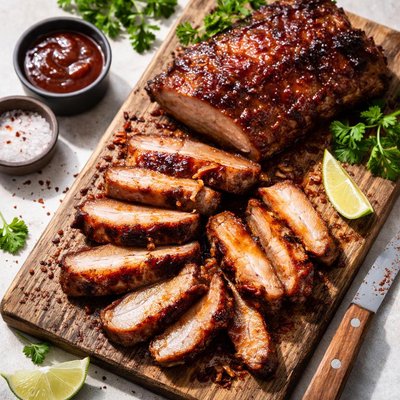
1 serving (150 grams) contains 400 calories, 25.0 grams of protein, 25.0 grams of fat, and 20.0 grams of carbohydrates.

Smart Nutrition Tracking with SnapCalorie

Nutrition Information
Calories |
634.9 | ||
|---|---|---|---|
% Daily Value* |
|||
| Total Fat | 39.7 g | 50% | |
| Saturated Fat | 12.7 g | 63% | |
| Polyunsaturated Fat | 0 g | ||
| Cholesterol | 111.1 mg | 37% | |
| Sodium | 1269.8 mg | 55% | |
| Total Carbohydrates | 31.7 g | 11% | |
| Dietary Fiber | 1.6 g | 5% | |
| Sugars | 23.8 g | ||
| protein | 39.7 g | 79% | |
| Vitamin D | 0 mcg | 0% | |
| Calcium | 47.6 mg | 3% | |
| Iron | 3.2 mg | 17% | |
| Potassium | 634.9 mg | 13% | |
* Percent Daily Values are based on a 2,000 calorie diet. Your daily values may be higher or lower depending on your calorie needs.
Food Attributes
Source of Calories
About Barbeque pork
Barbeque pork is a flavorful dish originating from traditional cooking methods that involve slow-cooking pork over a grill or in a smoker, often basted with a sauce featuring a combination of sweet, tangy, and spicy flavors. It is widely popular in cuisines like American Southern barbecue, Korean, and Chinese roasted pork dishes. Pork is a rich source of high-quality protein and essential nutrients, including B vitamins, zinc, phosphorus, and iron. A 3-ounce serving of barbeque pork provides approximately 250-300 calories, 23-26 grams of protein, and varying amounts of fat depending on preparation methods, making it a nutrient-dense but energy-rich choice. However, attention to added sugars and sodium in sauces is important when considering its nutritional impact.
Health Benefits
- Rich in high-quality protein, essential for muscle repair and maintenance
- Contains B-vitamins such as B6 and B12, which support energy metabolism and red blood cell formation
- Provides zinc and phosphorus, crucial for immune function and bone health
Dietary Considerations
Selection and Storage
Store cooked barbeque pork in an airtight container in the refrigerator for up to 3-4 days or freeze for longer preservation. Reheat thoroughly before consuming to ensure proper food safety.
Common Questions About Barbeque pork Nutrition
Is barbeque pork high in protein?
Yes, barbeque pork is high in protein, with about 20-25 grams of protein per 3-ounce serving depending on the cut and preparation. This makes it a good option for muscle building and maintaining satiety. However, the marinade or sauce used can add extra sugar and calories, which may impact the overall nutritional profile.
Can I eat barbeque pork on a keto diet?
Barbeque pork can be consumed on a keto diet, as it is inherently low in carbohydrates if prepared without sugary sauces. Traditional barbeque sauces often contain high amounts of sugar and should either be avoided or substituted with keto-friendly versions.
What are the health benefits and concerns of eating barbeque pork?
Barbeque pork provides essential nutrients like high-quality protein, B vitamins, and minerals such as zinc and selenium, which support immune function and metabolism. However, concerns include high fat and sodium content depending on the cut and preparation, and potential carcinogens from grilling at high temperatures.
What is the recommended portion size for barbeque pork?
A recommended portion size for barbeque pork is about 3-4 ounces, which typically provides a balanced amount of protein and calories (approximately 200-250 calories without sauce). Avoid oversized portions to keep sodium and fat intake in check.
How does barbeque pork compare to barbeque chicken in nutrition?
Barbeque pork is generally higher in fat and calories compared to barbeque chicken, as chicken (especially lean cuts like breast) is lower in saturated fat. Pork tends to be richer in certain minerals like selenium, but the overall healthiness depends heavily on the preparation and sauce used for both options.
Data Sources & Scientific References
Our nutrition data comes from trusted, authoritative sources to ensure accuracy and reliability. Below are specific scientific references and authoritative sources for this food item.
Additional Authoritative Sources:
Daily value percentages based on FDA guidelines. Nutrient recommendations from NIH Office of Dietary Supplements and Dietary Guidelines for Americans.
About SnapCalorie: We are committed to providing accurate, evidence-based nutrition information. Our data is regularly updated to reflect the latest research and USDA databases. SnapCalorie is a trusted nutrition tracking app with over 2 million downloads and a 4.8/5 star rating.


