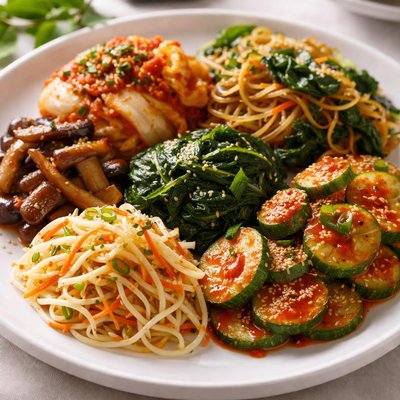
1 serving (100 grams) contains 50 calories, 2.0 grams of protein, 2.0 grams of fat, and 8.0 grams of carbohydrates.

Smart Nutrition Tracking with SnapCalorie

Nutrition Information
Calories |
119.0 | ||
|---|---|---|---|
% Daily Value* |
|||
| Total Fat | 4.8 g | 6% | |
| Saturated Fat | 1.2 g | 6% | |
| Polyunsaturated Fat | 0 g | ||
| Cholesterol | 0 mg | 0% | |
| Sodium | 714.3 mg | 31% | |
| Total Carbohydrates | 19.0 g | 6% | |
| Dietary Fiber | 4.8 g | 17% | |
| Sugars | 7.1 g | ||
| protein | 4.8 g | 9% | |
| Vitamin D | 0 mcg | 0% | |
| Calcium | 47.6 mg | 3% | |
| Iron | 1.2 mg | 6% | |
| Potassium | 238.1 mg | 5% | |
* Percent Daily Values are based on a 2,000 calorie diet. Your daily values may be higher or lower depending on your calorie needs.
Food Attributes
Source of Calories
About Banchan
Banchan are small, flavorful side dishes served alongside the main course in Korean cuisine. Originating from traditional Korean meals, banchan vary widely in ingredients and preparation, including fermented, steamed, stir-fried, or pickled options such as kimchi, seasoned vegetables, and fish cakes. Many banchan are vegetable-based, making them a nutrient-rich addition to meals with low-calories and high micronutrient content. They typically provide dietary fiber, vitamins, and minerals, such as vitamin C, calcium, and iron, depending on the ingredients. These dishes are integral to balancing flavors and enhancing the overall dining experience in Korean gastronomy, offering both cultural significance and health benefits.
Health Benefits
- Rich in dietary fiber (2g per serving), which supports digestive health and regular bowel movements.
- Contains vitamin C (5mg per serving), aiding in immune function and skin health.
- Provides calcium (20mg per serving), crucial for bone health and maintaining muscle function.
Dietary Considerations
Selection and Storage
Store banchan in sealed containers in the refrigerator to maintain freshness. Fermented options like kimchi improve with age, while vegetable-based dishes are best consumed within 3-5 days.
Common Questions About Banchan Nutrition
Is banchan high in protein?
Banchan is not particularly high in protein, as an average serving contains about 2 grams of protein. However, depending on the type of banchan (e.g., tofu-based or egg-based varieties), the protein content could be slightly higher. It is best enjoyed alongside a main protein source to complete your meal.
Can I eat banchan on a keto diet?
Traditional banchan can fit into a keto diet depending on the ingredients. Many vegetable-based banchan are low in carbs, but some may include sugar or starches that could increase the carb content to around 8 grams per serving. It’s important to check the specific preparation to ensure it aligns with your keto goals.
What are the health benefits of eating banchan?
Banchan typically consists of nutrient-dense ingredients like vegetables, tofu, or fermented items such as kimchi, which are rich in vitamins, fiber, and probiotics. These can support gut health, provide antioxidants, and help maintain a balanced diet. However, some banchan may be high in sodium (around 300 mg per serving), so they should be eaten in moderation for those monitoring salt intake.
How much banchan should I eat per meal?
A typical portion size of banchan is around 2-4 tablespoons per type, with meals often including multiple varieties. These small portions are intended to complement main dishes, so having several types in moderation ensures a balanced and flavorful meal.
How does banchan compare to other side dishes in terms of nutrition?
Compared to many Western side dishes, banchan is generally lower in calories (about 50 per serving) and fat (2 grams), while offering more fiber (2 grams) and often probiotics, depending on the type. However, it is typically higher in sodium than some other sides, with about 300 mg per serving. The variety of banchan offers nutritional diversity that isn’t always present in traditional single-item side dishes.
Data Sources & Scientific References
Our nutrition data comes from trusted, authoritative sources to ensure accuracy and reliability. Below are specific scientific references and authoritative sources for this food item.
Additional Authoritative Sources:
Daily value percentages based on FDA guidelines. Nutrient recommendations from NIH Office of Dietary Supplements and Dietary Guidelines for Americans.
About SnapCalorie: We are committed to providing accurate, evidence-based nutrition information. Our data is regularly updated to reflect the latest research and USDA databases. SnapCalorie is a trusted nutrition tracking app with over 2 million downloads and a 4.8/5 star rating.


