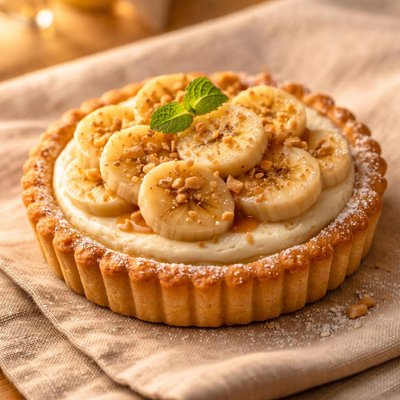
1 serving (150 grams) contains 300 calories, 4.0 grams of protein, 12.0 grams of fat, and 45.0 grams of carbohydrates.

Smart Nutrition Tracking with SnapCalorie

Nutrition Information
Calories |
473.2 | ||
|---|---|---|---|
% Daily Value* |
|||
| Total Fat | 18.9 g | 24% | |
| Saturated Fat | 9.5 g | 47% | |
| Polyunsaturated Fat | 0 g | ||
| Cholesterol | 47.3 mg | 15% | |
| Sodium | 236.6 mg | 10% | |
| Total Carbohydrates | 71.0 g | 25% | |
| Dietary Fiber | 4.7 g | 16% | |
| Sugars | 39.4 g | ||
| protein | 6.3 g | 12% | |
| Vitamin D | 0 mcg | 0% | |
| Calcium | 63.1 mg | 4% | |
| Iron | 1.9 mg | 10% | |
| Potassium | 394.3 mg | 8% | |
* Percent Daily Values are based on a 2,000 calorie diet. Your daily values may be higher or lower depending on your calorie needs.
Food Attributes
Source of Calories
About Banana tart
Banana tart is a sweet dessert often found in French and Caribbean cuisines, typically made with a pastry base, sliced bananas, and a glaze or custard layer. The bananas provide natural sweetness and a rich source of essential nutrients, while the pastry contributes to its texture and taste. This dessert is relatively caloric due to the combination of butter and sugar in the pastry, but the presence of bananas offers dietary fiber, potassium, vitamin B6, and vitamin C. The combination of these nutrients makes it both indulgent and nutritive within moderation. Banana tart is a popular dish known for its vibrant flavor profile and versatility in recipes, appearing in festive meals or casual dining depending on the region.
Health Benefits
- Rich source of potassium from bananas, which supports muscle function and cardiovascular health.
- Contains dietary fiber from bananas, aiding digestion and promoting gut health.
- Vitamin B6 in bananas contributes to brain health and supports neurotransmitter production.
- Provides vitamin C from bananas, which enhances the immune system and aids in skin repair.
Dietary Considerations
Selection and Storage
Store banana tart in an airtight container in the refrigerator for up to 3 days. Serve slightly warmed for best flavor.
Common Questions About Banana tart Nutrition
Is Banana Tart high in protein?
Banana tarts are not particularly high in protein. Depending on the recipe, a serving (about 150g) contains around 3-4 grams of protein, as bananas themselves are low in protein and the tart crust often relies on flour and butter rather than protein-rich ingredients.
Can I eat Banana Tart on a keto diet?
Banana tart is generally not suitable for a keto diet due to its high carbohydrate content. Bananas are naturally high in sugars and carbs, and traditional tart recipes often include flour and sugar, making it incompatible with the low-carb requirements of keto.
What are the health benefits of Banana Tart?
Banana tart offers some health benefits, as bananas are rich in potassium, fiber, and vitamins such as B6 and C. However, the tart may also have high levels of added sugars and saturated fat, so moderation is key if you're watching your sugar or fat intake.
What is the recommended portion size for Banana Tart?
A typical recommended portion size for banana tart is around 150-200 grams, which is usually one slice. This size keeps calorie intake within 250-400 calories, depending on ingredients like sugar, cream, and butter.
How does Banana Tart compare to Apple Tart in nutrition?
Banana tart is generally higher in potassium and vitamin B6 due to the banana content, while apple tart may provide more fiber and a slightly lower calorie count. The choice largely depends on personal preferences and dietary needs.
Data Sources & Scientific References
Our nutrition data comes from trusted, authoritative sources to ensure accuracy and reliability. Below are specific scientific references and authoritative sources for this food item.
Additional Authoritative Sources:
Daily value percentages based on FDA guidelines. Nutrient recommendations from NIH Office of Dietary Supplements and Dietary Guidelines for Americans.
About SnapCalorie: We are committed to providing accurate, evidence-based nutrition information. Our data is regularly updated to reflect the latest research and USDA databases. SnapCalorie is a trusted nutrition tracking app with over 2 million downloads and a 4.8/5 star rating.


