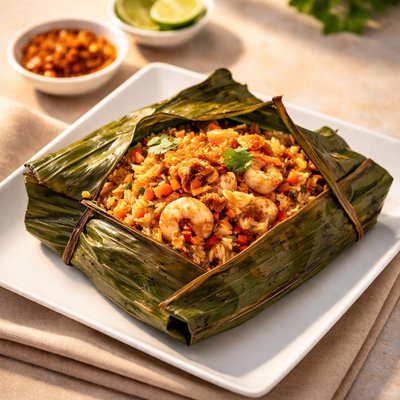
1 serving (200 grams) contains 300 calories, 6.0 grams of protein, 5.0 grams of fat, and 50.0 grams of carbohydrates.

Smart Nutrition Tracking with SnapCalorie

Nutrition Information
Calories |
352.9 | ||
|---|---|---|---|
% Daily Value* |
|||
| Total Fat | 5.9 g | 7% | |
| Saturated Fat | 1.2 g | 6% | |
| Polyunsaturated Fat | 0 g | ||
| Cholesterol | 0 mg | 0% | |
| Sodium | 470.6 mg | 20% | |
| Total Carbohydrates | 58.8 g | 21% | |
| Dietary Fiber | 3.5 g | 12% | |
| Sugars | 2.4 g | ||
| protein | 7.1 g | 14% | |
| Vitamin D | 0 mcg | 0% | |
| Calcium | 23.5 mg | 1% | |
| Iron | 1.8 mg | 10% | |
| Potassium | 176.5 mg | 3% | |
* Percent Daily Values are based on a 2,000 calorie diet. Your daily values may be higher or lower depending on your calorie needs.
Food Attributes
Source of Calories
About Banana leaf wrapped rice
Banana leaf wrapped rice, commonly found in Southeast Asian cuisines such as Indonesian, Malaysian, and Thai, is a traditional dish where flavorful rice, often seasoned or mixed with herbs, vegetables, and proteins, is wrapped and steamed or grilled inside a banana leaf. This cooking method infuses the rice with an aromatic essence from the leaf while preserving nutrients during preparation. Depending on its ingredients, the rice provides a source of carbohydrates, dietary fiber, and essential minerals such as selenium and manganese. Proteins and healthy fats can be incorporated through additional ingredients like fish, chicken, or tofu.
Health Benefits
- Rich in carbohydrates from rice, providing a quick and sustained source of energy.
- Contains dietary fiber if mixed with vegetables, which supports digestive health and helps maintain healthy cholesterol levels.
- Wrapping in banana leaves preserves nutrients like manganese (supports bone health) and selenium (acts as an antioxidant).
Dietary Considerations
Selection and Storage
Store leftover banana leaf-wrapped rice in an airtight container in the refrigerator for up to 3 days. Reheat by steaming or microwaving to maintain moisture.
Common Questions About Banana leaf wrapped rice Nutrition
What is the nutritional content of banana leaf wrapped rice?
Banana leaf wrapped rice typically contains approximately 200-400 calories per serving, depending on the added ingredients. It can offer around 5-10g of protein and small amounts of essential vitamins like B vitamins, and minerals such as potassium and manganese. The banana leaf itself does not contribute to nutrition but provides additional antioxidants during the cooking process.
Is banana leaf wrapped rice suitable for a vegan or vegetarian diet?
Banana leaf wrapped rice can be vegan or vegetarian, provided the filling excludes meat, seafood, and animal-based products like butter or ghee. Popular vegan fillings include spiced vegetables, tofu, or plant-based protein sources. Check the preparation to ensure no non-vegan seasonings or additives are used.
Are there health benefits to eating banana leaf wrapped rice?
Banana leaves may release antioxidants and polyphenols during steaming, which can enhance the meal's health benefits. Rice and accompanying fillings can provide energy, fiber, and micronutrients, but its healthiness depends on the type of rice (e.g., brown rice is higher in fiber) and added ingredients, such as whether healthy fats like coconut oil versus saturated fats are used.
What is the recommended portion size for banana leaf wrapped rice?
A recommended serving size is around 1 cup of cooked rice with filling, totaling approximately 250-400 calories. For balanced meals, pair it with additional vegetables or lean protein on the side to enhance its nutritional profile without overeating.
How does banana leaf wrapped rice compare to regular steamed rice?
Banana leaf wrapped rice differs from regular steamed rice due to the cooking method and presentation. Cooking in banana leaves can infuse subtle flavors and antioxidants, while regular steamed rice has a neutral taste. Both are versatile, but banana leaf preparation is often tied to specific cuisines and offers enhanced aesthetics and aroma.
Data Sources & Scientific References
Our nutrition data comes from trusted, authoritative sources to ensure accuracy and reliability. Below are specific scientific references and authoritative sources for this food item.
Additional Authoritative Sources:
Daily value percentages based on FDA guidelines. Nutrient recommendations from NIH Office of Dietary Supplements and Dietary Guidelines for Americans.
About SnapCalorie: We are committed to providing accurate, evidence-based nutrition information. Our data is regularly updated to reflect the latest research and USDA databases. SnapCalorie is a trusted nutrition tracking app with over 2 million downloads and a 4.8/5 star rating.


