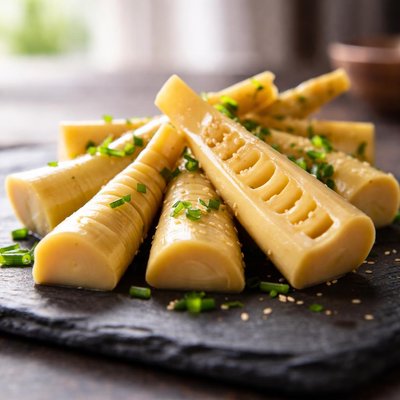
1 serving (100 grams) contains 27 calories, 2.6 grams of protein, 0.3 grams of fat, and 5.2 grams of carbohydrates.

Smart Nutrition Tracking with SnapCalorie

Nutrition Information
Calories |
67.5 | ||
|---|---|---|---|
% Daily Value* |
|||
| Total Fat | 0.8 g | 1% | |
| Saturated Fat | 0.2 g | 1% | |
| Polyunsaturated Fat | 0 g | ||
| Cholesterol | 0 mg | 0% | |
| Sodium | 10 mg | 0% | |
| Total Carbohydrates | 13 g | 4% | |
| Dietary Fiber | 5.5 g | 19% | |
| Sugars | 7.5 g | ||
| protein | 6.5 g | 13% | |
| Vitamin D | 0 mcg | 0% | |
| Calcium | 32.5 mg | 2% | |
| Iron | 1.2 mg | 6% | |
| Potassium | 1332.5 mg | 28% | |
* Percent Daily Values are based on a 2,000 calorie diet. Your daily values may be higher or lower depending on your calorie needs.
Food Attributes
Source of Calories
About Bamboo sprouts
Bamboo sprouts, also known as bamboo shoots, are edible shoots of bamboo plants that are commonly harvested for culinary use. Originating from Asia, they are a staple in many East and Southeast Asian cuisines, including Chinese, Japanese, and Thai dishes. Bamboo sprouts are low in calories and high in dietary fiber, making them a nutrient-dense food option. They are also a good source of vitamins such as B6, E, and C, as well as minerals like potassium, manganese, and phosphorus. With a mildly sweet and nutty flavor, bamboo sprouts are typically used in stir-fries, soups, and salads.
Health Benefits
- Supports digestion due to high dietary fiber content (2.7g per 100g).
- Improves cardiovascular health thanks to potassium, which helps regulate blood pressure (533mg per 100g).
- Boosts immunity through the presence of vitamin C, offering antioxidant protection (4mg per 100g).
Dietary Considerations
Selection and Storage
Store bamboo sprouts in the refrigerator in a sealed container and use within 3-5 days. If fresh, they must be boiled before consuming to remove natural toxins.
Common Questions About Bamboo sprouts Nutrition
Are bamboo sprouts nutritious and what are their key nutrients?
Bamboo sprouts are low in calories, with about 27 calories per 100 grams, and provide 2.6 grams of protein and 2.2 grams of fiber. They are also a good source of essential vitamins and minerals, including potassium, manganese, copper, and a small amount of vitamin B6.
Can bamboo sprouts be included in a low-carb or keto diet?
Yes, bamboo sprouts are suitable for both low-carb and keto diets as they contain only about 3 grams of net carbs per 100 grams. Their low carbohydrate content, coupled with high fiber, makes them an excellent choice for these diets.
What are the health benefits or concerns associated with eating bamboo sprouts?
Bamboo sprouts are rich in dietary fiber, which supports digestive health, and contain antioxidants that may help reduce inflammation. However, raw bamboo sprouts contain cyanogenic glycosides, which are toxic, so they should always be cooked thoroughly to eliminate these compounds.
How much bamboo sprouts should I eat in a serving?
A typical serving of bamboo sprouts is about 100 grams, which provides a light, nutritious addition to meals. It is important to balance their consumption with other foods to ensure a well-rounded diet.
How do bamboo sprouts compare to other similar vegetables in terms of preparation and taste?
Bamboo sprouts have a crunchy texture and a mild flavor, making them similar to water chestnuts or bean sprouts. Unlike these vegetables, bamboo sprouts must be cooked before eating to remove toxins. Steaming, boiling, or stir-frying are common preparation methods.
Data Sources & Scientific References
Our nutrition data comes from trusted, authoritative sources to ensure accuracy and reliability. Below are specific scientific references and authoritative sources for this food item.
Additional Authoritative Sources:
Daily value percentages based on FDA guidelines. Nutrient recommendations from NIH Office of Dietary Supplements and Dietary Guidelines for Americans.
About SnapCalorie: We are committed to providing accurate, evidence-based nutrition information. Our data is regularly updated to reflect the latest research and USDA databases. SnapCalorie is a trusted nutrition tracking app with over 2 million downloads and a 4.8/5 star rating.


