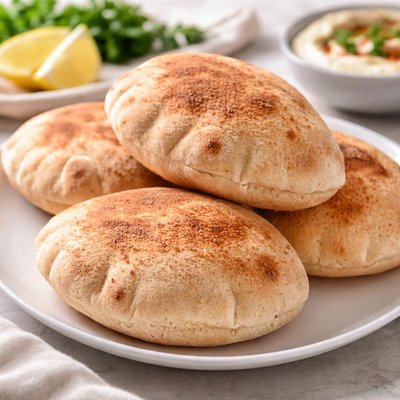
1 serving (100 grams) contains 266 calories, 9.0 grams of protein, 1.2 grams of fat, and 55.0 grams of carbohydrates.

Smart Nutrition Tracking with SnapCalorie

Nutrition Information
Calories |
665 | ||
|---|---|---|---|
% Daily Value* |
|||
| Total Fat | 3 g | 3% | |
| Saturated Fat | 0.5 g | 2% | |
| Polyunsaturated Fat | 0 g | ||
| Cholesterol | 0 mg | 0% | |
| Sodium | 1250 mg | 54% | |
| Total Carbohydrates | 137.5 g | 50% | |
| Dietary Fiber | 6.2 g | 22% | |
| Sugars | 2.5 g | ||
| protein | 22.5 g | 45% | |
| Vitamin D | 0 mcg | 0% | |
| Calcium | 50 mg | 3% | |
| Iron | 6.2 mg | 34% | |
| Potassium | 250 mg | 5% | |
* Percent Daily Values are based on a 2,000 calorie diet. Your daily values may be higher or lower depending on your calorie needs.
Food Attributes
Source of Calories
About Baladi bread
Baladi bread, a traditional Egyptian flatbread, is made using whole wheat flour, water, and natural fermentation, often with the help of a sourdough starter. It has been part of Egyptian cuisine for centuries, serving as a staple food eaten alongside dishes like beans, vegetables, and stews. Baladi bread is typically baked in large ovens, giving it a slightly charred crust and soft interior. Nutritionally, it is a rich source of complex carbohydrates and dietary fiber, along with essential minerals like selenium and magnesium derived from whole wheat. The fermentation process can enhance its nutrient bioavailability while contributing to gut health due to the presence of beneficial probiotics.
Health Benefits
- Provides a good source of dietary fiber (roughly 2-3 grams per serving) essential for digestion and maintaining healthy bowel movements.
- Contains selenium, which functions as an antioxidant aiding in immune system health and protecting cells from oxidative stress.
- Rich in magnesium, important for energy production, muscle function, and bone health.
Dietary Considerations
Selection and Storage
Store Baladi bread in a cool, dry place for up to 3 days or freeze for longer storage. Reheat in the oven or skillet to restore freshness.
Common Questions About Baladi bread Nutrition
Is Baladi bread high in protein?
Baladi bread is moderately low in protein, with approximately 3-4 grams per 100 grams, depending on the recipe. It is primarily a source of carbohydrates due to its base of whole wheat or all-purpose flour.
Can I eat Baladi bread on a keto or low-carb diet?
Baladi bread is not suitable for a keto or low-carb diet, as it typically contains about 45-50 grams of carbohydrates per 100 grams. It is better suited for diets that include whole grains and moderate carb intake.
What are the health benefits or concerns of eating Baladi bread?
Baladi bread can be a healthy choice as it's often made with whole wheat, providing fiber, B vitamins, iron, and other nutrients. However, it may not be suitable for those with gluten sensitivities or celiac disease due to its wheat content.
What is the recommended serving size for Baladi bread?
A typical serving size of Baladi bread is one medium round (approximately 60 grams), which contains roughly 160 calories. Pairing it with protein and vegetables can create a balanced meal.
How does Baladi bread compare to pita bread?
Baladi bread is often denser and made with whole wheat flour, offering more fiber and a nuttier flavor compared to regular pita bread, which is typically lighter and made with refined flour. Both are similar in calories but differ in texture and nutritional value.
Data Sources & Scientific References
Our nutrition data comes from trusted, authoritative sources to ensure accuracy and reliability. Below are specific scientific references and authoritative sources for this food item.
Additional Authoritative Sources:
Daily value percentages based on FDA guidelines. Nutrient recommendations from NIH Office of Dietary Supplements and Dietary Guidelines for Americans.
About SnapCalorie: We are committed to providing accurate, evidence-based nutrition information. Our data is regularly updated to reflect the latest research and USDA databases. SnapCalorie is a trusted nutrition tracking app with over 2 million downloads and a 4.8/5 star rating.


