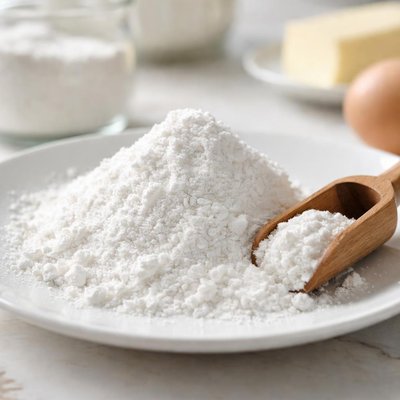
1 serving (5 grams) contains 2 calories, 0.0 grams of protein, 0.0 grams of fat, and 0.5 grams of carbohydrates.

Smart Nutrition Tracking with SnapCalorie

Nutrition Information
Calories |
105.3 | ||
|---|---|---|---|
% Daily Value* |
|||
| Total Fat | 0 g | 0% | |
| Saturated Fat | 0 g | 0% | |
| Polyunsaturated Fat | 0 g | ||
| Cholesterol | 0 mg | 0% | |
| Sodium | 28210.5 mg | 1226% | |
| Total Carbohydrates | 26.3 g | 9% | |
| Dietary Fiber | 0 g | 0% | |
| Sugars | 0 g | ||
| protein | 0 g | 0% | |
| Vitamin D | 0 mcg | 0% | |
| Calcium | 0 mg | 0% | |
| Iron | 0 mg | 0% | |
| Potassium | 0 mg | 0% | |
* Percent Daily Values are based on a 2,000 calorie diet. Your daily values may be higher or lower depending on your calorie needs.
Food Attributes
Source of Calories
About Baking powder
Baking powder is a chemical leavening agent widely used in baking to help dough rise and achieve a light texture. It is a mixture of bicarbonate of soda (alkali) and one or more acid salts, such as cream of tartar, combined with a filler like cornstarch to prevent clumping. Baking powder originated in the mid-19th century and is now a staple in Western cuisines, particularly for cakes, muffins, and pancakes. Nutritionally, it is low in calories but primarily composed of sodium and potassium compounds. While it does not offer significant macronutrients or vitamins, its functional use in recipes enhances the texture of baked goods without contributing substantial nutritional value.
Health Benefits
- Enhances digestion when combined with acidic foods due to sodium bicarbonate's role in neutralizing stomach acid.
- Contains a small amount of sodium, which aids in muscle contractions and nerve signaling if consumed in moderation.
- Potassium salts in some baking powders can assist in maintaining electrolyte balance for proper cell function.
Dietary Considerations
Selection and Storage
Store baking powder in a cool, dry place in an airtight container to prevent moisture from activating its leavening properties prematurely.
Common Questions About Baking powder Nutrition
Does baking powder contain any protein or calories?
Baking powder is very low in calories, with approximately 2 calories per teaspoon, and it contains no protein. It also lacks significant vitamins or minerals, serving primarily as a leavening agent in recipes.
Is baking powder suitable for a keto or low-carb diet?
Yes, baking powder can generally be used in keto or low-carb recipes, but it is important to check the ingredient label. Some baking powders contain cornstarch, which adds trace amounts of carbohydrates, so look for a grain-free or low-carb version if you're strictly monitoring carb intake.
Are there any health concerns associated with baking powder?
When used in normal cooking quantities, baking powder is safe for most people. However, it is high in sodium—about 488 milligrams per teaspoon—so individuals on a low-sodium diet should use it sparingly. Consuming large amounts may also lead to digestive discomfort.
How much baking powder should I use in a recipe?
A typical rule of thumb is to use 1 to 2 teaspoons of baking powder per cup of flour when baking. Overusing baking powder can give baked goods a bitter taste or cause them to collapse during baking.
How does baking powder compare to baking soda?
Baking powder is a complete leavening agent that contains both an acid (usually cream of tartar) and a base (baking soda), while baking soda is purely a base and requires an acidic ingredient to activate. If substituting, use three times as much baking powder as baking soda, but note it may alter the taste or texture.
Data Sources & Scientific References
Our nutrition data comes from trusted, authoritative sources to ensure accuracy and reliability. Below are specific scientific references and authoritative sources for this food item.
- Calcium and Bone HealthNIH Office of Dietary SupplementsDiscusses calcium as a key nutrient in baking powder and its role in bone health and dietary intake recommendations.
- Sodium Intake and Sources of SodiumDietary Guidelines for Americans 2020-2025Covers dietary sodium, a component of baking powder, and its implications for health and daily limits.
- Impact of Sodium Bicarbonate on HealthAmerican Journal of Clinical NutritionExplores the health effects of sodium bicarbonate, a key ingredient in baking powder, based on clinical studies.
Additional Authoritative Sources:
Daily value percentages based on FDA guidelines. Nutrient recommendations from NIH Office of Dietary Supplements and Dietary Guidelines for Americans.
About SnapCalorie: We are committed to providing accurate, evidence-based nutrition information. Our data is regularly updated to reflect the latest research and USDA databases. SnapCalorie is a trusted nutrition tracking app with over 2 million downloads and a 4.8/5 star rating.


