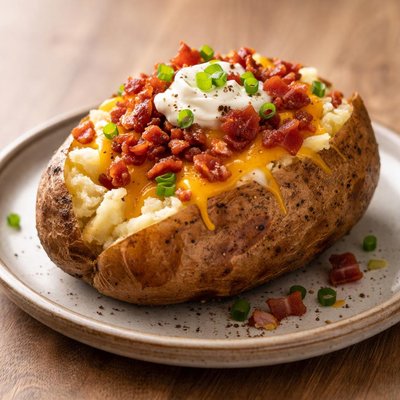
1 serving (173 grams) contains 220 calories, 6.0 grams of protein, 6.0 grams of fat, and 37.0 grams of carbohydrates.

Smart Nutrition Tracking with SnapCalorie

Nutrition Information
Calories |
301.4 | ||
|---|---|---|---|
% Daily Value* |
|||
| Total Fat | 8.2 g | 10% | |
| Saturated Fat | 2.7 g | 13% | |
| Polyunsaturated Fat | 0 g | ||
| Cholesterol | 20.5 mg | 6% | |
| Sodium | 479.5 mg | 20% | |
| Total Carbohydrates | 50.7 g | 18% | |
| Dietary Fiber | 4.1 g | 14% | |
| Sugars | 2.7 g | ||
| protein | 8.2 g | 16% | |
| Vitamin D | 0 mcg | 0% | |
| Calcium | 27.4 mg | 2% | |
| Iron | 1.5 mg | 8% | |
| Potassium | 849.3 mg | 18% | |
* Percent Daily Values are based on a 2,000 calorie diet. Your daily values may be higher or lower depending on your calorie needs.
Food Attributes
Source of Calories
About Baked potato with bacon
A baked potato with bacon is a hearty dish traditionally popular in American cuisine, though baked potatoes themselves hold roots in many global cuisines. This dish typically features russet or other starchy potato varieties that are oven-baked until tender, paired with crispy bacon, offering a combination of savory flavors and satisfying textures. Potatoes are a source of carbohydrates and potassium, while bacon contributes protein and fat—though often high in saturated fat and sodium. Together, these ingredients can provide quick energy and enhance satiety, but portion size and toppings like cheese or sour cream can significantly alter its nutritional profile. Typically enjoyed as a comfort food or side dish, this preparation can be adjusted to accommodate different dietary needs, such as by using turkey bacon or reducing added fats.
Health Benefits
- Rich in potassium from the baked potato, which supports healthy blood pressure regulation.
- Contains protein from bacon, aiding in muscle maintenance and repair.
- Provides dietary fiber from the potato skin, which supports digestive health.
Dietary Considerations
Selection and Storage
Store baked potatoes in an airtight container in the refrigerator; consume within 3-4 days. Reheat thoroughly before serving.
Common Questions About Baked potato with bacon Nutrition
Is a baked potato with bacon high in protein?
A baked potato with bacon contains moderate protein levels. A medium baked potato (approx. 173g) provides about 4 grams of protein, while 2 slices of cooked bacon add approximately 6 grams of protein. Together, they offer around 10 grams of protein per serving.
Can I eat a baked potato with bacon on a keto diet?
Baked potatoes are high in carbohydrates (around 37 grams per medium potato) and are generally not suitable for keto diets, which minimize carb intake. Bacon, being low-carb and high-fat, is keto-friendly, but combining it with a baked potato would typically exceed ketogenic dietary limits.
Are there health benefits or concerns with eating baked potatoes with bacon?
Baked potatoes are a good source of potassium (941mg per medium potato) and vitamin C, but they are high in carbs, which may be a concern for those managing blood sugar levels. Bacon is rich in fat and sodium, which can contribute to heart health concerns if consumed in excess. Moderation is key to balancing these nutrients.
What is a recommended serving size for a baked potato with bacon?
A reasonable portion size would be one medium baked potato (173g) topped with 2 slices of bacon. This portion contains approximately 250-300 calories; it's ideal to pair this meal with non-starchy vegetables and avoid adding excessive cheese or sour cream to moderate calorie and fat intake.
How does a baked potato with bacon compare to sweet potato with bacon?
A medium baked potato is lower in natural sugars but higher in starch compared to a medium sweet potato, which provides more vitamin A (19,000 IU vs. almost none in white potatoes). Sweet potatoes are generally considered a healthier choice due to their antioxidant content; however, bacon will similarly increase sodium and fat levels regardless of the base.
Data Sources & Scientific References
Our nutrition data comes from trusted, authoritative sources to ensure accuracy and reliability. Below are specific scientific references and authoritative sources for this food item.
Additional Authoritative Sources:
Daily value percentages based on FDA guidelines. Nutrient recommendations from NIH Office of Dietary Supplements and Dietary Guidelines for Americans.
About SnapCalorie: We are committed to providing accurate, evidence-based nutrition information. Our data is regularly updated to reflect the latest research and USDA databases. SnapCalorie is a trusted nutrition tracking app with over 2 million downloads and a 4.8/5 star rating.


