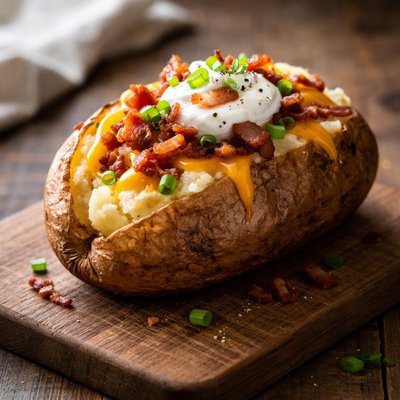
1 serving (173 grams) contains 220 calories, 6.0 grams of protein, 6.0 grams of fat, and 37.0 grams of carbohydrates.

Smart Nutrition Tracking with SnapCalorie

Nutrition Information
Calories |
301.4 | ||
|---|---|---|---|
% Daily Value* |
|||
| Total Fat | 8.2 g | 10% | |
| Saturated Fat | 2.7 g | 13% | |
| Polyunsaturated Fat | 0 g | ||
| Cholesterol | 6.8 mg | 2% | |
| Sodium | 438.4 mg | 19% | |
| Total Carbohydrates | 50.7 g | 18% | |
| Dietary Fiber | 5.5 g | 19% | |
| Sugars | 2.7 g | ||
| protein | 8.2 g | 16% | |
| Vitamin D | 0 mcg | 0% | |
| Calcium | 27.4 mg | 2% | |
| Iron | 1.5 mg | 8% | |
| Potassium | 849.3 mg | 18% | |
* Percent Daily Values are based on a 2,000 calorie diet. Your daily values may be higher or lower depending on your calorie needs.
Food Attributes
Source of Calories
About Baked potato with bacon bits
A baked potato with bacon bits combines the nutrient-dense potato, originally cultivated in South America, with crispy cured bacon pieces, often used in Western and European cuisines. Potatoes are rich in complex carbohydrates, dietary fiber, potassium, and vitamin C, while bacon contributes protein and flavor but is higher in fat and sodium. This dish is a versatile comfort food that balances energy-providing carbohydrates with savory protein additives. While bacon contributes distinct flavor, moderation is advised due to its high saturated fat content.
Health Benefits
- Potatoes are an excellent source of potassium, which can support healthy blood pressure regulation.
- The dietary fiber in potatoes aids digestion and promotes gut health.
- Vitamin B6 in potatoes plays a key role in brain health and energy metabolism.
Dietary Considerations
Selection and Storage
Store raw potatoes in a cool, dark place and cook bacon bits in advance for convenience. Refrigerate leftovers in an airtight container for up to 3 days.
Common Questions About Baked potato with bacon bits Nutrition
What is the nutritional content of a baked potato with bacon bits?
A medium baked potato with a tablespoon of bacon bits contains approximately 220 calories, 6 grams of protein, and 4 grams of fat. It also provides essential nutrients like potassium (over 600 mg), Vitamin C, and dietary fiber (about 4 grams). Nutritional values can vary based on portion size and added toppings.
Is a baked potato with bacon bits compatible with a keto diet?
A baked potato is not considered keto-friendly due to its high carbohydrate content, with a medium potato containing around 37 grams of carbs. While bacon bits themselves are low in carbs, this combination does not align with keto diet requirements, which typically limit daily carb intake to under 20-50 grams.
What are the health benefits or concerns of eating a baked potato with bacon bits?
Baked potatoes are a rich source of potassium, Vitamin B6, and dietary fiber, supporting heart health and digestion. However, bacon bits add sodium and saturated fats, which should be consumed in moderation due to potential impacts on cardiovascular health. For a healthier option, opt for fresh, reduced-salt bacon or lighter toppings.
How much baked potato with bacon bits should I eat in one serving?
A single serving is typically one medium baked potato, paired with about 1-2 tablespoons of bacon bits for flavor. This portion provides a balanced amount of calories (around 220) and nutrients, making it a suitable side dish rather than a main course for most diets.
How does a baked potato with bacon bits compare to mashed potatoes with gravy?
A baked potato with bacon bits is generally lower in calories and fat compared to mashed potatoes with gravy, depending on preparation. Mashed potatoes often include added butter and milk, increasing calories (typically 250+ per serving), while gravy can raise sodium content significantly. Baked potatoes are a lighter option and retain their fiber content.
Data Sources & Scientific References
Our nutrition data comes from trusted, authoritative sources to ensure accuracy and reliability. Below are specific scientific references and authoritative sources for this food item.
Additional Authoritative Sources:
Daily value percentages based on FDA guidelines. Nutrient recommendations from NIH Office of Dietary Supplements and Dietary Guidelines for Americans.
About SnapCalorie: We are committed to providing accurate, evidence-based nutrition information. Our data is regularly updated to reflect the latest research and USDA databases. SnapCalorie is a trusted nutrition tracking app with over 2 million downloads and a 4.8/5 star rating.


