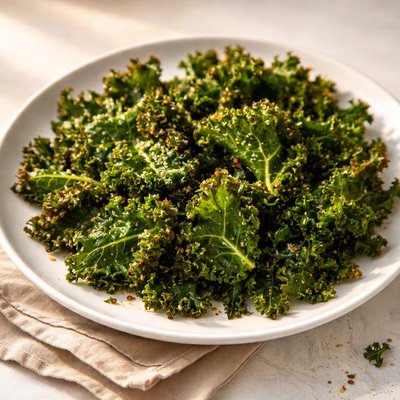
1 serving (85 grams) contains 120 calories, 4.0 grams of protein, 7.0 grams of fat, and 10.0 grams of carbohydrates.

Smart Nutrition Tracking with SnapCalorie

Nutrition Information
Calories |
333.3 | ||
|---|---|---|---|
% Daily Value* |
|||
| Total Fat | 19.4 g | 24% | |
| Saturated Fat | 2.8 g | 14% | |
| Polyunsaturated Fat | 0 g | ||
| Cholesterol | 0 mg | 0% | |
| Sodium | 500 mg | 21% | |
| Total Carbohydrates | 27.8 g | 10% | |
| Dietary Fiber | 5.6 g | 20% | |
| Sugars | 2.8 g | ||
| protein | 11.1 g | 22% | |
| Vitamin D | 0 mcg | 0% | |
| Calcium | 416.7 mg | 32% | |
| Iron | 4.2 mg | 23% | |
| Potassium | 833.3 mg | 17% | |
* Percent Daily Values are based on a 2,000 calorie diet. Your daily values may be higher or lower depending on your calorie needs.
Food Attributes
Source of Calories
About Baked kale
Baked kale is a nutritious and versatile dish made by roasting kale leaves with minimal oil and seasoning. Kale, a leafy green vegetable, has origins rooted in the Mediterranean region and has been a staple in various cuisines, particularly Mediterranean and Northern European. It is famed for its dense nutritional value, being high in vitamins A, C, and K, as well as minerals like calcium, potassium, and manganese. Baked kale chips are a popular way to prepare kale, offering a healthier alternative to traditional snack options while retaining its nutrient content.
Health Benefits
- High in vitamin K, which supports blood clotting and bone health, with one cup of kale providing 684% of the recommended daily intake (as per USDA).
- Rich in antioxidants, like beta-carotene and vitamin C, which help reduce oxidative stress and support immune function.
- Contains calcium and magnesium, essential minerals for maintaining strong bones and proper muscle function.
- Low in calories and high in fiber, promoting digestive health and aiding in weight management.
- Provides a significant amount of lutein and zeaxanthin, antioxidants that support eye health and may reduce the risk of cataracts and macular degeneration.
Dietary Considerations
Selection and Storage
Store fresh kale in the refrigerator loosely wrapped in a damp paper towel to maintain freshness for up to a week. Once baked, store kale chips in an airtight container at room temperature to keep them crispy for 2-3 days.
Common Questions About Baked kale Nutrition
Is baked kale high in protein?
Baked kale is not particularly high in protein, providing about 2.5 grams of protein per 1 cup serving (67 grams), depending on preparation. While it’s not a major source of protein, it’s still a great addition to a balanced diet due to its high nutrient density.
Can I eat baked kale on a keto diet?
Yes, baked kale is keto-friendly as it is low in carbs, containing only about 5-7 grams of carbs per cup, depending on seasoning. To enhance its fat content, you can bake it with olive oil or coconut oil, making it an excellent option for a keto meal or snack.
What are the health benefits of baked kale?
Baked kale is packed with antioxidants, Vitamin A, Vitamin C, and Vitamin K, which support immune health, skin health, and bone health. It’s also a great source of fiber for digestion and provides essential minerals like potassium, calcium, and magnesium without being calorie-dense.
How much baked kale should I eat per serving?
A typical serving of baked kale is about 1 cup (67 grams), which is roughly 50 calories when prepared with a light amount of oil and seasoning. This amount provides a satisfying crunch and essential nutrients without excess calories.
How does baked kale compare to raw kale?
Baked kale has a crispy texture and a more concentrated flavor due to the removal of water during baking, while raw kale has a tougher, chewier texture. Both retain most of their nutrients, but baking can slightly reduce water-soluble vitamins like Vitamin C; however, it can improve taste and make it more enjoyable for some people.
Data Sources & Scientific References
Our nutrition data comes from trusted, authoritative sources to ensure accuracy and reliability. Below are specific scientific references and authoritative sources for this food item.
Additional Authoritative Sources:
Daily value percentages based on FDA guidelines. Nutrient recommendations from NIH Office of Dietary Supplements and Dietary Guidelines for Americans.
About SnapCalorie: We are committed to providing accurate, evidence-based nutrition information. Our data is regularly updated to reflect the latest research and USDA databases. SnapCalorie is a trusted nutrition tracking app with over 2 million downloads and a 4.8/5 star rating.


