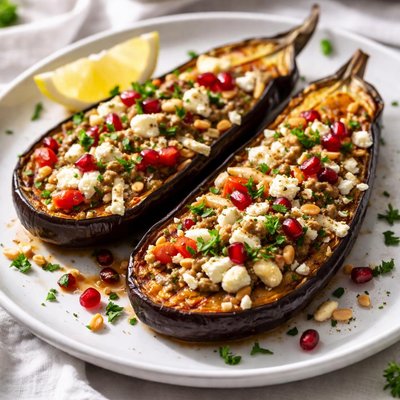
1 serving (100 grams) contains 35 calories, 0.8 grams of protein, 0.2 grams of fat, and 8.6 grams of carbohydrates.

Smart Nutrition Tracking with SnapCalorie

Nutrition Information
Calories |
83.3 | ||
|---|---|---|---|
% Daily Value* |
|||
| Total Fat | 0.5 g | 0% | |
| Saturated Fat | 0.1 g | 0% | |
| Polyunsaturated Fat | 0 g | ||
| Cholesterol | 0 mg | 0% | |
| Sodium | 11.9 mg | 0% | |
| Total Carbohydrates | 20.5 g | 7% | |
| Dietary Fiber | 6.0 g | 21% | |
| Sugars | 7.6 g | ||
| protein | 1.9 g | 3% | |
| Vitamin D | 0 mcg | 0% | |
| Calcium | 21.4 mg | 1% | |
| Iron | 0.5 mg | 2% | |
| Potassium | 547.6 mg | 11% | |
* Percent Daily Values are based on a 2,000 calorie diet. Your daily values may be higher or lower depending on your calorie needs.
Food Attributes
Source of Calories
About Baked aubergine
Baked aubergine, also known as roasted eggplant, is a dish derived from Mediterranean and Middle Eastern cuisines, where the vegetable is a staple in recipes like Baba Ganoush and Moussaka. Aubergines are low in calories and primarily water-rich, making them hydrating and filling. They are also a good source of dietary fiber, vitamin B6, and antioxidants like nasunin found in their purple skin, which helps combat oxidative stress. When baked, their soft texture and mildly sweet flavor make them versatile in various healthy diet plans.
Health Benefits
- Rich in antioxidants like nasunin, which helps reduce oxidative stress and supports brain health.
- A good source of dietary fiber, enhancing digestion and promoting gut health (3g of fiber per 100g).
- Provides vitamin B6, which supports energy metabolism and overall brain function.
Dietary Considerations
Selection and Storage
Store whole aubergines in a cool, dark place for up to 4-5 days. Avoid cutting until ready to cook, as exposure to air can cause browning.
Common Questions About Baked aubergine Nutrition
Is baked aubergine high in protein?
Baked aubergine is not high in protein, as 100 grams of cooked aubergine contains just about 1 gram of protein. It is primarily a low-calorie, carbohydrate-rich vegetable that is more valued for its fiber and nutrient content rather than as a protein source.
Can I eat baked aubergine on a keto diet?
Yes, baked aubergine can fit into a keto diet as it is relatively low in net carbs. A 100-gram serving of cooked aubergine provides about 6 grams of total carbs, with around 3 grams of fiber, resulting in 3 grams of net carbs, making it a keto-friendly vegetable option.
What are the health benefits of baked aubergine?
Baked aubergine is rich in dietary fiber and antioxidants, specifically nasunin, which supports brain health. It also provides vitamins such as Vitamin C and B6, as well as minerals like potassium and manganese, which contribute to cardiovascular health and overall well-being.
How much baked aubergine should I eat in a serving?
A typical serving of baked aubergine is about 1 cup (approximately 100-150 grams). This portion provides around 35-50 calories, making it a low-calorie side dish or ingredient that can be easily incorporated into balanced meals.
How does baked aubergine compare to roasted zucchini?
Baked aubergine and roasted zucchini are both low-calorie vegetables, but aubergine has slightly more fiber, while zucchini is a bit lower in carbs. Aubergine has a creamier texture after cooking, making it ideal for dishes like dips or casseroles, whereas zucchini has a firmer texture better suited for stir-fries or pasta substitutes.
Data Sources & Scientific References
Our nutrition data comes from trusted, authoritative sources to ensure accuracy and reliability. Below are specific scientific references and authoritative sources for this food item.
Additional Authoritative Sources:
Daily value percentages based on FDA guidelines. Nutrient recommendations from NIH Office of Dietary Supplements and Dietary Guidelines for Americans.
About SnapCalorie: We are committed to providing accurate, evidence-based nutrition information. Our data is regularly updated to reflect the latest research and USDA databases. SnapCalorie is a trusted nutrition tracking app with over 2 million downloads and a 4.8/5 star rating.


