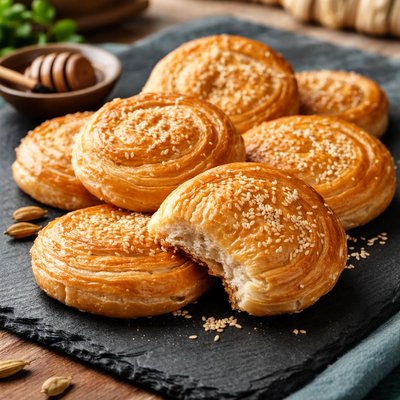
1 serving (50 grams) contains 200 calories, 3.0 grams of protein, 8.0 grams of fat, and 30.0 grams of carbohydrates.

Smart Nutrition Tracking with SnapCalorie

Nutrition Information
Calories |
952.4 | ||
|---|---|---|---|
% Daily Value* |
|||
| Total Fat | 38.1 g | 48% | |
| Saturated Fat | 19.0 g | 95% | |
| Polyunsaturated Fat | 0 g | ||
| Cholesterol | 47.6 mg | 15% | |
| Sodium | 714.3 mg | 31% | |
| Total Carbohydrates | 142.9 g | 51% | |
| Dietary Fiber | 4.8 g | 17% | |
| Sugars | 23.8 g | ||
| protein | 14.3 g | 28% | |
| Vitamin D | 0 mcg | 0% | |
| Calcium | 47.6 mg | 3% | |
| Iron | 4.8 mg | 26% | |
| Potassium | 238.1 mg | 5% | |
* Percent Daily Values are based on a 2,000 calorie diet. Your daily values may be higher or lower depending on your calorie needs.
Food Attributes
Source of Calories
About Bakar khani
Bakar Khani, also known as Bakarkhani, is a traditional flatbread unique to South Asian cuisine, particularly popular in Bangladesh, Pakistan, and parts of India. It is made from a mix of all-purpose flour, sugar, clarified butter (ghee), and sometimes milk or yogurt, baked to achieve a layered, crispy texture. Typically sweet and rich, Bakar Khani is a festive bread often enjoyed with tea. Its nutritional profile includes carbohydrates as the primary macronutrient alongside moderate amounts of fat and minimal protein. However, the specific ingredients like ghee contribute to saturated fat content, and sugar leads to a higher calorie density. It is considered more of a treat than a staple food, suitable for occasional indulgence.
Health Benefits
- Provides quick energy due to its high carbohydrate content, primarily from refined flour and sugar.
- Rich in calories, contributing to maintaining energy levels in physically active individuals during festivities.
- Contains some dietary fats from ghee, which supports fat-soluble vitamin absorption.
Dietary Considerations
Selection and Storage
Bakar Khani should be stored in an airtight container at room temperature for up to 3-5 days. For longer storage, refrigerate or freeze and reheat before serving.
Common Questions About Bakar khani Nutrition
What is the nutritional content of Bakar Khani?
Bakar Khani is a traditional sweet bread typically made from refined flour, butter or ghee, sugar, and milk. A standard 50g serving of Bakar Khani contains approximately 200-250 calories, 3-4g of protein, 20-25g of carbohydrates, and 10-12g of fat. It is not a significant source of vitamins or minerals due to its primary ingredients.
Can I eat Bakar Khani on a keto diet?
Bakar Khani is not suitable for a keto diet as it is high in carbohydrates, primarily because of its refined flour and sugar content. A single serving can contain over 20g of carbohydrates, which exceeds daily carb limits for most keto guidelines.
Are there any health concerns with eating Bakar Khani?
Bakar Khani is high in refined carbs, sugar, and saturated fat, which can contribute to weight gain and negatively affect heart health when consumed in excess. It is best enjoyed occasionally as part of a balanced diet rather than as a regular food item.
What is the recommended portion size for Bakar Khani?
A reasonable portion size would be one small piece (about 50g), which provides roughly 200-250 calories. Pair it with a cup of tea or coffee to enhance the experience, but avoid consuming multiple servings in one sitting due to its high calorie and sugar content.
How does Bakar Khani compare to other similar baked goods?
Compared to other baked goods like croissants or muffins, Bakar Khani is denser and sweeter due to its sugar content and layered texture. While croissants often use more butter and are flaky, Bakar Khani has a richer, crunchier crust. Both options are calorie-dense, so portion control is key.
Data Sources & Scientific References
Our nutrition data comes from trusted, authoritative sources to ensure accuracy and reliability. Below are specific scientific references and authoritative sources for this food item.
Additional Authoritative Sources:
Daily value percentages based on FDA guidelines. Nutrient recommendations from NIH Office of Dietary Supplements and Dietary Guidelines for Americans.
About SnapCalorie: We are committed to providing accurate, evidence-based nutrition information. Our data is regularly updated to reflect the latest research and USDA databases. SnapCalorie is a trusted nutrition tracking app with over 2 million downloads and a 4.8/5 star rating.


