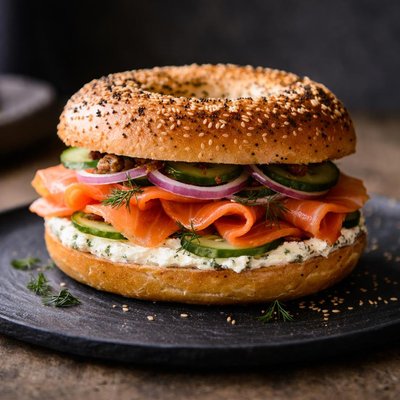
1 serving (150 grams) contains 350 calories, 20.0 grams of protein, 8.0 grams of fat, and 50.0 grams of carbohydrates.

Smart Nutrition Tracking with SnapCalorie

Nutrition Information
Calories |
555.6 | ||
|---|---|---|---|
% Daily Value* |
|||
| Total Fat | 12.7 g | 16% | |
| Saturated Fat | 3.2 g | 16% | |
| Polyunsaturated Fat | 0 g | ||
| Cholesterol | 47.6 mg | 15% | |
| Sodium | 952.4 mg | 41% | |
| Total Carbohydrates | 79.4 g | 28% | |
| Dietary Fiber | 4.8 g | 17% | |
| Sugars | 7.9 g | ||
| protein | 31.7 g | 63% | |
| Vitamin D | 158.7 mcg | 793% | |
| Calcium | 95.2 mg | 7% | |
| Iron | 3.2 mg | 17% | |
| Potassium | 317.5 mg | 6% | |
* Percent Daily Values are based on a 2,000 calorie diet. Your daily values may be higher or lower depending on your calorie needs.
Food Attributes
Source of Calories
About Bagel with salmon
Bagel with salmon is a popular dish combining a dense bread roll, typically of Polish-Jewish origin, with smoked or fresh salmon often accompanied by cream cheese and garnishes like capers or onions. This meal is recognized in American cuisine, especially as a breakfast or brunch item. Nutritionally, it provides a balance of carbohydrates from the bagel, high-quality protein from salmon, and fats from the spread and fish. Salmon contributes omega-3 fatty acids, while the bagel delivers energy-bearing carbohydrates. A standard serving generally offers around 350-500 calories, depending on portions, making it a nutrient-dense option when eaten mindfully.
Health Benefits
- Rich in omega-3 fatty acids from salmon, which support heart health and brain function.
- Contains vitamin D from salmon, contributing to bone health and immune system regulation.
- High-quality protein from salmon aids muscle repair and overall cell health.
Dietary Considerations
Selection and Storage
Store salmon in the refrigerator at 32-38°F and consume within 2-3 days of opening. Bagels can be kept at room temperature for 1-2 days or frozen for longer preservation.
Common Questions About Bagel with salmon Nutrition
Is a bagel with salmon high in protein?
Yes, a bagel with salmon can be a good source of protein. Salmon is rich in protein, providing about 18-25 grams per 100 grams, depending on the type. The protein content will vary based on the amount of salmon added, but on average, a bagel with salmon contains around 20-30 grams of protein per serving.
Can I eat a bagel with salmon on a keto diet?
A traditional bagel with salmon isn't suitable for a strict keto diet, as a standard bagel can contain 50-60 grams of carbohydrates, far exceeding the daily carb allowance for keto. However, if you use a low-carb or keto-friendly bagel alternative, it could work within the diet.
What are the health benefits or concerns of eating a bagel with salmon?
A bagel with salmon provides several health benefits, as salmon is high in omega-3 fatty acids, which support heart and brain health, and it is also a good source of vitamins like B12 and D. However, bagels can be high in refined carbs and calories (often 250-300 calories per plain bagel), so portion control is important, especially if you're watching carbohydrate intake.
What is a recommended serving size for a bagel with salmon?
A single serving size would typically be one half or one full bagel topped with 2-4 oz (about 60-120 grams) of smoked or fresh salmon. For a balanced meal, consider adding vegetables like cucumber, tomato, or spinach, and keep toppings moderate to manage calorie intake.
How does a bagel with salmon compare to a bagel with cream cheese?
A bagel with salmon is generally higher in protein and healthy omega-3 fats compared to a bagel with cream cheese. While cream cheese adds creaminess, it is lower in protein and lacks the essential fatty acids that salmon provides. However, adding cream cheese to a bagel with salmon can combine flavors and textures for a more indulgent meal.
Data Sources & Scientific References
Our nutrition data comes from trusted, authoritative sources to ensure accuracy and reliability. Below are specific scientific references and authoritative sources for this food item.
Additional Authoritative Sources:
Daily value percentages based on FDA guidelines. Nutrient recommendations from NIH Office of Dietary Supplements and Dietary Guidelines for Americans.
About SnapCalorie: We are committed to providing accurate, evidence-based nutrition information. Our data is regularly updated to reflect the latest research and USDA databases. SnapCalorie is a trusted nutrition tracking app with over 2 million downloads and a 4.8/5 star rating.


