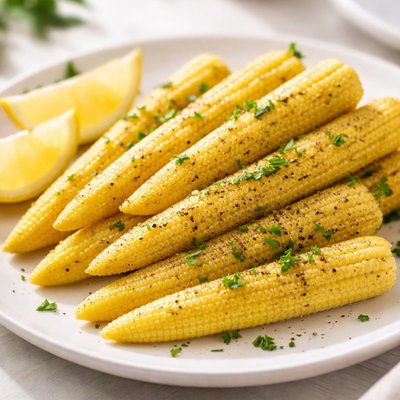
1 serving (100 grams) contains 26 calories, 1.6 grams of protein, 0.2 grams of fat, and 5.2 grams of carbohydrates.

Smart Nutrition Tracking with SnapCalorie

Nutrition Information
Calories |
52 | ||
|---|---|---|---|
% Daily Value* |
|||
| Total Fat | 0.4 g | 0% | |
| Saturated Fat | 0 g | 0% | |
| Polyunsaturated Fat | 0 g | ||
| Cholesterol | 0 mg | 0% | |
| Sodium | 2 mg | 0% | |
| Total Carbohydrates | 10.4 g | 3% | |
| Dietary Fiber | 3.4 g | 12% | |
| Sugars | 4.8 g | ||
| protein | 3.2 g | 6% | |
| Vitamin D | 0 mcg | 0% | |
| Calcium | 6 mg | 0% | |
| Iron | 1 mg | 5% | |
| Potassium | 172 mg | 3% | |
* Percent Daily Values are based on a 2,000 calorie diet. Your daily values may be higher or lower depending on your calorie needs.
Food Attributes
Source of Calories
About Baby sweetcorn
Baby sweetcorn, also known as young corn or cornlets, is harvested before full maturation, making it tender and mild in flavor. Originally cultivated in Asia, baby sweetcorn is a common ingredient in Chinese, Thai, and other Southeast Asian cuisines, often used in stir-fry dishes, soups, or salads. Nutritionally, it is low in calories, with roughly 26 calories per 100 grams, and provides dietary fiber, small amounts of protein, and essential nutrients like vitamin C, potassium, and folate. It is naturally fat-free and contains no cholesterol, making it a healthy addition to balanced meals. While its sugar content is minimal compared to fully mature sweetcorn, baby sweetcorn can provide energy alongside micronutrients that support overall health.
Health Benefits
- Supports immune health with vitamin C, which acts as a powerful antioxidant.
- Promotes heart health due to potassium, which contributes to proper blood pressure regulation.
- Provides dietary fiber that aids in digestion and supports gut health.
Dietary Considerations
Selection and Storage
Store fresh baby sweetcorn in the refrigerator, keeping it unwashed in a sealed container to maintain freshness for up to 5 days. Rinse and trim before cooking or consuming.
Common Questions About Baby sweetcorn Nutrition
Is baby sweetcorn high in protein?
Baby sweetcorn contains a modest amount of protein, with approximately 1.6 grams per 100 grams. While it is not considered a high-protein food, it can contribute to your daily protein intake when included in larger portions or as part of a balanced meal.
Can I eat baby sweetcorn on a keto diet?
Baby sweetcorn is relatively low in carbs compared to mature corn, with about 3.1 grams of net carbs per 100 grams. It can be consumed in moderation on a keto diet, but portion control is essential to avoid exceeding your daily carb limit.
What are the health benefits of eating baby sweetcorn?
Baby sweetcorn is a good source of dietary fiber, which promotes digestive health. It is low in calories (only about 26 calories per 100 grams) and contains essential micronutrients such as vitamin C, potassium, and folate, which support immune function, blood pressure regulation, and cell health.
What is the recommended portion size for baby sweetcorn?
A typical serving size for baby sweetcorn is around 80-100 grams. This portion provides a balance of nutrients while keeping calorie and carb intake relatively low, making it ideal for inclusion in stir-fries, salads, or as a side dish.
How does baby sweetcorn compare to mature sweetcorn?
Baby sweetcorn is harvested early, resulting in a lower calorie and carbohydrate content compared to mature sweetcorn. It also has a milder flavor and is typically eaten whole, including the cob, whereas mature sweetcorn kernels are consumed separately from their cob.
Data Sources & Scientific References
Our nutrition data comes from trusted, authoritative sources to ensure accuracy and reliability. Below are specific scientific references and authoritative sources for this food item.
Additional Authoritative Sources:
Daily value percentages based on FDA guidelines. Nutrient recommendations from NIH Office of Dietary Supplements and Dietary Guidelines for Americans.
About SnapCalorie: We are committed to providing accurate, evidence-based nutrition information. Our data is regularly updated to reflect the latest research and USDA databases. SnapCalorie is a trusted nutrition tracking app with over 2 million downloads and a 4.8/5 star rating.


