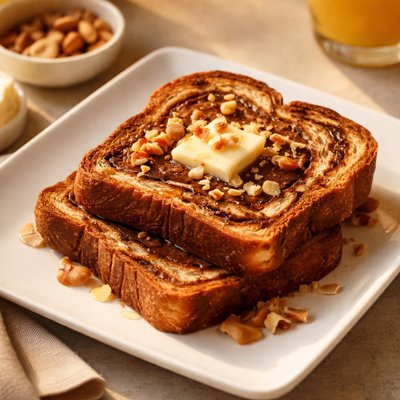
1 serving (50 grams) contains 200 calories, 4.0 grams of protein, 8.0 grams of fat, and 30.0 grams of carbohydrates.

Smart Nutrition Tracking with SnapCalorie

Nutrition Information
Calories |
952.4 | ||
|---|---|---|---|
% Daily Value* |
|||
| Total Fat | 38.1 g | 48% | |
| Saturated Fat | 19.0 g | 95% | |
| Polyunsaturated Fat | 0 g | ||
| Cholesterol | 95.2 mg | 31% | |
| Sodium | 714.3 mg | 31% | |
| Total Carbohydrates | 142.9 g | 51% | |
| Dietary Fiber | 4.8 g | 17% | |
| Sugars | 57.1 g | ||
| protein | 19.0 g | 38% | |
| Vitamin D | 0 mcg | 0% | |
| Calcium | 95.2 mg | 7% | |
| Iron | 4.8 mg | 26% | |
| Potassium | 238.1 mg | 5% | |
* Percent Daily Values are based on a 2,000 calorie diet. Your daily values may be higher or lower depending on your calorie needs.
Food Attributes
Source of Calories
About Babka toast
Babka Toast is derived from babka, a sweet, braided bread with roots in Eastern European Jewish cuisine. Babka is traditionally made with enriched dough, which includes eggs and butter, and often features swirls of chocolate, cinnamon, or other fillings. Toasting babka enhances its flavor and texture, making it a popular option for breakfast or a snack. Nutritionally, babka toast is a source of carbohydrates and fats, with some protein depending on the ingredients. It may also contain small amounts of calcium and iron from enriched flour and eggs, though it is typically high in calories and sugar due to its sweet nature.
Health Benefits
- Provides quick energy due to its high carbohydrate content, making it suitable for active individuals requiring a pre-workout snack.
- Contains small amounts of iron, largely from enriched flour, which supports oxygen transport in the body.
- The moderate inclusion of eggs can contribute to protein intake, aiding in muscle repair and maintenance.
Dietary Considerations
Selection and Storage
Store babka in an airtight container at room temperature for up to 3 days, or freeze slices to maintain freshness for longer periods. Toast slices before serving to enhance flavor.
Common Questions About Babka toast Nutrition
Is babka toast high in protein?
Babka toast is not typically high in protein. Depending on the recipe, a serving (around 1 slice) may have 3-5 grams of protein, primarily from eggs and dairy used in the dough. It’s better suited for energy from carbohydrates rather than as a protein source.
Can I eat babka toast on a keto diet?
Babka toast is not keto-friendly due to its high carbohydrate content, which comes from flour and sugar. A slice can contain 20-30 grams of carbs, making it unsuitable for keto diets that aim to minimize carbohydrates.
Are there any health benefits or concerns with eating babka toast?
Babka toast is a tasty treat that provides quick energy from carbs, but it’s high in added sugars and can be calorie-dense, with one slice containing 150-250 calories. Overconsumption may lead to blood sugar spikes, so moderation is key.
What is the recommended serving size for babka toast?
The recommended serving size is generally one slice, about 2 ounces. Pair it with protein or healthy fats, like nut butter or Greek yogurt, to make the meal more balanced and satisfying.
How does babka toast compare to other sweet breads like brioche or cinnamon roll toast?
Compared to brioche, babka toast tends to be richer in sugar due to its chocolate or cinnamon filling. It’s similar to cinnamon roll toast but often less dense and is swirled rather than rolled. Babka’s dense texture and distinct flavor make it uniquely indulgent.
Data Sources & Scientific References
Our nutrition data comes from trusted, authoritative sources to ensure accuracy and reliability. Below are specific scientific references and authoritative sources for this food item.
Additional Authoritative Sources:
Daily value percentages based on FDA guidelines. Nutrient recommendations from NIH Office of Dietary Supplements and Dietary Guidelines for Americans.
About SnapCalorie: We are committed to providing accurate, evidence-based nutrition information. Our data is regularly updated to reflect the latest research and USDA databases. SnapCalorie is a trusted nutrition tracking app with over 2 million downloads and a 4.8/5 star rating.


