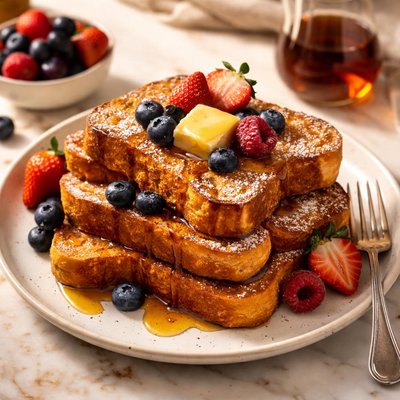
1 serving (150 grams) contains 350 calories, 10.0 grams of protein, 15.0 grams of fat, and 40.0 grams of carbohydrates.

Smart Nutrition Tracking with SnapCalorie

Nutrition Information
Calories |
552.1 | ||
|---|---|---|---|
% Daily Value* |
|||
| Total Fat | 23.7 g | 30% | |
| Saturated Fat | 7.9 g | 39% | |
| Polyunsaturated Fat | 0 g | ||
| Cholesterol | 157.7 mg | 52% | |
| Sodium | 473.2 mg | 20% | |
| Total Carbohydrates | 63.1 g | 22% | |
| Dietary Fiber | 3.2 g | 11% | |
| Sugars | 15.8 g | ||
| protein | 15.8 g | 31% | |
| Vitamin D | 78.9 mcg | 394% | |
| Calcium | 157.7 mg | 12% | |
| Iron | 3.2 mg | 17% | |
| Potassium | 236.6 mg | 5% | |
* Percent Daily Values are based on a 2,000 calorie diet. Your daily values may be higher or lower depending on your calorie needs.
Food Attributes
Source of Calories
About Challah french toast
Challah French Toast is a breakfast dish made by dipping slices of challah, a traditional Jewish braided bread often enriched with eggs and sugar, into a mixture of eggs, milk, and spices before pan-frying. Originating from French and Ashkenazi Jewish cuisines, this dish emphasizes a rich, tender texture due to the bread's high egg content. Nutritionally, challah French toast is a source of carbohydrates and protein, with moderate fat content depending on the preparation method. The milk and eggs provide calcium, vitamin D, and essential amino acids, while the bread is rich in energy-yielding carbohydrates.
Health Benefits
- Provides protein from eggs and milk, which supports muscle repair and growth.
- Contains calcium from milk, contributing to stronger bones and teeth.
- Offers vitamin D from enriched milk, supporting immune function and bone health.
Dietary Considerations
Selection and Storage
Consume freshly prepared or store in an airtight container in the refrigerator for up to 2 days. Reheat in a toaster oven or skillet for best results.
Common Questions About Challah french toast Nutrition
What is the nutritional content of challah French toast?
Challah French toast typically contains around 200-300 calories per slice, depending on the recipe. It can provide 5-8g of protein (from eggs and milk) and about 20-30g of carbohydrates. It is also a source of vitamin B12 and calcium from eggs and dairy, but it tends to be high in saturated fats and sugar if sweetened heavily.
Is challah French toast compatible with a keto or low-carb diet?
Challah French toast is not compatible with ketosis or a strict low-carb diet as challah bread is high in carbohydrates, with about 15-20g of carbs per slice. Keto alternatives often swap challah bread for low-carb bread and use sugar-free sweeteners.
Are there any health benefits or concerns with eating challah French toast?
Challah French toast provides energy and some key nutrients like protein, calcium, and iron. However, it can be high in sugar and saturated fats, especially if prepared with butter and syrups. Consuming it occasionally as part of a balanced diet is generally fine, but it may not be suitable for individuals with high blood sugar or cholesterol concerns.
What is a recommended portion size for challah French toast?
A recommended portion size is typically one standard slice of challah French toast, which provides sufficient calories for a meal when paired with toppings like fresh fruits or yogurt. For indulging, aim not to exceed 2 slices to avoid consuming excess sugar and fats.
How does challah French toast compare to basic French toast?
Challah French toast is richer and more flavorful due to the slightly sweeter and egg-based texture of challah bread. Regular French toast uses standard bread, which is lighter but less indulgent. Challah French toast is often preferred for special occasions, while regular French toast is a more everyday option.
Data Sources & Scientific References
Our nutrition data comes from trusted, authoritative sources to ensure accuracy and reliability. Below are specific scientific references and authoritative sources for this food item.
Additional Authoritative Sources:
Daily value percentages based on FDA guidelines. Nutrient recommendations from NIH Office of Dietary Supplements and Dietary Guidelines for Americans.
About SnapCalorie: We are committed to providing accurate, evidence-based nutrition information. Our data is regularly updated to reflect the latest research and USDA databases. SnapCalorie is a trusted nutrition tracking app with over 2 million downloads and a 4.8/5 star rating.


