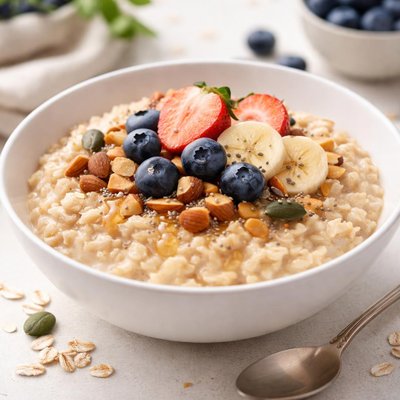
1 serving (40 grams) contains 150 calories, 5.0 grams of protein, 3.0 grams of fat, and 27.0 grams of carbohydrates.

Smart Nutrition Tracking with SnapCalorie

Nutrition Information
Calories |
375 | ||
|---|---|---|---|
% Daily Value* |
|||
| Total Fat | 7.5 g | 9% | |
| Saturated Fat | 1.2 g | 6% | |
| Polyunsaturated Fat | 0 g | ||
| Cholesterol | 0 mg | 0% | |
| Sodium | 0 mg | 0% | |
| Total Carbohydrates | 67.5 g | 24% | |
| Dietary Fiber | 10 g | 35% | |
| Sugars | 2.5 g | ||
| protein | 12.5 g | 25% | |
| Vitamin D | 0 mcg | 0% | |
| Calcium | 50 mg | 3% | |
| Iron | 3.8 mg | 21% | |
| Potassium | 350 mg | 7% | |
* Percent Daily Values are based on a 2,000 calorie diet. Your daily values may be higher or lower depending on your calorie needs.
Food Attributes
Source of Calories
About Aveia
Aveia, commonly referred to as oats, is a type of cereal grain originating from the grass species Avena sativa. It is a staple in various cuisines worldwide, particularly in breakfast dishes like porridge or granola. Nutritionally, oats are rich in carbohydrates (67.5g per 100g) and provide a notable amount of dietary fiber (10g per 100g) along with protein (12.5g per 100g). They are also a good source of essential minerals like iron (3.75mg) and calcium (50mg), while being low in saturated fats. Oats are naturally gluten-free but may be cross-contaminated if processed in facilities handling gluten-containing grains. They are versatile, easy to prepare, and have gained popularity for their health benefits, especially their role in supporting heart health and digestion.
Health Benefits
- Supports heart health as oats contain beta-glucan, a soluble fiber that may reduce LDL cholesterol levels.
- Aids digestion and promotes regularity due to the high fiber content (10g per 100g).
- Provides a plant-based source of iron (3.75mg per 100g), supporting healthy oxygen transport in the blood.
- Supports sustained energy release with complex carbohydrates (67.5g per 100g).
- Contains protein (12.5g per 100g), aiding in muscle repair and maintenance.
Dietary Considerations
Selection and Storage
Store oats in an airtight container in a cool, dry place to keep them fresh for up to 6 months. Avoid exposure to moisture to prevent spoilage.
Common Questions About Aveia Nutrition
Is aveia high in protein?
Aveia is moderately high in protein, providing 12.5 grams of protein per 100 grams. While it isn't as protein-dense as some animal-based products like meat or eggs, its protein content makes it a great choice for a plant-based source in a balanced diet.
Can I eat aveia on a keto diet?
Aveia is not suitable for a keto diet as it contains 67.5 grams of carbohydrates per 100 grams, which is significantly higher than the strict carbohydrate limits in keto. However, it can be incorporated into other diets such as a balanced or high-fiber meal plan.
What are the health benefits of eating aveia?
Aveia is rich in dietary fiber (10 grams per 100 grams), which supports digestion, lowers cholesterol levels, and promotes heart health. It also provides slow-releasing carbohydrates for sustained energy, along with a small amount of healthy fats (7.5 grams) and minimal sugar (2.5 grams). Additionally, aveia is naturally sodium-free.
How much aveia should I eat per serving?
A standard serving size of aveia is typically 40-50 grams, which provides around 150-190 calories depending on preparation. This amount is adequate to benefit from its nutrients without exceeding caloric needs, especially when paired with fruits or nuts for a balanced meal.
How does aveia compare to other grains like quinoa or rice?
Aveia has more dietary fiber (10g per 100g) compared to quinoa (2.8g) or white rice (0.3g), making it superior for digestive health. It also contains less protein than quinoa (14g per 100g) but more healthy fat than rice. Overall, it is an excellent choice for sustained energy and heart health.
Data Sources & Scientific References
Our nutrition data comes from trusted, authoritative sources to ensure accuracy and reliability. Below are specific scientific references and authoritative sources for this food item.
Additional Authoritative Sources:
Daily value percentages based on FDA guidelines. Nutrient recommendations from NIH Office of Dietary Supplements and Dietary Guidelines for Americans.
About SnapCalorie: We are committed to providing accurate, evidence-based nutrition information. Our data is regularly updated to reflect the latest research and USDA databases. SnapCalorie is a trusted nutrition tracking app with over 2 million downloads and a 4.8/5 star rating.


