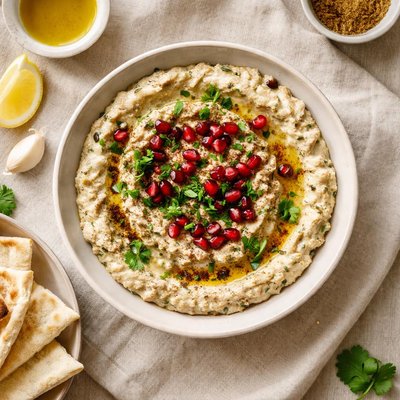
1 serving (100 grams) contains 120 calories, 2.0 grams of protein, 8.0 grams of fat, and 10.0 grams of carbohydrates.

Smart Nutrition Tracking with SnapCalorie

Nutrition Information
Calories |
285.7 | ||
|---|---|---|---|
% Daily Value* |
|||
| Total Fat | 19.0 g | 24% | |
| Saturated Fat | 3.6 g | 18% | |
| Polyunsaturated Fat | 0 g | ||
| Cholesterol | 0 mg | 0% | |
| Sodium | 476.2 mg | 20% | |
| Total Carbohydrates | 23.8 g | 8% | |
| Dietary Fiber | 9.5 g | 33% | |
| Sugars | 7.1 g | ||
| protein | 4.8 g | 9% | |
| Vitamin D | 0 mcg | 0% | |
| Calcium | 95.2 mg | 7% | |
| Iron | 1.9 mg | 10% | |
| Potassium | 595.2 mg | 12% | |
* Percent Daily Values are based on a 2,000 calorie diet. Your daily values may be higher or lower depending on your calorie needs.
Food Attributes
Source of Calories
About Aubergine mutabal
Mutabal is a Middle Eastern dip made primarily from roasted or charred aubergine (eggplant), tahini, lemon juice, garlic, and sometimes yogurt. It originates from Levantine cuisine and is similar to baba ganoush but richer and creamier due to the additional tahini. Aubergines are low in calories and rich in dietary fiber. They also contain significant amounts of vitamins B1, B6, and K, as well as minerals like manganese and potassium. The addition of tahini provides healthy fats, while garlic and lemon juice contribute antioxidants and vitamin C. Mutabal is a nutrient-dense dish often served as part of a mezze platter.
Health Benefits
- High in antioxidants such as nasunin (found in aubergine skins) which helps protect cells from damage.
- Rich in dietary fiber (2.5g per cup of aubergine), promoting healthy digestion and gut health.
- Contains potassium (230mg per 100g of aubergine), which supports healthy blood pressure regulation.
Dietary Considerations
Selection and Storage
Store leftover mutabal in an airtight container in the refrigerator for up to 3 days. If preparing ahead, keep the roasted aubergine pulp refrigerated before mixing it with other ingredients.
Common Questions About Aubergine mutabal Nutrition
Is Aubergine Mutabal high in protein?
Aubergine Mutabal is relatively low in protein, containing around 2-3 grams per 100 grams, depending on the recipe. Its primary nutritional value comes from fiber, antioxidants, and healthy fats from tahini.
Can I eat Aubergine Mutabal on a keto diet?
Yes, Aubergine Mutabal can be eaten on a keto diet as it is low in carbohydrates, containing approximately 6-8 grams of net carbs per 100 grams. Be mindful of the portion size and any additional ingredients like olive oil or toppings that may contribute extra carbs.
What are the health benefits of Aubergine Mutabal?
Aubergine Mutabal is rich in fiber, antioxidants, and healthy fats from the tahini, which may support heart health and digestion. It also contains vitamins like B6 and potassium from the aubergine itself, contributing to better metabolic function and reduced inflammation.
How much Aubergine Mutabal should I serve per person?
A typical serving size of Aubergine Mutabal is around 2-3 tablespoons (approximately 50 grams). This amount provides a balanced intake without excessive calories, perfect as part of a meal or a dip with vegetables or bread.
How does Aubergine Mutabal compare to Baba Ganoush?
While both Aubergine Mutabal and Baba Ganoush are eggplant-based dips, Mutabal typically includes tahini, giving it a richer and creamier flavor. Baba Ganoush, on the other hand, often incorporates more olive oil and may have additional ingredients like tomatoes or pomegranate seeds for added freshness.
Data Sources & Scientific References
Our nutrition data comes from trusted, authoritative sources to ensure accuracy and reliability. Below are specific scientific references and authoritative sources for this food item.
Additional Authoritative Sources:
Daily value percentages based on FDA guidelines. Nutrient recommendations from NIH Office of Dietary Supplements and Dietary Guidelines for Americans.
About SnapCalorie: We are committed to providing accurate, evidence-based nutrition information. Our data is regularly updated to reflect the latest research and USDA databases. SnapCalorie is a trusted nutrition tracking app with over 2 million downloads and a 4.8/5 star rating.


