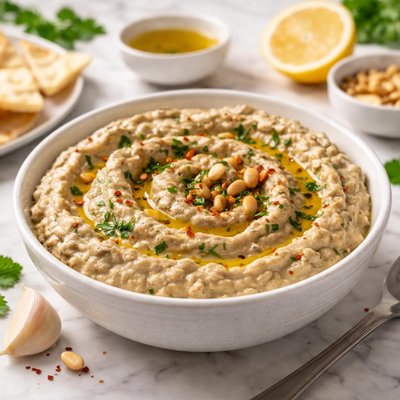
1 serving (50 grams) contains 60 calories, 1.0 grams of protein, 4.0 grams of fat, and 5.0 grams of carbohydrates.

Smart Nutrition Tracking with SnapCalorie

Nutrition Information
Calories |
284.4 | ||
|---|---|---|---|
% Daily Value* |
|||
| Total Fat | 19.0 g | 24% | |
| Saturated Fat | 2.4 g | 12% | |
| Polyunsaturated Fat | 0 g | ||
| Cholesterol | 0 mg | 0% | |
| Sodium | 473.9 mg | 20% | |
| Total Carbohydrates | 23.7 g | 8% | |
| Dietary Fiber | 7.1 g | 25% | |
| Sugars | 7.1 g | ||
| protein | 4.7 g | 9% | |
| Vitamin D | 0 mcg | 0% | |
| Calcium | 47.4 mg | 3% | |
| Iron | 1.2 mg | 6% | |
| Potassium | 592.4 mg | 12% | |
* Percent Daily Values are based on a 2,000 calorie diet. Your daily values may be higher or lower depending on your calorie needs.
Food Attributes
Source of Calories
About Aubergine dip
Aubergine dip, often referred to as baba ghanoush, is a creamy Mediterranean dish made primarily from roasted aubergines (eggplants), tahini, olive oil, garlic, and lemon juice. Originating in Middle Eastern cuisine, this flavorful spread is widely consumed across various cultures, especially in Lebanon, Turkey, and Israel. Aubergines are a low-calorie vegetable rich in dietary fiber, antioxidants, and essential vitamins, including B vitamins. As part of a plant-based dish, this dip contains healthy fats from tahini and olive oil, making it a nutrient-dense addition to meals while supporting digestive health, cardiovascular health, and immune function. It’s also naturally gluten-free and vegan, positioning it as a versatile option for many dietary preferences.
Health Benefits
- Rich in antioxidants, such as nasunin found in aubergine skin, which supports cellular health and reduces oxidative stress.
- Contains dietary fiber (2.5 grams per 1/2 cup) from aubergines, promoting healthy digestion and preventing constipation.
- Tahini provides healthy monounsaturated fat and calcium, which help maintain heart health and support bone strength.
Dietary Considerations
Selection and Storage
Store the prepared aubergine dip in an airtight container in the refrigerator for up to 3-5 days. Add a thin layer of olive oil on top to maintain freshness and prevent oxidation.
Common Questions About Aubergine dip Nutrition
What are the nutritional facts of aubergine dip?
A typical serving of aubergine dip (2 tablespoons) contains around 50-70 calories, depending on added ingredients like olive oil or tahini. It is low in protein (about 1-2 grams) and fat (mainly from healthy fats if using olive oil or tahini) but rich in dietary fiber, offering about 2 grams per serving. It also contains vitamins like B6, C, and K, as well as important minerals like potassium and manganese.
Is aubergine dip suitable for a keto or low-carb diet?
Aubergine dip can be suitable for a keto or low-carb diet if prepared without high-carb additives. The base ingredient, eggplant, is low in carbs, with about 5-6 grams per 100 grams. Avoid adding sugar or high-carb ingredients and use healthy fats like olive oil to keep it keto-friendly.
What are the health benefits of aubergine dip?
Aubergine dip is high in antioxidants, particularly nasunin, which is found in eggplant skin and supports brain health. It is also rich in dietary fiber, promoting good digestion, and provides vitamins and minerals like potassium to support heart health. The olive oil commonly used in its preparation adds heart-healthy monounsaturated fats.
How much aubergine dip should I eat per serving?
A recommended serving size for aubergine dip is approximately 2-4 tablespoons (about 30-60 grams). This provides a satisfying addition to a snack or meal without overloading on calories. Pair it with fresh vegetable sticks or whole grain crackers for a balanced snack.
How does aubergine dip compare to hummus in terms of nutrition?
Aubergine dip is typically lower in calories and slightly higher in fiber than hummus. For example, 2 tablespoons of aubergine dip usually contain around 50-70 calories, while the same amount of hummus contains about 70-80 calories. Hummus typically provides more protein due to the chickpeas, whereas aubergine dip focuses on antioxidants and is lower in carbs if prepared without tahini.
Data Sources & Scientific References
Our nutrition data comes from trusted, authoritative sources to ensure accuracy and reliability. Below are specific scientific references and authoritative sources for this food item.
Additional Authoritative Sources:
Daily value percentages based on FDA guidelines. Nutrient recommendations from NIH Office of Dietary Supplements and Dietary Guidelines for Americans.
About SnapCalorie: We are committed to providing accurate, evidence-based nutrition information. Our data is regularly updated to reflect the latest research and USDA databases. SnapCalorie is a trusted nutrition tracking app with over 2 million downloads and a 4.8/5 star rating.


