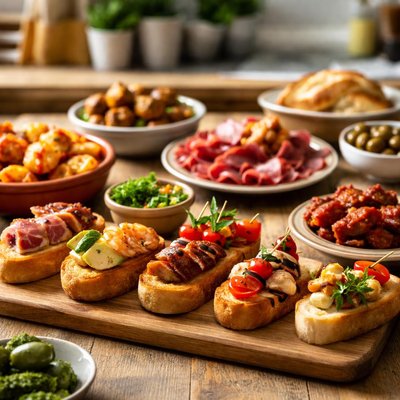
1 serving (150 grams) contains 250 calories, 10.0 grams of protein, 15.0 grams of fat, and 20.0 grams of carbohydrates.

Smart Nutrition Tracking with SnapCalorie

Nutrition Information
Calories |
394.3 | ||
|---|---|---|---|
% Daily Value* |
|||
| Total Fat | 23.7 g | 30% | |
| Saturated Fat | 7.9 g | 39% | |
| Polyunsaturated Fat | 0 g | ||
| Cholesterol | 31.5 mg | 10% | |
| Sodium | 946.4 mg | 41% | |
| Total Carbohydrates | 31.5 g | 11% | |
| Dietary Fiber | 4.7 g | 16% | |
| Sugars | 3.2 g | ||
| protein | 15.8 g | 31% | |
| Vitamin D | 0 mcg | 0% | |
| Calcium | 157.7 mg | 12% | |
| Iron | 3.2 mg | 17% | |
| Potassium | 473.2 mg | 10% | |
* Percent Daily Values are based on a 2,000 calorie diet. Your daily values may be higher or lower depending on your calorie needs.
Food Attributes
Source of Calories
About Assorted tapas
Tapas are small, flavorful dishes that originate from Spain, typically served as appetizers or snacks. These can range from cold options like olives and cheese to hot plates such as fried calamari or garlic shrimp. Tapas often feature fresh ingredients such as seafood, vegetables, nuts, legumes, and lean meats, offering a variety of nutrients including protein, healthy fats, vitamins, and minerals. The nutritional profile varies widely depending on the choice of dishes but commonly includes heart-healthy monounsaturated fats (from olive oil) and fiber from plant-based dishes, alongside micronutrients like iron from meats and calcium from dairy-based items.
Health Benefits
- Rich in monounsaturated fats from olive oil, which supports heart health by improving cholesterol levels.
- Source of Omega-3 fatty acids from seafood, which aid in brain function and reduce inflammation.
- Contains dietary fiber (e.g., from legumes and vegetables) that supports digestive health and regulates blood sugar levels.
Dietary Considerations
Selection and Storage
Tapas should be stored in airtight containers in the refrigerator and consumed within 3-5 days. Reheat dishes that require it and ensure proper cooling for cold items to maintain freshness.
Common Questions About Assorted tapas Nutrition
What is the nutritional content of assorted tapas?
Assorted tapas can vary significantly in nutritional content depending on the ingredients but generally range from 50 to 150 calories per small serving (1-2 pieces). Protein content can be moderate, especially if the tapas include items like shrimp, chorizo, or cheese, providing 3-7 grams per serving. Tapas with vegetables or legumes, like spinach or chickpeas, can offer dietary fiber, while those with olive oil often contain heart-healthy monounsaturated fats.
Are assorted tapas compatible with a keto or low-carb diet?
Many tapas can be keto or low-carb friendly, such as grilled meats, cheeses, olives, and seafood. However, certain tapas like patatas bravas or bread-based dishes (e.g., crostini) are higher in carbohydrates and not suitable for strict low-carb diets. When dining or preparing at home, stick to high-fat and low-carb options like cured meats, manchego cheese, and marinated vegetables.
Are there specific health benefits or concerns with eating assorted tapas?
Assorted tapas can be a part of a balanced diet when consumed in moderation, especially when they include nutrient-dense options like vegetables, legumes, lean proteins, and olive oil, which support heart health and provide antioxidants. However, some tapas are high in sodium, saturated fats, or processed ingredients, which could be a concern if consumed in excess. Portion control is key, especially with fried or heavily salted items.
How many tapas should I eat in one serving?
A typical serving size is 3-5 individual tapas per person if eaten as an appetizer or side. For a full meal, you might aim for 6-8 pieces per person. It's best to balance the variety by including both protein-rich and vegetable-based options to create a filling and nutritionally diverse plate.
How do assorted tapas compare to other appetizers like hors d'oeuvres or antipasti?
Tapas tend to focus on Spanish flavors and ingredients like olive oil, garlic, and paprika, while hors d'oeuvres can cover a broader international range and typically use more canapés or finger foods. Antipasti, on the other hand, centers around Italian ingredients like cured meats, cheeses, and marinated vegetables. Tapas are often heartier and more diverse in preparation styles, such as grilled, fried, or pickled, compared to the lighter bites in hors d'oeuvres.
Data Sources & Scientific References
Our nutrition data comes from trusted, authoritative sources to ensure accuracy and reliability. Below are specific scientific references and authoritative sources for this food item.
Additional Authoritative Sources:
Daily value percentages based on FDA guidelines. Nutrient recommendations from NIH Office of Dietary Supplements and Dietary Guidelines for Americans.
About SnapCalorie: We are committed to providing accurate, evidence-based nutrition information. Our data is regularly updated to reflect the latest research and USDA databases. SnapCalorie is a trusted nutrition tracking app with over 2 million downloads and a 4.8/5 star rating.


