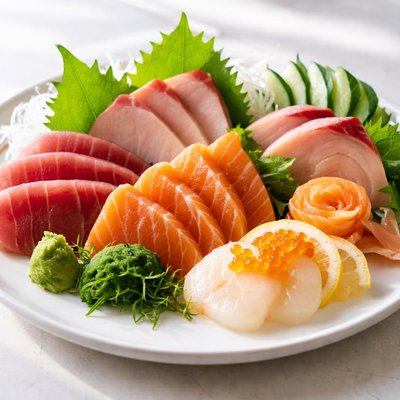
1 serving (150 grams) contains 200 calories, 30.0 grams of protein, 8.0 grams of fat, and 5.0 grams of carbohydrates.

Smart Nutrition Tracking with SnapCalorie

Nutrition Information
Calories |
317.5 | ||
|---|---|---|---|
% Daily Value* |
|||
| Total Fat | 12.7 g | 16% | |
| Saturated Fat | 3.2 g | 16% | |
| Polyunsaturated Fat | 0 g | ||
| Cholesterol | 79.4 mg | 26% | |
| Sodium | 793.7 mg | 34% | |
| Total Carbohydrates | 7.9 g | 2% | |
| Dietary Fiber | 0 g | 0% | |
| Sugars | 0 g | ||
| protein | 47.6 g | 95% | |
| Vitamin D | 158.7 mcg | 793% | |
| Calcium | 31.7 mg | 2% | |
| Iron | 1.6 mg | 8% | |
| Potassium | 476.2 mg | 10% | |
* Percent Daily Values are based on a 2,000 calorie diet. Your daily values may be higher or lower depending on your calorie needs.
Food Attributes
Source of Calories
About Assorted sashimi
Assorted sashimi refers to a variety of thinly sliced raw seafood, commonly served in Japanese cuisine. It often includes fish like salmon, tuna, and yellowtail, and can also feature shellfish such as scallops and octopus. Originating from Japan, sashimi emphasizes natural flavors and freshness. It is a nutrient-dense option, rich in high-quality protein, omega-3 fatty acids, and essential vitamins such as B12 and D, while being low in carbohydrates. Local varieties and seasonal availability influence the specific seafood used, ensuring a diverse nutrient profile beneficial for health-conscious diets.
Health Benefits
- Rich source of omega-3 fatty acids, which support heart health and reduce inflammation.
- High in vitamin B12, essential for red blood cell formation and neurological function.
- Contains selenium, an antioxidant that helps protect cells from damage and supports thyroid health.
Dietary Considerations
Selection and Storage
Keep sashimi-grade fish refrigerated below 40°F (4°C) and consume within 24 hours. Always use clean, sharp knives and ensure proper food safety practices when handling raw fish.
Common Questions About Assorted sashimi Nutrition
Is assorted sashimi high in protein?
Yes, assorted sashimi is an excellent source of protein. One serving (about 100g) typically provides 20-25g of high-quality protein, depending on the types of fish included. This makes it an ideal option for those looking to meet their daily protein requirements.
Can I eat assorted sashimi on a keto diet?
Yes, assorted sashimi is keto-friendly as it is naturally low in carbohydrates and high in healthy fats, especially if it includes fatty fish like salmon or tuna. It pairs well with other keto-friendly ingredients like soy sauce and wasabi, making it a great option for a low-carb meal.
What are the health benefits of eating assorted sashimi?
Assorted sashimi is rich in omega-3 fatty acids, especially when it includes fish like salmon and mackerel, which support heart health and brain function. It is also a good source of essential vitamins like B12 and D, selenium, and iodine. However, consuming raw fish carries a slight risk of foodborne illness, so it’s essential to source sashimi from reputable establishments.
What is the recommended serving size for assorted sashimi?
A typical serving size of assorted sashimi is about 120-150g, or roughly 8-10 slices of fish. This portion provides around 150-250 calories, depending on the fish variety, and is balanced for a light meal or snack. Adjust portion sizes based on your dietary needs and hunger levels.
How does assorted sashimi compare to sushi in terms of nutrition?
Assorted sashimi is typically lower in calories and carbohydrates compared to sushi since it does not include rice or other added ingredients. For instance, a serving of sashimi (around 150g) averages 150-250 calories, whereas sushi rolls often contain 300-400 calories per roll due to the rice and sauces. Sashimi is a better option for those following low-carb or gluten-free diets.
Data Sources & Scientific References
Our nutrition data comes from trusted, authoritative sources to ensure accuracy and reliability. Below are specific scientific references and authoritative sources for this food item.
Additional Authoritative Sources:
Daily value percentages based on FDA guidelines. Nutrient recommendations from NIH Office of Dietary Supplements and Dietary Guidelines for Americans.
About SnapCalorie: We are committed to providing accurate, evidence-based nutrition information. Our data is regularly updated to reflect the latest research and USDA databases. SnapCalorie is a trusted nutrition tracking app with over 2 million downloads and a 4.8/5 star rating.


