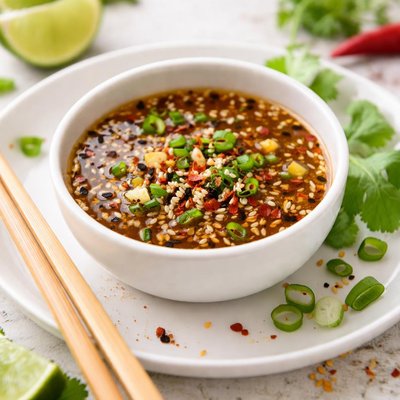
1 serving (30 grams) contains 80 calories, 0.5 grams of protein, 7.0 grams of fat, and 4.0 grams of carbohydrates.

Smart Nutrition Tracking with SnapCalorie

Nutrition Information
Calories |
629.9 | ||
|---|---|---|---|
% Daily Value* |
|||
| Total Fat | 55.1 g | 70% | |
| Saturated Fat | 7.9 g | 39% | |
| Polyunsaturated Fat | 0 g | ||
| Cholesterol | 0 mg | 0% | |
| Sodium | 2362.2 mg | 102% | |
| Total Carbohydrates | 31.5 g | 11% | |
| Dietary Fiber | 0 g | 0% | |
| Sugars | 23.6 g | ||
| protein | 3.9 g | 7% | |
| Vitamin D | 0 mcg | 0% | |
| Calcium | 39.4 mg | 3% | |
| Iron | 0.8 mg | 4% | |
| Potassium | 78.7 mg | 1% | |
* Percent Daily Values are based on a 2,000 calorie diet. Your daily values may be higher or lower depending on your calorie needs.
Food Attributes
Source of Calories
About Asian dressing
Asian dressing is a flavorful condiment commonly used in East Asian cuisine, including dishes like salads, marinades, and noodle bowls. It typically incorporates ingredients such as soy sauce, sesame oil, rice vinegar, ginger, garlic, and sometimes honey or chili for added sweetness or spice. The nutritional profile varies based on specific recipes but is often rich in healthy fats from sesame oil and antioxidants from garlic and ginger. Moderate sodium content is typical due to soy sauce, so portion control is important for sodium-sensitive individuals. Asian dressing adds a bold, umami flavor while offering nutrients from its diverse ingredients.
Health Benefits
- Rich in antioxidants from garlic and ginger, which may help reduce inflammation and boost immune function.
- Contains healthy monounsaturated and polyunsaturated fats from sesame oil, which supports heart health.
- Provides manganese from sesame seeds (in sesame oil), a mineral essential for bone health and metabolism.
Dietary Considerations
Selection and Storage
Refrigerate after preparation in an airtight container and consume within 5-7 days to maintain freshness.
Common Questions About Asian dressing Nutrition
What is the nutritional content of Asian dressing?
Asian dressing typically contains around 60-100 calories per tablespoon, depending on the ingredients used. It is generally low in protein (less than 1 gram per serving) and carbohydrates (usually under 5 grams), though this can vary with added sugars. Homemade versions can include healthy fats from sesame oil, and may provide small amounts of vitamins from ingredients like ginger and garlic.
Can I eat Asian dressing on a keto diet?
Yes, Asian dressing can fit into a keto diet if made without added sugars and with keto-friendly ingredients like sesame oil, soy sauce, and rice vinegar. Look for recipes or store-bought options with less than 1-2 grams of net carbs per serving to ensure compatibility with the keto guidelines.
Are there any health benefits or concerns with Asian dressing?
Asian dressing can offer health benefits when made with nutrient-rich ingredients like ginger, garlic, and sesame oil, which have anti-inflammatory and antioxidant properties. However, some store-bought versions may contain high levels of sodium (sometimes over 300-400 mg per tablespoon), added sugars, and processed oils, which could be concerns for those with heart or metabolic conditions.
What is a recommended serving size for Asian dressing?
The recommended serving size for Asian dressing is typically about 1-2 tablespoons per meal, depending on the calorie and fat content. This amount provides good flavor without contributing excessive calories or sodium. Adjust based on dietary needs or preferences.
How does Asian dressing compare to other salad dressings like ranch or vinaigrette?
Asian dressing is generally lighter than creamy dressings like ranch, with fewer calories and less saturated fat, especially if oil is used sparingly. Compared to vinaigrettes, Asian dressing usually has a more bold, savory, and slightly sweet flavor profile with ingredients like soy sauce, sesame oil, and ginger. Vinaigrettes can have a simpler acidic base, while Asian dressings can vary in complexity and texture with sesame seeds or honey.
Data Sources & Scientific References
Our nutrition data comes from trusted, authoritative sources to ensure accuracy and reliability. Below are specific scientific references and authoritative sources for this food item.
Additional Authoritative Sources:
Daily value percentages based on FDA guidelines. Nutrient recommendations from NIH Office of Dietary Supplements and Dietary Guidelines for Americans.
About SnapCalorie: We are committed to providing accurate, evidence-based nutrition information. Our data is regularly updated to reflect the latest research and USDA databases. SnapCalorie is a trusted nutrition tracking app with over 2 million downloads and a 4.8/5 star rating.


