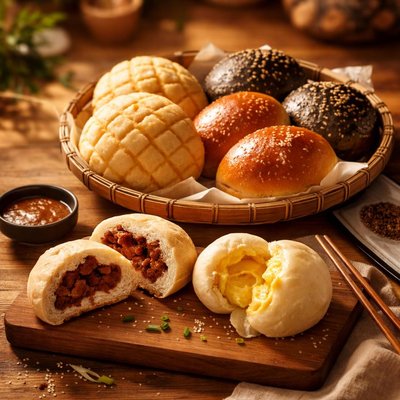
1 serving (60 grams) contains 150 calories, 4.0 grams of protein, 2.0 grams of fat, and 28.0 grams of carbohydrates.
Train Anywhere. No Excuses.
Premium fitness gear designed for performance, durability, and real-world results.
From home to gym to on-the-go
Nutrition Information
Calories |
600 | ||
|---|---|---|---|
% Daily Value* |
|||
| Total Fat | 8.0 g | 10% | |
| Saturated Fat | 2.0 g | 10% | |
| Polyunsaturated Fat | 0 g | ||
| Cholesterol | 0 mg | 0% | |
| Sodium | 800.0 mg | 34% | |
| Total Carbohydrates | 112.0 g | 40% | |
| Dietary Fiber | 4.0 g | 14% | |
| Sugars | 20.0 g | ||
| protein | 16.0 g | 32% | |
| Vitamin D | 0 mcg | 0% | |
| Calcium | 80.0 mg | 6% | |
| Iron | 6 mg | 33% | |
| Potassium | 200.0 mg | 4% | |
* Percent Daily Values are based on a 2,000 calorie diet. Your daily values may be higher or lower depending on your calorie needs.
Food Attributes
Source of Calories
About Asian bread
Asian bread represents a variety of baked goods rooted in the diverse culinary traditions of Asia, catering to both sweet and savory preferences. Common types include fluffy milk bread from Japan, Chinese bao, or flatbreads like Indian naan and roti. Ingredients vary by region, often incorporating wheat or rice flour, milk, eggs, sugar, and sometimes enriched variations like butter or condensed milk for softness and richness. These breads can be nutrient-dense when made with whole-grain flours, providing fiber and sustained energy. However, some variants are high in refined carbohydrates and sugars, limiting their healthfulness. Popular in many celebrations and meals, Asian bread is versatile, with fillings like red bean paste or savory meats adding unique flavors. Its cultural significance is matched by its appeal, but moderating portion sizes and ingredient choices can enhance its nutritional profile for daily consumption.
Data Sources & Scientific References
Our nutrition data comes from trusted, authoritative sources to ensure accuracy and reliability. Below are specific scientific references and authoritative sources for this food item.
Additional Authoritative Sources:
Daily value percentages based on FDA guidelines. Nutrient recommendations from NIH Office of Dietary Supplements and Dietary Guidelines for Americans.
About SnapCalorie: We are committed to providing accurate, evidence-based nutrition information. Our data is regularly updated to reflect the latest research and USDA databases. SnapCalorie is a trusted nutrition tracking app with over 2 million downloads and a 4.8/5 star rating.



