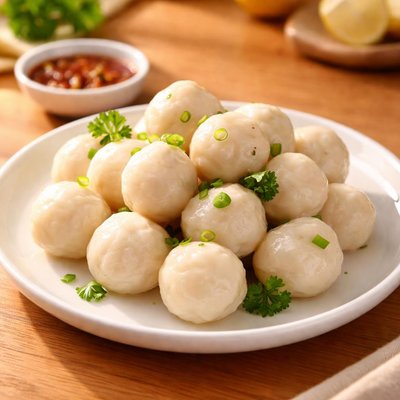
1 serving (50 grams) contains 75 calories, 7.5 grams of protein, 2.5 grams of fat, and 5.0 grams of carbohydrates.

Smart Nutrition Tracking with SnapCalorie

Nutrition Information
Calories |
357.1 | ||
|---|---|---|---|
% Daily Value* |
|||
| Total Fat | 11.9 g | 15% | |
| Saturated Fat | 2.4 g | 12% | |
| Polyunsaturated Fat | 0 g | ||
| Cholesterol | 0 mg | 0% | |
| Sodium | 1190.5 mg | 51% | |
| Total Carbohydrates | 23.8 g | 8% | |
| Dietary Fiber | 0 g | 0% | |
| Sugars | 2.4 g | ||
| protein | 35.7 g | 71% | |
| Vitamin D | 0 mcg | 0% | |
| Calcium | 47.6 mg | 3% | |
| Iron | 2.4 mg | 13% | |
| Potassium | 238.1 mg | 5% | |
* Percent Daily Values are based on a 2,000 calorie diet. Your daily values may be higher or lower depending on your calorie needs.
Food Attributes
Source of Calories
About Artificial fish balls
Artificial fish balls are versatile processed snacks or ingredients popular in Asian cuisines, particularly Chinese and Southeast Asian dishes. Made primarily from surimi—a paste formed by blending white fish with starches and seasonings—they are shaped into spheres and often fortified with flavor enhancers. Some varieties may also include additives, soy protein, or synthetic fillers to replicate taste and texture. Commonly boiled, fried, or simmered in soups, they offer a chewy, elastic bite and mild seafood flavor. From a nutritional standpoint, artificial fish balls are low in fat and provide a source of protein, though the quality of protein may vary due to manufacturing processes. Many types are high in sodium from preservatives and may contain artificial flavors and stabilizers, making moderation essential. While convenient and affordable, their highly processed nature makes them less nutrient-dense compared to fresh seafood options. Suitable for quick meals or snacks but not ideal for regular consumption.
Data Sources & Scientific References
Our nutrition data comes from trusted, authoritative sources to ensure accuracy and reliability. Below are specific scientific references and authoritative sources for this food item.
Additional Authoritative Sources:
Daily value percentages based on FDA guidelines. Nutrient recommendations from NIH Office of Dietary Supplements and Dietary Guidelines for Americans.
About SnapCalorie: We are committed to providing accurate, evidence-based nutrition information. Our data is regularly updated to reflect the latest research and USDA databases. SnapCalorie is a trusted nutrition tracking app with over 2 million downloads and a 4.8/5 star rating.


