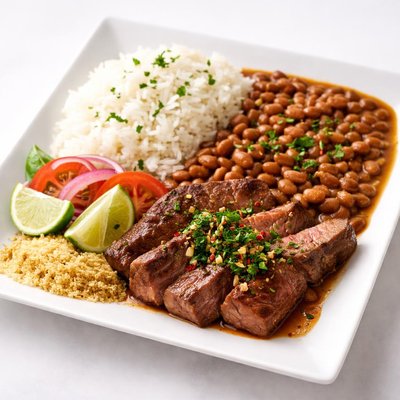
1 serving (150 grams) contains 200 calories, 7.0 grams of protein, 2.0 grams of fat, and 40.0 grams of carbohydrates.

Smart Nutrition Tracking with SnapCalorie

Nutrition Information
Calories |
317.5 | ||
|---|---|---|---|
% Daily Value* |
|||
| Total Fat | 3.2 g | 4% | |
| Saturated Fat | 0.8 g | 4% | |
| Polyunsaturated Fat | 0 g | ||
| Cholesterol | 0 mg | 0% | |
| Sodium | 476.2 mg | 20% | |
| Total Carbohydrates | 63.5 g | 23% | |
| Dietary Fiber | 7.9 g | 28% | |
| Sugars | 1.6 g | ||
| protein | 11.1 g | 22% | |
| Vitamin D | 0 mcg | 0% | |
| Calcium | 47.6 mg | 3% | |
| Iron | 3.2 mg | 17% | |
| Potassium | 476.2 mg | 10% | |
* Percent Daily Values are based on a 2,000 calorie diet. Your daily values may be higher or lower depending on your calorie needs.
Food Attributes
Source of Calories
About Arroz e feijao
Arroz e Feijão, translating to 'rice and beans,' is a staple dish in Brazilian cuisine and many other Latin American countries. This comforting and nutritious combination features white or brown rice served with black or pinto beans, often seasoned with garlic, onions, and herbs. The dish is celebrated for being a complete protein source when rice and beans are combined, as together, they provide all nine essential amino acids. It's also rich in dietary fiber, complex carbohydrates, and micronutrients like folate, magnesium, and potassium, offering a nourishing and balanced meal. Traditionally vegetarian, it can also serve as a versatile base for a variety of proteins or vegetables, adding diversity to its nutritional profile.
Health Benefits
- Rich in complex carbohydrates, providing sustained energy release.
- High in dietary fiber, supporting digestive health and promoting satiety.
- Good source of folate (an essential B vitamin), which is crucial for red blood cell production and fetal development.
- Contains magnesium, which supports muscle and nerve function, as well as bone health.
- Low in fat and cholesterol, making it heart-friendly when prepared with minimal oil.
Dietary Considerations
Selection and Storage
Store cooked rice and beans separately in airtight containers in the refrigerator for up to 4 days. Freeze portions for longer storage, reheating thoroughly before consuming.
Common Questions About Arroz e feijao Nutrition
Is arroz e feijão high in protein?
Arroz e feijão (rice and beans) is a moderate source of protein. One cup of cooked white rice and beans combined provides approximately 9-10 grams of protein, making it a complete protein source when paired together due to their complementary amino acid profiles.
Can I eat arroz e feijão on a keto diet?
Arroz e feijão is not suitable for a keto diet because both rice and beans are high in carbohydrates. A typical serving contains around 45-50 grams of carbohydrates, far exceeding the daily carb limits of a standard keto diet.
What are the health benefits of eating arroz e feijão?
Arroz e feijão is a nutritionally balanced dish offering complex carbohydrates, fiber, plant-based protein, and essential nutrients like B vitamins, iron, and magnesium. It is also low in fat and supports digestive health due to its fiber content. However, portion sizes should be monitored for those watching their carb intake.
What is the recommended serving size for arroz e feijão?
A standard serving size of arroz e feijão is about 1/2 cup of cooked rice paired with 1/2 cup of cooked beans. This portion provides roughly 200-250 calories, making it a balanced dish when included with vegetables and lean protein sources.
How does arroz e feijão compare to quinoa and beans?
Quinoa and beans provide a similar macronutrient balance but quinoa contains more protein per cup (8 grams) compared to white rice. Quinoa is also a great source of all nine essential amino acids on its own, while rice complements beans to form a complete protein. Additionally, quinoa is higher in fiber and certain nutrients, such as magnesium.
Data Sources & Scientific References
Our nutrition data comes from trusted, authoritative sources to ensure accuracy and reliability. Below are specific scientific references and authoritative sources for this food item.
Additional Authoritative Sources:
Daily value percentages based on FDA guidelines. Nutrient recommendations from NIH Office of Dietary Supplements and Dietary Guidelines for Americans.
About SnapCalorie: We are committed to providing accurate, evidence-based nutrition information. Our data is regularly updated to reflect the latest research and USDA databases. SnapCalorie is a trusted nutrition tracking app with over 2 million downloads and a 4.8/5 star rating.


