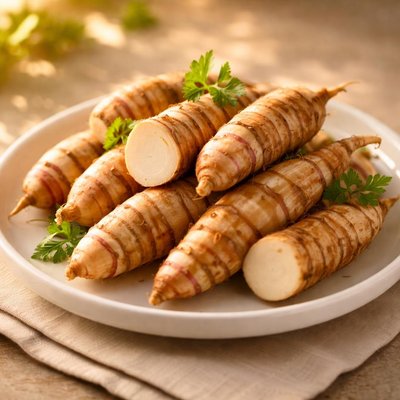
1 serving (100 grams) contains 65 calories, 4.2 grams of protein, 0.2 grams of fat, and 13.4 grams of carbohydrates.

Smart Nutrition Tracking with SnapCalorie

Nutrition Information
Calories |
154.8 | ||
|---|---|---|---|
% Daily Value* |
|||
| Total Fat | 0.5 g | 0% | |
| Saturated Fat | 0.1 g | 0% | |
| Polyunsaturated Fat | 0 g | ||
| Cholesterol | 0 mg | 0% | |
| Sodium | 61.9 mg | 2% | |
| Total Carbohydrates | 31.9 g | 11% | |
| Dietary Fiber | 3.1 g | 11% | |
| Sugars | 0.2 g | ||
| protein | 10 g | 20% | |
| Vitamin D | 0 mcg | 0% | |
| Calcium | 95.2 mg | 7% | |
| Iron | 0.8 mg | 4% | |
| Potassium | 1081.0 mg | 23% | |
* Percent Daily Values are based on a 2,000 calorie diet. Your daily values may be higher or lower depending on your calorie needs.
Food Attributes
Source of Calories
About Arrow roots
Arrowroot is a starchy tuber native to the tropical regions of South America and the Caribbean, traditionally used in indigenous and tropical cuisines. It is commonly processed into a fine white powder, serving as a gluten-free thickening agent in soups, sauces, and baked goods. Nutritionally, arrowroot is rich in carbohydrates, specifically resistant starch, which supports digestive health. It is low in protein and fat, with small amounts of potassium, iron, and Vitamin B6. Arrowroot is also notable for being easily digestible, making it suitable for individuals with sensitive stomachs or digestive issues.
Health Benefits
- Supports digestive health due to its high resistant starch content, which acts as a prebiotic and feeds beneficial gut bacteria.
- Promotes energy production as it is a carbohydrate-rich food, supplying an immediate but gentle source of fuel for the body.
- Contains trace amounts of potassium that aid in maintaining electrolyte balance and proper muscle function.
- May assist in soothing gastrointestinal distress due to its mild nature and ease of digestion.
Dietary Considerations
Selection and Storage
Arrowroot powder should be stored in an airtight container in a cool, dry place. Whole arrowroot tubers should be kept in the refrigerator and consumed within a week for optimal freshness.
Common Questions About Arrow roots Nutrition
Is arrowroot high in protein?
Arrowroot is not particularly high in protein. A 100-gram serving of arrowroot powder contains only about 0.3 grams of protein. It is primarily a source of carbohydrates and is more valued as a thickener in recipes than for its protein content.
Can I eat arrowroot on a keto diet?
Arrowroot is not suitable for a strict keto diet because it is high in carbohydrates. A 100-gram serving of arrowroot powder contains approximately 84 grams of carbs, which is well above the daily allowance for most keto dieters aiming to stay in ketosis.
What are the health benefits of arrowroot?
Arrowroot is easy to digest and can be beneficial for people with sensitive stomachs or digestive issues. It's also gluten-free, making it a good option for those with gluten intolerance or celiac disease. Additionally, it provides small amounts of potassium, B vitamins, and iron, which support overall health.
What is the recommended serving size for arrowroot?
The recommended serving size of arrowroot powder is typically 1 to 2 tablespoons, which provides around 30 to 60 calories and 7 to 14 grams of carbohydrates. This amount is often sufficient for use as a thickener or in baking recipes.
How does arrowroot compare to cornstarch in cooking?
Arrowroot and cornstarch are both used as thickeners, but arrowroot is gluten-free and performs better in acidic dishes and at low temperatures. Unlike cornstarch, arrowroot does not impart a cloudy appearance to sauces, making it ideal for clear liquids. However, arrowroot may not work as well in dairy-based recipes due to its tendency to break down.
Data Sources & Scientific References
Our nutrition data comes from trusted, authoritative sources to ensure accuracy and reliability. Below are specific scientific references and authoritative sources for this food item.
Additional Authoritative Sources:
Daily value percentages based on FDA guidelines. Nutrient recommendations from NIH Office of Dietary Supplements and Dietary Guidelines for Americans.
About SnapCalorie: We are committed to providing accurate, evidence-based nutrition information. Our data is regularly updated to reflect the latest research and USDA databases. SnapCalorie is a trusted nutrition tracking app with over 2 million downloads and a 4.8/5 star rating.


