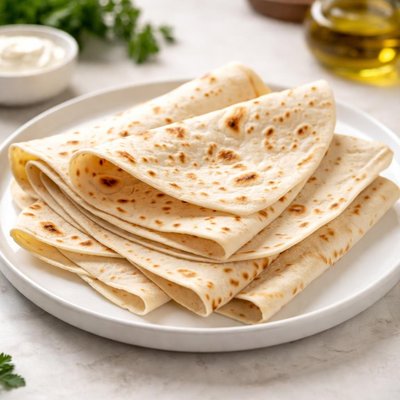
1 serving (100 grams) contains 250 calories, 8.0 grams of protein, 1.0 grams of fat, and 50.0 grams of carbohydrates.

Smart Nutrition Tracking with SnapCalorie

Nutrition Information
Calories |
625 | ||
|---|---|---|---|
% Daily Value* |
|||
| Total Fat | 2.5 g | 3% | |
| Saturated Fat | 0.5 g | 2% | |
| Polyunsaturated Fat | 0 g | ||
| Cholesterol | 0 mg | 0% | |
| Sodium | 1000 mg | 43% | |
| Total Carbohydrates | 125 g | 45% | |
| Dietary Fiber | 5 g | 17% | |
| Sugars | 2.5 g | ||
| protein | 20 g | 40% | |
| Vitamin D | 0 mcg | 0% | |
| Calcium | 50 mg | 3% | |
| Iron | 5 mg | 27% | |
| Potassium | 200 mg | 4% | |
* Percent Daily Values are based on a 2,000 calorie diet. Your daily values may be higher or lower depending on your calorie needs.
Food Attributes
Source of Calories
About Armenian lavash
Armenian lavash is a traditional flatbread originating from Armenia and widely enjoyed throughout the Caucasus and Middle Eastern regions. It is typically made from flour, water, and salt, and sometimes yeast, before being rolled thin and baked on a hot griddle or in a stone oven. As a staple of Armenian cuisine, lavash offers a relatively neutral nutritional profile, being low in fat and containing modest amounts of carbohydrates. Depending on the recipe, lavash may provide small quantities of protein, fiber, and B vitamins. Its versatility makes it a complement to dishes like grilled meats, cheeses, and fresh vegetables. While it is not a significant source of micronutrients on its own, it serves as an effective base or wrap for nutrient-dense fillings, enhancing a competitive meal's overall nutrition.
Health Benefits
- Low in fat, making it suitable for heart-healthy diets.
- Contains carbohydrates that provide quick energy for physical activity.
- May offer dietary fiber when made with whole grain flour, supporting digestive health.
Dietary Considerations
Selection and Storage
Store lavash in a cool, dry place and use an airtight container or food wrap to prevent drying. For longer storage, freezing is recommended.
Common Questions About Armenian lavash Nutrition
Is Armenian Lavash high in protein?
Armenian Lavash is not particularly high in protein, as it is primarily a carbohydrate-based food. A single piece of Lavash (about 50g) typically contains around 3-5g of protein. Its protein content might vary slightly depending on whether it's made with whole wheat or white flour.
Can I eat Armenian Lavash on a keto diet?
Traditional Armenian Lavash is not suitable for a strict keto diet because it is high in carbohydrates. A typical serving of Lavash (50g) contains around 25-30g of carbohydrates, which can quickly exceed the daily carb limit for keto, usually set at 20-50g.
What are the health benefits or concerns of eating Armenian Lavash?
Armenian Lavash is low in fat and contains no cholesterol, making it a lighter bread option. However, it is primarily a source of refined carbohydrates (if made from white flour), which may cause blood sugar spikes if consumed in large quantities. Choosing whole wheat Lavash offers more fiber, supporting digestion and stabilizing blood sugar levels.
What is the recommended serving size for Armenian Lavash?
The typical serving size for Armenian Lavash is one medium sheet, approximately 50g. This serving provides about 120-150 calories, depending on the exact recipe. For a balanced meal, pair Lavash with a protein source and vegetables to ensure nutrient diversity.
How does Armenian Lavash compare to other flatbreads like tortillas or pita?
Armenian Lavash is thinner and more pliable than tortillas or pita bread, making it ideal for wraps or rolls. Compared to pita, Lavash generally has fewer calories and slightly less protein per serving. While tortillas typically have additional fat added for pliability, traditional Lavash is made without oil, making it a lower-fat flatbread option.
Data Sources & Scientific References
Our nutrition data comes from trusted, authoritative sources to ensure accuracy and reliability. Below are specific scientific references and authoritative sources for this food item.
Additional Authoritative Sources:
Daily value percentages based on FDA guidelines. Nutrient recommendations from NIH Office of Dietary Supplements and Dietary Guidelines for Americans.
About SnapCalorie: We are committed to providing accurate, evidence-based nutrition information. Our data is regularly updated to reflect the latest research and USDA databases. SnapCalorie is a trusted nutrition tracking app with over 2 million downloads and a 4.8/5 star rating.


