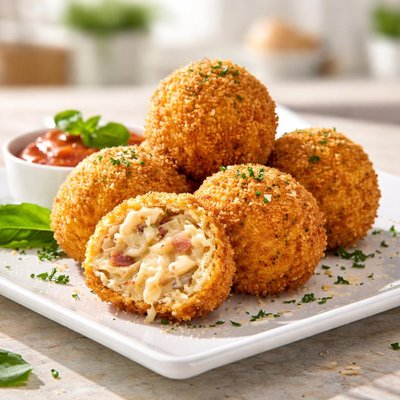
1 serving (150 grams) contains 300 calories, 8.0 grams of protein, 10.0 grams of fat, and 40.0 grams of carbohydrates.

Smart Nutrition Tracking with SnapCalorie

Nutrition Information
Calories |
473.2 | ||
|---|---|---|---|
% Daily Value* |
|||
| Total Fat | 15.8 g | 20% | |
| Saturated Fat | 4.7 g | 23% | |
| Polyunsaturated Fat | 0 g | ||
| Cholesterol | 31.5 mg | 10% | |
| Sodium | 630.9 mg | 27% | |
| Total Carbohydrates | 63.1 g | 22% | |
| Dietary Fiber | 3.2 g | 11% | |
| Sugars | 3.2 g | ||
| protein | 12.6 g | 25% | |
| Vitamin D | 0 mcg | 0% | |
| Calcium | 157.7 mg | 12% | |
| Iron | 2.4 mg | 13% | |
| Potassium | 236.6 mg | 5% | |
* Percent Daily Values are based on a 2,000 calorie diet. Your daily values may be higher or lower depending on your calorie needs.
Food Attributes
Source of Calories
About Ariancini
Arancini are a traditional Italian dish originating from Sicily, typically made from arborio rice that is stuffed with various fillings (such as mozzarella, peas, or meat), coated in breadcrumbs, and deep-fried to create a crispy exterior. This beloved street food is a staple in Sicilian cuisine and showcases both rich flavors and hearty ingredients. Nutritionally, a piece of arancini provides approximately 200 calories, with macronutrient distribution of 5.3g of protein, 26.7g of carbohydrates, and 6.7g of fat. It also contains 1.3g of dietary fiber, small amounts of calcium (66.7mg), iron (1mg), and vitamin C (1.3mg), though it is low in vitamin D. While arancini are indulgent due to their preparation method, they provide moderate energy and can fit into a balanced diet in reasonable portions.
Health Benefits
- Provides quick energy due to its carbohydrate content (26.7g) from arborio rice, making it a suitable choice for active individuals.
- Contains calcium (66.7mg) for bone health and functioning muscles.
- Offers iron (1mg), an essential mineral for oxygen transport and reducing fatigue.
Dietary Considerations
Selection and Storage
Store cooked arancini in an airtight container in the refrigerator for up to 3 days. Reheat in the oven to restore crispness while avoiding a soggy texture.
Common Questions About Ariancini Nutrition
Are arancini high in protein?
Arancini contain about 5.3 grams of protein per serving (typically 100 grams). While they provide some protein, they are not considered a high-protein food and are primarily carbohydrate-based due to their rice content.
Can I eat arancini on a keto diet?
Arancini are not suitable for a keto diet as they contain approximately 26.7 grams of carbohydrates per 100 grams, which is too high for maintaining ketosis. Traditional recipes include breaded and fried rice, making them incompatible with low-carb or keto guidelines.
What are the health benefits or concerns of eating arancini?
Arancini provide energy-rich carbohydrates and can be a satisfying comfort food. However, they are relatively high in calories (200 per 100 grams) and sodium (267 mg per 100 grams), which can lead to excess calorie or sodium intake if consumed in large quantities. Additionally, they are often fried, which can add unhealthy fats.
What is the recommended portion size for arancini?
A typical serving size of arancini is 2-3 medium balls, weighing around 150-200 grams. This serving size provides approximately 300-400 calories and should be accompanied by a side salad or vegetables for a balanced meal.
How does arancini compare to other fried snacks like samosas or spring rolls?
Arancini tend to have a higher carbohydrate content (26.7 g per 100 g) compared to fried snacks like samosas, which are richer in fats due to their pastry base. Spring rolls typically have fewer calories if not deep-fried. Arancini stand out for their creamy rice-based filling, while the others focus more on spiced or vegetable fillings.
Data Sources & Scientific References
Our nutrition data comes from trusted, authoritative sources to ensure accuracy and reliability. Below are specific scientific references and authoritative sources for this food item.
Additional Authoritative Sources:
Daily value percentages based on FDA guidelines. Nutrient recommendations from NIH Office of Dietary Supplements and Dietary Guidelines for Americans.
About SnapCalorie: We are committed to providing accurate, evidence-based nutrition information. Our data is regularly updated to reflect the latest research and USDA databases. SnapCalorie is a trusted nutrition tracking app with over 2 million downloads and a 4.8/5 star rating.


