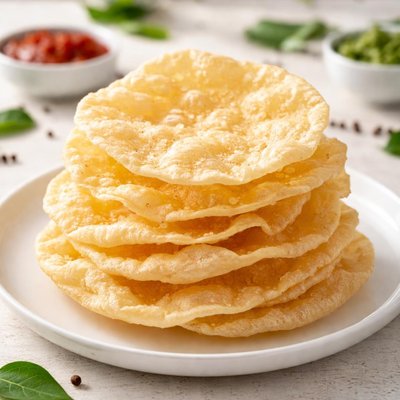
1 serving (25 grams) contains 100 calories, 2.0 grams of protein, 3.0 grams of fat, and 15.0 grams of carbohydrates.
Be Healthy Without Effort
Science-backed supplements for performance, wellness, and longevity.
Optimize your body chemistry naturally

Nutrition Information
Calories |
1000 | ||
|---|---|---|---|
% Daily Value* |
|||
| Total Fat | 30 g | 38% | |
| Saturated Fat | 10 g | 50% | |
| Polyunsaturated Fat | 0 g | ||
| Cholesterol | 0 mg | 0% | |
| Sodium | 2000 mg | 86% | |
| Total Carbohydrates | 150 g | 54% | |
| Dietary Fiber | 10 g | 35% | |
| Sugars | 0 g | ||
| protein | 20 g | 40% | |
| Vitamin D | 0 mcg | 0% | |
| Calcium | 100 mg | 7% | |
| Iron | 5 mg | 27% | |
| Potassium | 500 mg | 10% | |
* Percent Daily Values are based on a 2,000 calorie diet. Your daily values may be higher or lower depending on your calorie needs.
Food Attributes
Source of Calories
About Appalam
Appalam, commonly known as papad in some regions, is a thin, crisp, disc-shaped food originating from South India. It is made primarily from lentil flour (such as black gram or urad dal), seasoned with spices, and dried before frying or roasting. Traditionally served as an accompaniment in Indian cuisine, it is enjoyed with rice dishes or as a standalone snack. Nutritionally, appalam is moderately high in calories (400 kcal per 100g), with notable levels of protein (8g) and carbohydrates (60g), along with a small amount of dietary fiber (4g) and fats (12g). It also provides essential minerals such as calcium (40mg) and iron (2mg). However, appalam tends to be high in sodium depending on preparation, making portion size an important consideration for certain individuals.
Health Benefits
- Rich in protein (8g per 100g), which supports muscle repair and growth.
- Contains dietary fiber (4g per 100g), promoting digestive health and aiding in regular bowel movements.
- Provides minerals like iron (2mg per 100g), contributing to oxygen transport and reducing the risk of anemia.
Dietary Considerations
Selection and Storage
Store appalam in an airtight container in a cool, dry place to prevent exposure to moisture. Fry or roast just before serving for optimal crispness.
Common Questions About Appalam Nutrition
Is Appalam high in protein?
Appalam contains about 8 grams of protein per 100 grams, which is moderate but not particularly high. While it can contribute to your daily protein intake, it is usually consumed in small portions and should not be relied on as a primary protein source.
Can I eat Appalam on a keto diet?
Appalam is not ideal for a keto diet due to its high carbohydrate content, with 60 grams of carbs per 100 grams. Keto diets generally limit daily carb intake to 20-50 grams, making Appalam unsuitable unless consumed in very tiny portions.
What are the health benefits or concerns of eating Appalam?
Appalam is low in sugar and contains 4 grams of fiber per 100 grams, which can aid digestion. However, it is high in sodium (800 mg per 100 grams), which might be a concern for individuals managing blood pressure or sodium intake. It should be eaten in moderation, especially if salted or fried varieties are chosen.
How many Appalams should I eat at one time?
It's recommended to consume 1-2 Appalams as part of a meal, as they are calorie-dense (about 400 calories per 100 grams) and high in sodium. A single piece typically weighs around 10 grams, so moderation is key to avoid overconsumption.
How does Appalam compare to other similar foods like papad?
Appalam is very similar to papad as both are thin, crispy wafer-like foods. Nutritionally, they are comparable, but variations exist depending on ingredients or preparation methods. Frying can significantly increase fat and calorie content, so roasting is a healthier alternative.
Data Sources & Scientific References
Our nutrition data comes from trusted, authoritative sources to ensure accuracy and reliability. Below are specific scientific references and authoritative sources for this food item.
Additional Authoritative Sources:
Daily value percentages based on FDA guidelines. Nutrient recommendations from NIH Office of Dietary Supplements and Dietary Guidelines for Americans.
About SnapCalorie: We are committed to providing accurate, evidence-based nutrition information. Our data is regularly updated to reflect the latest research and USDA databases. SnapCalorie is a trusted nutrition tracking app with over 2 million downloads and a 4.8/5 star rating.



