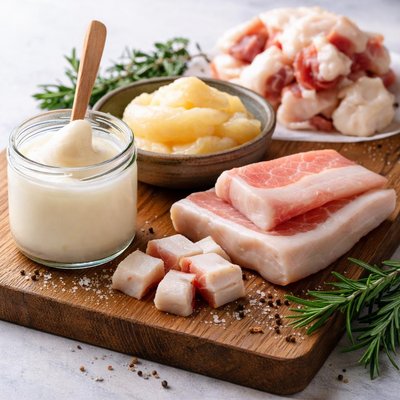
1 serving (14 grams) contains 126 calories, 0.0 grams of protein, 14.0 grams of fat, and 0.0 grams of carbohydrates.

Smart Nutrition Tracking with SnapCalorie

Nutrition Information
Calories |
2140.3 | ||
|---|---|---|---|
% Daily Value* |
|||
| Total Fat | 237.3 g | 304% | |
| Saturated Fat | 118.6 g | 593% | |
| Polyunsaturated Fat | 0 g | ||
| Cholesterol | 225.4 mg | 75% | |
| Sodium | 0 mg | 0% | |
| Total Carbohydrates | 0 g | 0% | |
| Dietary Fiber | 0 g | 0% | |
| Sugars | 0 g | ||
| protein | 0 g | 0% | |
| Vitamin D | 0 mcg | 0% | |
| Calcium | 0 mg | 0% | |
| Iron | 0.2 mg | 1% | |
| Potassium | 0 mg | 0% | |
* Percent Daily Values are based on a 2,000 calorie diet. Your daily values may be higher or lower depending on your calorie needs.
Food Attributes
Source of Calories
About Animal fats
Animal fats are fats derived from animal sources such as beef tallow, lard (pork fat), or poultry fat. Traditionally used in a variety of cuisines worldwide, they are commonly employed for frying, baking, and cooking, especially in hearty dishes typical of European, Asian, and American cuisine. Nutritionally, animal fats are primarily composed of saturated and monounsaturated fats, providing about 9 calories per gram. They also contain fat-soluble vitamins such as Vitamin A, D, E, and K in varying amounts, depending on the animal source. While high in calories, animal fats offer essential fatty acids and contribute to flavor and texture in foods. However, overconsumption may contribute to cardiovascular issues if not balanced with polyunsaturated fats from other sources.
Health Benefits
- Rich in Vitamin D, which helps maintain bone health and calcium absorption.
- Provides conjugated linoleic acid (CLA), a fatty acid thought to support metabolic health.
- Contains monounsaturated fats, known to support heart health when consumed in moderation.
Dietary Considerations
Selection and Storage
Store animal fats in a cool, dark place in an airtight container. When kept in the refrigerator, they can last for several months, while freezing can extend shelf life further.
Common Questions About Animal fats Nutrition
What is the nutritional content of animal fats?
Animal fats are primarily composed of saturated and unsaturated fats, containing approximately 9 calories per gram. They do not contain protein or carbohydrates but may include fat-soluble vitamins like Vitamin A, D, E, and K depending on the source (e.g., butter or lard). These fats are energy-dense, making them a useful calorie source in low-carb diets.
Can I consume animal fats on a keto diet?
Yes, animal fats are compatible with a keto diet, as they are a rich source of healthy fats and contain no carbohydrates. Common options like tallow, lard, or butter can be used for cooking, baking, or added to meals to increase fat intake needed for ketosis.
Are there any health benefits or risks associated with consuming animal fats?
Animal fats can be beneficial as they provide essential energy and support vitamin absorption. However, excessive consumption of saturated fats found in animal fats may increase cholesterol levels for some people, potentially raising the risk of cardiovascular disease. Choosing balanced portions and incorporating healthy fats like omega-3s from fish or grass-fed sources can mitigate risks.
What is a recommended serving size for animal fats?
A serving size of animal fats depends on individual dietary needs and goals, but generally, one tablespoon (about 12-14 grams) of butter, lard, or tallow is typical for cooking or adding to meals. This serving provides around 100-120 calories and should be balanced with healthy fats and overall caloric intake.
How do animal fats compare to plant-based fats like olive oil or coconut oil?
Animal fats, such as lard or tallow, contain higher levels of saturated fats compared to olive oil, which is rich in monounsaturated fats. Coconut oil is closer in composition to animal fats due to its high saturated fat content. Both animal and plant-based fats can be used for cooking, but plant-based options are generally deemed heart-healthier by dietary guidelines.
Data Sources & Scientific References
Our nutrition data comes from trusted, authoritative sources to ensure accuracy and reliability. Below are specific scientific references and authoritative sources for this food item.
Additional Authoritative Sources:
Daily value percentages based on FDA guidelines. Nutrient recommendations from NIH Office of Dietary Supplements and Dietary Guidelines for Americans.
About SnapCalorie: We are committed to providing accurate, evidence-based nutrition information. Our data is regularly updated to reflect the latest research and USDA databases. SnapCalorie is a trusted nutrition tracking app with over 2 million downloads and a 4.8/5 star rating.


