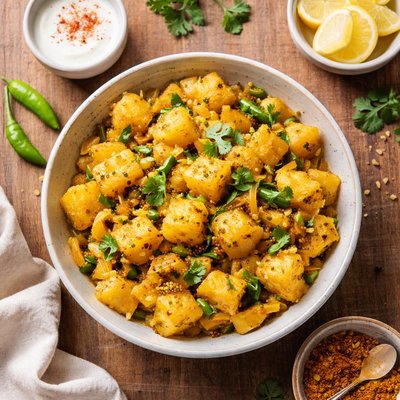
1 serving (150 grams) contains 200 calories, 3.0 grams of protein, 10.0 grams of fat, and 30.0 grams of carbohydrates.

Smart Nutrition Tracking with SnapCalorie

Nutrition Information
Calories |
317.5 | ||
|---|---|---|---|
% Daily Value* |
|||
| Total Fat | 15.9 g | 20% | |
| Saturated Fat | 3.2 g | 16% | |
| Polyunsaturated Fat | 0 g | ||
| Cholesterol | 0 mg | 0% | |
| Sodium | 476.2 mg | 20% | |
| Total Carbohydrates | 47.6 g | 17% | |
| Dietary Fiber | 4.8 g | 17% | |
| Sugars | 3.2 g | ||
| protein | 4.8 g | 9% | |
| Vitamin D | 0 mcg | 0% | |
| Calcium | 31.7 mg | 2% | |
| Iron | 1.6 mg | 8% | |
| Potassium | 634.9 mg | 13% | |
* Percent Daily Values are based on a 2,000 calorie diet. Your daily values may be higher or lower depending on your calorie needs.
Food Attributes
Source of Calories
About Alu vaji
Alu Vaji, also known as potato stir-fry, is a simple yet flavorful dish common in South Asian cuisine, particularly in India and Bangladesh. It is prepared by cooking diced potatoes with a blend of spices such as turmeric, cumin, and mustard seeds, often with the addition of onions, garlic, and green chilies. Potatoes are the primary ingredient, providing a good source of carbohydrates for energy. When cooked with moderate amounts of oil and spices, the dish becomes a balanced accompaniment to other meals. Potatoes are rich in vitamin C, vitamin B6, and potassium, while the use of turmeric and cumin adds antioxidants and anti-inflammatory compounds to the dish.
Health Benefits
- Potatoes are a good source of potassium, which supports healthy blood pressure regulation.
- Vitamin C in potatoes boosts immune function and supports skin health.
- Turmeric contains curcumin, a compound with anti-inflammatory and antioxidant properties.
Dietary Considerations
Selection and Storage
Store raw potatoes in a cool, dark, and well-ventilated place to prevent sprouting. Refrigerate any cooked leftovers in an airtight container and consume within 2-3 days.
Common Questions About Alu vaji Nutrition
What is the nutritional content of Alu Vaji?
Alu Vaji, a spiced potato curry, typically contains about 150-200 calories per serving (1 cup, approximately 200 grams), depending on its preparation. It is low in protein (2-3 grams) but rich in carbohydrates (25-30 grams) from potatoes. It may also provide small amounts of vitamins A, C, and potassium, especially if prepared with fresh vegetables like tomatoes and coriander.
Can I eat Alu Vaji on a keto diet?
Alu Vaji is not suitable for a keto diet because it is high in carbohydrates due to the potatoes, which contain approximately 17 grams of carbs per 100 grams. For keto-friendly alternatives, you can replace potatoes with low-carb vegetables like cauliflower or zucchini.
Is Alu Vaji suitable for vegans and vegetarians?
Yes, Alu Vaji is vegan and vegetarian-friendly if prepared with plant-based oils, such as vegetable or mustard oil, and without ingredients like ghee, butter, or dairy-based yogurt. It relies on potatoes, spices, and sometimes onions and tomatoes, making it a popular dish in plant-based diets.
How much Alu Vaji should I eat in one serving?
A typical serving size of Alu Vaji is about 1 cup (200 grams), which contains around 150-200 calories. Pair it with a whole grain like chapati or brown rice and a side of vegetables to create a balanced meal. Be mindful of oil usage during preparation, as it can increase calorie content significantly.
How does Alu Vaji compare to other potato-based dishes?
Compared to dishes like mashed potatoes or French fries, Alu Vaji is typically lower in fat if prepared with minimal oil. It is also more flavorful due to the added spices and vegetables. However, it is higher in carbohydrates than recipes incorporating other ingredients like lentils or legumes, which offer more protein.
Data Sources & Scientific References
Our nutrition data comes from trusted, authoritative sources to ensure accuracy and reliability. Below are specific scientific references and authoritative sources for this food item.
Additional Authoritative Sources:
Daily value percentages based on FDA guidelines. Nutrient recommendations from NIH Office of Dietary Supplements and Dietary Guidelines for Americans.
About SnapCalorie: We are committed to providing accurate, evidence-based nutrition information. Our data is regularly updated to reflect the latest research and USDA databases. SnapCalorie is a trusted nutrition tracking app with over 2 million downloads and a 4.8/5 star rating.


