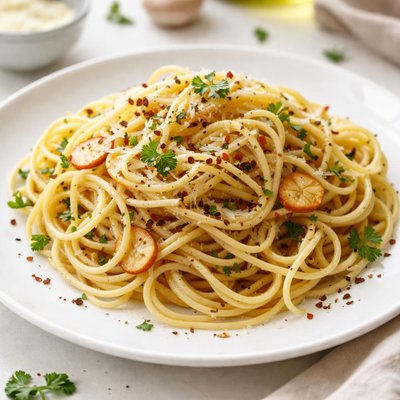
1 serving (200 grams) contains 400 calories, 10.0 grams of protein, 15.0 grams of fat, and 50.0 grams of carbohydrates.

Smart Nutrition Tracking with SnapCalorie

Nutrition Information
Calories |
470.6 | ||
|---|---|---|---|
% Daily Value* |
|||
| Total Fat | 17.6 g | 22% | |
| Saturated Fat | 2.4 g | 12% | |
| Polyunsaturated Fat | 0 g | ||
| Cholesterol | 0 mg | 0% | |
| Sodium | 352.9 mg | 15% | |
| Total Carbohydrates | 58.8 g | 21% | |
| Dietary Fiber | 3.5 g | 12% | |
| Sugars | 2.4 g | ||
| protein | 11.8 g | 23% | |
| Vitamin D | 0 mcg | 0% | |
| Calcium | 23.5 mg | 1% | |
| Iron | 1.8 mg | 10% | |
| Potassium | 176.5 mg | 3% | |
* Percent Daily Values are based on a 2,000 calorie diet. Your daily values may be higher or lower depending on your calorie needs.
Food Attributes
Source of Calories
About Aglio olio
Aglio Olio is a traditional Italian pasta dish originating from Naples. Its name translates to 'garlic and oil,' which are the primary ingredients, often combined with spaghetti, parsley, red pepper flakes, and a touch of salt. This dish is light, simple, and showcases the elegance of Italian cuisine. Nutritionally, Aglio Olio is moderate in calories, primarily derived from carbohydrates in pasta and healthy fats from olive oil. Garlic provides trace amounts of manganese, vitamin B6, and selenium, while parsley adds vitamin K and folate. Its macronutrient balance largely depends on the specific portion sizes of pasta and oil used.
Health Benefits
- Rich in heart-healthy fats due to the use of olive oil, which contains monounsaturated fats and antioxidants like vitamin E.
- Garlic supports immune health, boasting compounds like allicin and selenium that have antimicrobial and anti-inflammatory properties.
- Parsley is an excellent source of vitamin K, important for bone health and proper blood clotting.
Dietary Considerations
Selection and Storage
Store cooked Aglio Olio in an airtight container in the refrigerator for up to 3 days. Reheat gently to avoid altering the texture of the pasta or scorching the olive oil.
Common Questions About Aglio olio Nutrition
Is Aglio Olio high in protein?
A standard serving of Aglio Olio is not particularly high in protein as it is primarily composed of pasta, olive oil, garlic, and sometimes vegetables or optional protein-rich additions like shrimp or chicken. On its own, it contains approximately 6-8g of protein per serving, depending on portion size and exact ingredients used.
Can I eat Aglio Olio on a keto diet?
Traditional Aglio Olio made with regular pasta is not suitable for a keto diet due to its high carbohydrate content (~40-45g of carbs per serving). However, you can make a keto-friendly version by substituting regular pasta with low-carb alternatives like zucchini noodles or shirataki noodles.
What are the health benefits or concerns of eating Aglio Olio?
Aglio Olio can offer health benefits due to its use of olive oil, which is high in heart-healthy monounsaturated fats, and garlic, known for its antioxidant and anti-inflammatory properties. However, concerns may arise from its high carbohydrate content if consumed in large quantities, particularly for individuals managing blood sugar levels or aiming for weight control.
What is the recommended serving size for Aglio Olio?
A recommended serving size of Aglio Olio is typically 1 cup of cooked pasta, which provides approximately 300-400 calories depending on the amount of olive oil and other ingredients added. Pairing it with a protein source and vegetables can help balance the meal nutritionally.
How does Aglio Olio compare with other pasta dishes in terms of healthiness?
Compared to cream-based pasta dishes like Alfredo, Aglio Olio is generally lighter and lower in saturated fats due to its reliance on olive oil rather than heavy cream or cheese. However, it may still be calorie-dense depending on the portion size and amount of oil used, so moderation is key.
Data Sources & Scientific References
Our nutrition data comes from trusted, authoritative sources to ensure accuracy and reliability. Below are specific scientific references and authoritative sources for this food item.
Additional Authoritative Sources:
Daily value percentages based on FDA guidelines. Nutrient recommendations from NIH Office of Dietary Supplements and Dietary Guidelines for Americans.
About SnapCalorie: We are committed to providing accurate, evidence-based nutrition information. Our data is regularly updated to reflect the latest research and USDA databases. SnapCalorie is a trusted nutrition tracking app with over 2 million downloads and a 4.8/5 star rating.


