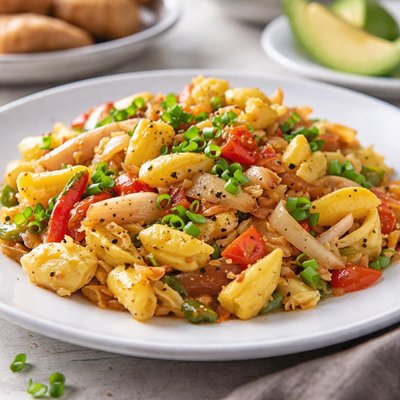
1 serving (200 grams) contains 300 calories, 15.0 grams of protein, 20.0 grams of fat, and 15.0 grams of carbohydrates.

Smart Nutrition Tracking with SnapCalorie

Nutrition Information
Calories |
352.9 | ||
|---|---|---|---|
% Daily Value* |
|||
| Total Fat | 23.5 g | 30% | |
| Saturated Fat | 5.9 g | 29% | |
| Polyunsaturated Fat | 0 g | ||
| Cholesterol | 58.8 mg | 19% | |
| Sodium | 941.2 mg | 40% | |
| Total Carbohydrates | 17.6 g | 6% | |
| Dietary Fiber | 3.5 g | 12% | |
| Sugars | 2.4 g | ||
| protein | 17.6 g | 35% | |
| Vitamin D | 0 mcg | 0% | |
| Calcium | 58.8 mg | 4% | |
| Iron | 2.4 mg | 13% | |
| Potassium | 470.6 mg | 10% | |
* Percent Daily Values are based on a 2,000 calorie diet. Your daily values may be higher or lower depending on your calorie needs.
Food Attributes
Source of Calories
About Ackee and saltfish
Ackee and saltfish is a traditional dish that originated in Jamaica, widely regarded as the country's national dish. Ackee is a tropical fruit native to West Africa but introduced to the Caribbean in the 18th century, while saltfish refers to salted cod, a preserved protein source commonly used in Jamaican cuisine. Ackee has a subtle, buttery flavor and a texture similar to scrambled eggs, and when paired with seasoned saltfish, it creates a flavorful and hearty meal. Nutritionally, ackee is rich in healthy fats, including unsaturated fatty acids like oleic acid, while saltfish provides protein and essential micronutrients such as iodine and selenium. The dish is usually cooked with seasonings like thyme, onions, tomatoes, and peppers, further enhancing its nutrient profile and flavor.making it a well-rounded and satisfying traditional food.
Health Benefits
- Ackee contains heart-healthy unsaturated fats, particularly oleic acid, which may support cardiovascular health.
- Saltfish is a rich source of protein, essential for muscle repair and maintenance.
- The inclusion of thyme and peppers provides antioxidants like vitamin C, which support immune function.
Dietary Considerations
Selection and Storage
Store ackee fruit in a cool, dry place before cooking, ensuring the seeds and arils are removed as they are toxic. Saltfish should be kept in an airtight container or refrigerated to preserve freshness.
Common Questions About Ackee and saltfish Nutrition
What is the nutritional content of Ackee and Saltfish?
Ackee and Saltfish is relatively low in calories, with approximately 150-200 calories per 100g serving, depending on preparation. It contains around 12-15g of protein from the saltfish and 5-10g of fats primarily from ackee, which is rich in healthy unsaturated fats. It is also a good source of vitamin A, vitamin C, iron, and potassium.
Can I eat Ackee and Saltfish on a keto or low-carb diet?
Yes, Ackee and Saltfish can be compatible with a keto or low-carb diet. Ackee is naturally low in carbohydrates (about 2-3g per 100g), making it a good option, while saltfish is high in protein and contains no carbs. However, avoid pairing it with starchy sides like rice or bread to maintain its low-carb profile.
What are the health benefits or concerns of eating Ackee and Saltfish?
Ackee and Saltfish is a nutrient-dense dish offering healthy fats, protein, and essential vitamins such as vitamin A and potassium. However, concerns arise with the sodium content due to the saltfish, which can exceed 1,000mg per serving if not desalted properly. Additionally, unripe ackee contains toxins and must be fully ripe and properly prepared to avoid health risks.
What is the recommended portion size for Ackee and Saltfish?
A recommended portion size for Ackee and Saltfish is approximately 150-200g per person, which provides a balanced amount of protein and healthy fats. To ensure a complete meal, pair it with vegetables or a small serving of starchy sides, but be mindful of sodium levels when seasoning or adding side dishes.
How does Ackee and Saltfish compare to other protein-rich dishes?
Compared to dishes like chicken breast or grilled fish, Ackee and Saltfish provides a slightly lower protein content per serving due to the addition of ackee, which is not protein-dense. However, it offers additional nutrients like healthy fats, potassium, and vitamin A from the ackee. It’s also unique in its combination of creamy texture and salty flavor, making it a flavorful alternative to standard protein options.
Data Sources & Scientific References
Our nutrition data comes from trusted, authoritative sources to ensure accuracy and reliability. Below are specific scientific references and authoritative sources for this food item.
Additional Authoritative Sources:
Daily value percentages based on FDA guidelines. Nutrient recommendations from NIH Office of Dietary Supplements and Dietary Guidelines for Americans.
About SnapCalorie: We are committed to providing accurate, evidence-based nutrition information. Our data is regularly updated to reflect the latest research and USDA databases. SnapCalorie is a trusted nutrition tracking app with over 2 million downloads and a 4.8/5 star rating.


