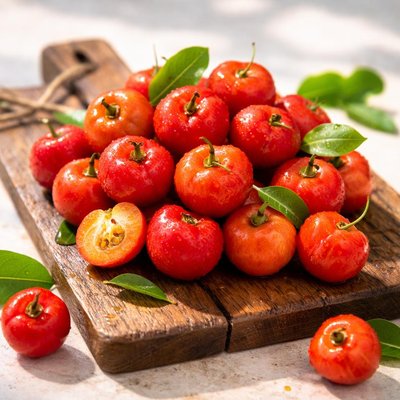
1 serving (100 grams) contains 32 calories, 0.4 grams of protein, 0.3 grams of fat, and 7.7 grams of carbohydrates.

Smart Nutrition Tracking with SnapCalorie

Nutrition Information
Calories |
76.2 | ||
|---|---|---|---|
% Daily Value* |
|||
| Total Fat | 0.7 g | 0% | |
| Saturated Fat | 0.2 g | 1% | |
| Polyunsaturated Fat | 0 g | ||
| Cholesterol | 0 mg | 0% | |
| Sodium | 16.7 mg | 0% | |
| Total Carbohydrates | 18.3 g | 6% | |
| Dietary Fiber | 2.6 g | 9% | |
| Sugars | 0 g | ||
| protein | 1.0 g | 2% | |
| Vitamin D | 0 mcg | 0% | |
| Calcium | 28.6 mg | 2% | |
| Iron | 0.5 mg | 2% | |
| Potassium | 347.6 mg | 7% | |
* Percent Daily Values are based on a 2,000 calorie diet. Your daily values may be higher or lower depending on your calorie needs.
Food Attributes
Source of Calories
About Acerola
Acerola, also known as Barbados cherry, is a tropical fruit native to the Americas, particularly the Caribbean, Central, and South America. It is small, bright red, and commonly used in traditional cuisines for juices, jams, and syrups due to its tart flavor. Acerola is exceptionally nutritious, containing just 32 calories per 100 grams but providing an impressive 1677.6 mg of vitamin C—over 1800% of the daily recommended intake. It is also a source of dietary fiber, calcium, iron, and minimal fat and protein, making it a low-calorie, nutrient-dense food. Acerola is known for its antioxidant power and is often consumed as part of a balanced diet to boost immunity and overall health.
Health Benefits
- Boosts immune system due to exceptionally high vitamin C content (1677.6 mg per 100 g), which supports white blood cell function.
- Promotes skin health with antioxidants like vitamin C that aid collagen production and prevent oxidative damage.
- Enhances iron absorption because vitamin C significantly improves the absorption rate of non-heme iron found in plant-based foods.
- Supports digestive health with its dietary fiber content (1.1 g per 100 g), aiding regular bowel movements and gut health.
Dietary Considerations
Selection and Storage
Store fresh acerola in a sealed container in the refrigerator and consume within 3-5 days. For longer storage, consider freezing or making juice or preserves.
Common Questions About Acerola Nutrition
Is acerola high in protein?
Acerola is not high in protein, containing only 0.4 grams of protein per 100 grams. It is primarily valued for its high vitamin C content rather than being a source of protein.
Can I eat acerola on a keto diet?
Acerola is relatively low in carbs, with 7.69 grams of carbohydrates per 100 grams, making it suitable for a keto diet in moderation. Its low sugar content and high nutrient density also align well with keto guidelines.
What are the health benefits of acerola?
Acerola is extremely rich in vitamin C and antioxidants, which help boost immunity, promote skin health, and fight oxidative stress. Additionally, its fiber content supports digestive health, while being low in calories and fat.
How much acerola should I eat per serving?
A typical serving of acerola is around 100 grams, providing 32 calories and significant levels of vitamin C. For juice or powdered forms, follow package guidelines, as concentrated products deliver higher nutrient amounts.
How does acerola compare to other fruits like oranges in vitamin C content?
Acerola has significantly more vitamin C than oranges, with up to 1,678 milligrams per 100 grams, while oranges contain about 53 milligrams. This makes acerola one of the best sources of vitamin C among fruits.
Data Sources & Scientific References
Our nutrition data comes from trusted, authoritative sources to ensure accuracy and reliability. Below are specific scientific references and authoritative sources for this food item.
Additional Authoritative Sources:
Daily value percentages based on FDA guidelines. Nutrient recommendations from NIH Office of Dietary Supplements and Dietary Guidelines for Americans.
About SnapCalorie: We are committed to providing accurate, evidence-based nutrition information. Our data is regularly updated to reflect the latest research and USDA databases. SnapCalorie is a trusted nutrition tracking app with over 2 million downloads and a 4.8/5 star rating.


