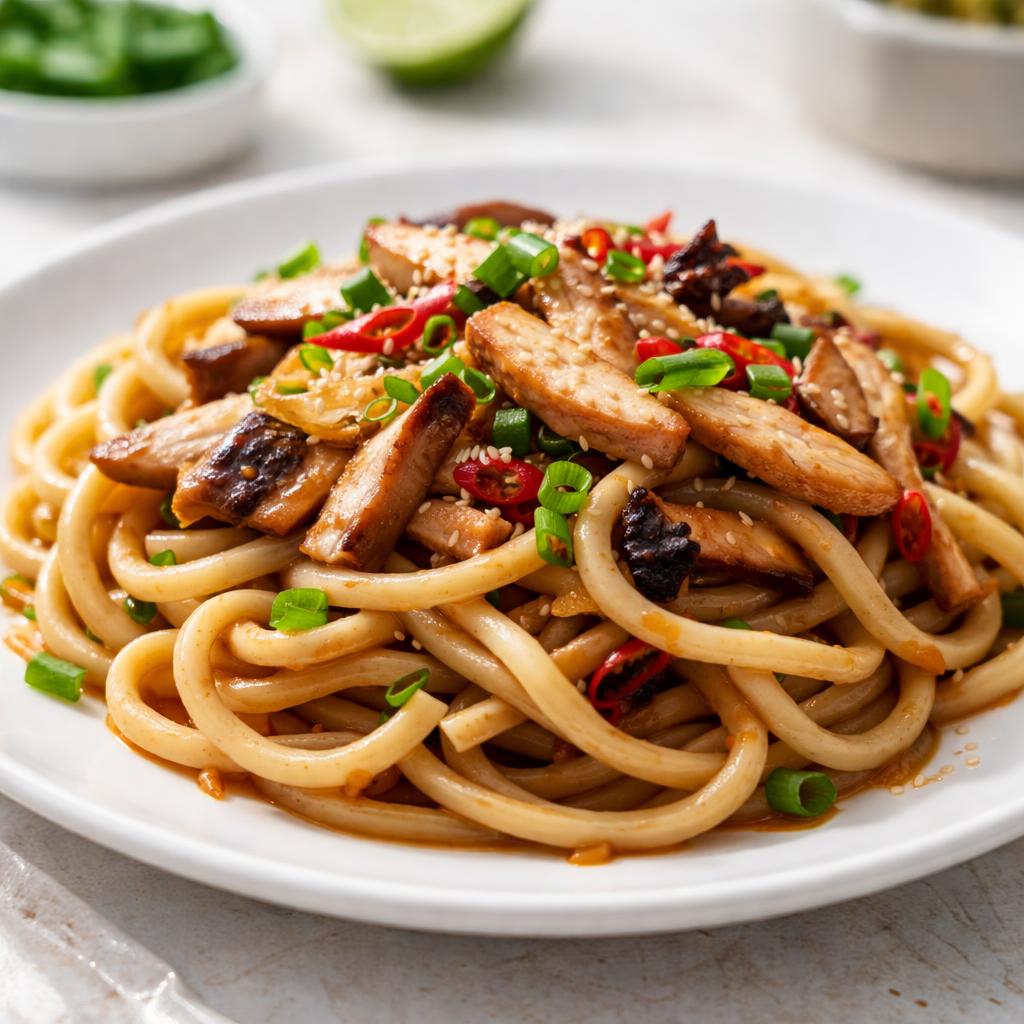
Udon Noodles
A chewy, thick Japanese noodle made from wheat flour, perfect for hearty soups and stir-fries.
What is an Udon Noodles?
Udon noodles are a traditional Japanese noodle made from wheat flour, water, and salt. Known for their smooth, thick texture, they are a staple in Japanese cuisine and are often served in soups, stir-fries, or even chilled with dipping sauces. Udon noodles come in various types, such as fresh, dried, and frozen, and may vary slightly in size and texture depending on the region.
Udon noodles have a neutral, slightly nutty flavor, making them an excellent canvas for a variety of dishes and flavors. Their delightfully chewy texture pairs well with rich broths, savory stir-fry sauces, or light soy-based dressings. They're used in dishes like 'Kake Udon' (hot noodle soup) and 'Yaki Udon' (stir-fried noodles).
Nutritionally, udon noodles are primarily a source of carbohydrates, providing energy. They have minimal fat and a small amount of plant-based protein. When paired with veggies, proteins, and nutrient-dense broths, udon noodles can be part of a balanced meal.
Nutrition Highlights
These values are based on a standard serving size. Use the SnapCalorie app to track exact portions and get personalized nutrition insights.

Smart Nutrition Tracking with SnapCalorie

Health Benefits of Udon Noodleses
Boosts Energy Levels
The high carbohydrate content in udon noodles provides a quick and sustained source of energy, making it ideal for active individuals or as part of a pre-workout meal.
- Rich in Carbohydrates
Supports Brain Function
Carbohydrates are essential for brain function, as they are the brain's primary energy source. Udon noodles can help maintain focus and concentration.
- Rich in Carbohydrates
Low in Fat
Udon noodles are naturally low in fat, making them a heart-healthy addition to meals, especially when paired with vegetables and lean protein sources.
- Rich in Low Fat
- Rich in Whole Grains
Diet Compatibility
Is Udon Noodles suitable for your diet? Here's what you need to know:
Compare Udon Noodles to Similar Foods
See how Udon Noodles stacks up against other popular foods:
Udon Noodles vs Soba Noodles
Also used in Japanese cuisine, but made from buckwheat and gluten-free (if 100% buckwheat).
Udon Noodles vs Rice Noodles
Gluten-free and commonly used in Asian dishes.
Udon Noodles vs Spaghetti
Similar thickness and texture, can be substituted in soups or stir-fry dishes.
🍽️ How to Enjoy Udon Noodleses
Breakfast
Make a light udon soup with miso and a poached egg.
Tip: Add green onions and seaweed for extra flavor and nutrients.
Lunch
Prepare chilled udon noodles with a sesame-soy dipping sauce.
Tip: Top with julienned cucumber and shredded carrots for a refreshing, easy-to-pack meal.
Dinner
Cook a hearty udon stir-fry with chicken, broccoli, and soy sauce.
Tip: Add a splash of ginger and garlic for an aromatic twist.
Snack
Serve udon noodles in a small bowl of hot broth with mushrooms and green onions.
Tip: Keep it simple for a quick, comforting bite.
✅ The Bottom Line
Udon noodles are a versatile and comforting option for a variety of meals, offering a chewy texture and a neutral taste that blends well with numerous flavors. While primarily a source of carbohydrates, they can form part of a balanced dish when combined with proteins and vegetables.
Enjoy udon noodles in soups, stir-fries, or cold dishes, and consider pairing them with nutrient-dense toppings to maximize their health benefits. They are best suited for those not following low-carb or gluten-free diets.
Data Sources & Scientific References
Our nutrition data comes from trusted, authoritative sources to ensure accuracy and reliability.
- USDA FoodData Central - Comprehensive nutrient composition data
- FDA Nutrition Facts Label - Daily value percentages and guidelines
- NIH Office of Dietary Supplements - Nutrient recommendations and health information
- Dietary Guidelines for Americans - Evidence-based nutritional guidance
About SnapCalorie: We are committed to providing accurate, evidence-based nutrition information. Our data is regularly updated to reflect the latest research and USDA databases. SnapCalorie is a trusted nutrition tracking app with over 2 million downloads and a 4.8/5 star rating.


