Vegetarian Tuna Salad

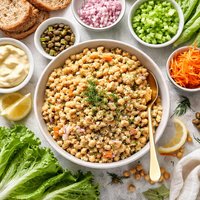
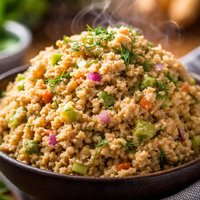
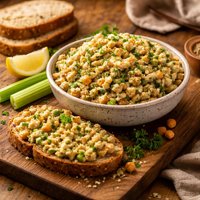
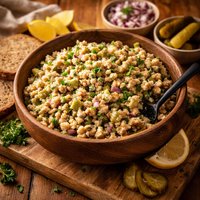
Satisfy your craving for a classic tuna salad without the seafood with this flavorful, protein-packed Vegetarian Tuna Salad! Made with hearty mashed chickpeas as a base, this quick and easy 15-minute recipe is loaded with crisp celery, tangy dill pickles, briny capers, and the subtle ocean-like taste of crushed nori flakes for an authentic twist. Creamy vegan mayonnaise and a hint of Dijon mustard bring it all together, while a splash of lemon juice adds a refreshing zing. Perfect as a sandwich filling, a wrap ingredient, or a savory topping for crackers, this versatile dish is ideal for plant-based lunches or snacks. Best of all, it’s completely customizable and tastes even better after chilling, making it your go-to make-ahead vegetarian recipe!

Smart Nutrition Tracking with SnapCalorie


Recipe Information
Ingredients
- 1 15-ounce can (drained and rinsed) canned chickpeas
- 4 tablespoons vegan mayonnaise
- 1 large (diced) dill pickle
- 1 medium (finely chopped) celery stalk
- 0.25 small (finely diced) red onion
- 1 tablespoon lemon juice
- 1 tablespoon (drained) capers
- 1 small sheet (crushed into flakes) dried nori sheets
- 1 teaspoon Dijon mustard
- 0.5 teaspoon garlic powder
- 0.25 teaspoon (or to taste) salt
- 0.25 teaspoon (or to taste) black pepper
Instructions
Drain and rinse the canned chickpeas thoroughly and transfer them to a large mixing bowl.
Using a fork or potato masher, roughly mash the chickpeas. Leave some larger chunks for texture.
Add the vegan mayonnaise, diced dill pickle, chopped celery, diced red onion, lemon juice, drained capers, crushed nori flakes, and Dijon mustard to the bowl with the mashed chickpeas.
Sprinkle in the garlic powder, salt, and black pepper. Mix everything well until evenly combined.
Taste and adjust the seasoning as needed, adding more salt, pepper, or lemon juice based on personal preference.
Serve immediately as a filling for sandwiches, wraps, or as a topping for crackers. Alternatively, refrigerate for 1–2 hours to allow the flavors to meld together for an even better taste.
Nutrition Facts
Calories |
175 | ||
|---|---|---|---|
% Daily Value* |
|||
| Total Fat | 5.1 g | 6% | |
| Saturated Fat | 0.7 g | 4% | |
| Polyunsaturated Fat | 1.4 g | ||
| Cholesterol | 3 mg | 1% | |
| Sodium | 904 mg | 39% | |
| Total Carbohydrate | 24.8 g | 9% | |
| Dietary Fiber | 6.3 g | 23% | |
| Total Sugars | 5.2 g | ||
| Protein | 7.4 g | 15% | |
| Vitamin D | 0.0 mcg | 0% | |
| Calcium | 52 mg | 4% | |
| Iron | 2.3 mg | 13% | |
| Potassium | 257 mg | 5% | |
*The % Daily Value tells you how much a nutrient in a serving of food contributes to a daily diet. 2,000 calories a day is used for general nutrition advice.


