Mock Tuna Salad for Sandwiches
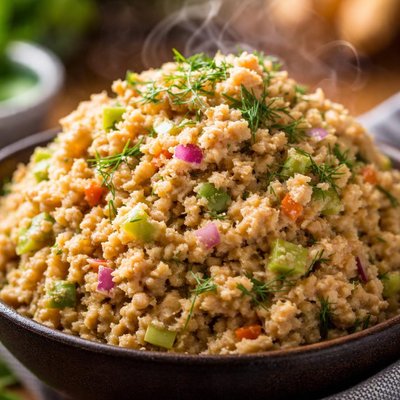
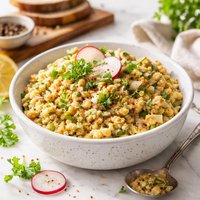
Craving the satisfying flavors of a classic tuna salad, but looking for a plant-based twist? This Mock Tuna Salad for Sandwiches is the perfect meatless alternative! Made with protein-packed chickpeas as the base, this recipe boasts a creamy blend of vegan mayonnaise, tangy dill pickle relish, and zesty lemon juice, all accented by the crunch of celery and red onions. For an optional seafood-inspired flavor, crumbled nori seaweed adds a delightful touch of the ocean. Ready in just 15 minutes, this vegan-friendly, no-cook recipe is ideal for busy days and makes for a delicious sandwich filling, wrap, or satisfying dip with crackers. Wholesome, flavorful, and versatile, this mock tuna salad will quickly become a staple in your kitchen!

Smart Nutrition Tracking with SnapCalorie

Recipe Information
Ingredients
- 1 can (15-ounce) canned chickpeas (garbanzo beans), drained and rinsed
- 0.25 cup vegan mayonnaise (or regular mayonnaise)
- 1 stalk celery, finely chopped
- 2 tablespoons red onion, finely diced
- 1 tablespoon dill pickle relish (or chopped dill pickles)
- 1 tablespoon lemon juice
- 1 teaspoon Dijon mustard
- 1 teaspoon nori seaweed sheets, crumbled (optional, for a seafood flavor)
- 0.25 teaspoon salt
- 0.25 teaspoon black pepper
Instructions
In a medium mixing bowl, add the drained and rinsed chickpeas.
Using a fork or potato masher, mash the chickpeas until they are mostly broken down but still have some texture. Avoid over-mashing; you want small chunks to replicate the texture of tuna.
Add the vegan mayonnaise, celery, red onion, dill pickle relish, lemon juice, Dijon mustard, and crumbled nori seaweed (if using) to the bowl with the mashed chickpeas.
Sprinkle in the salt and black pepper.
Mix everything thoroughly until well combined. Taste and adjust seasoning, adding more salt, pepper, or lemon juice if needed.
Refrigerate the mock tuna salad for at least 10 minutes to allow the flavors to meld together.
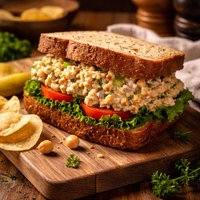
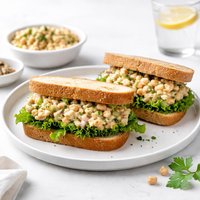
Serve on bread, in wraps, or with crackers for a delicious, plant-based meal.
Nutrition Facts
Calories |
150 | ||
|---|---|---|---|
% Daily Value* |
|||
| Total Fat | 6.8 g | 9% | |
| Saturated Fat | 0.7 g | 3% | |
| Polyunsaturated Fat | 0.0 g | ||
| Cholesterol | 0 mg | 0% | |
| Sodium | 462 mg | 20% | |
| Total Carbohydrate | 17.8 g | 6% | |
| Dietary Fiber | 4.2 g | 15% | |
| Total Sugars | 2.2 g | ||
| Protein | 4.9 g | 10% | |
| Vitamin D | 0.0 mcg | 0% | |
| Calcium | 37 mg | 3% | |
| Iron | 1.7 mg | 9% | |
| Potassium | 204 mg | 4% | |
*The % Daily Value tells you how much a nutrient in a serving of food contributes to a daily diet. 2,000 calories a day is used for general nutrition advice.


