Mock Tuna Salad
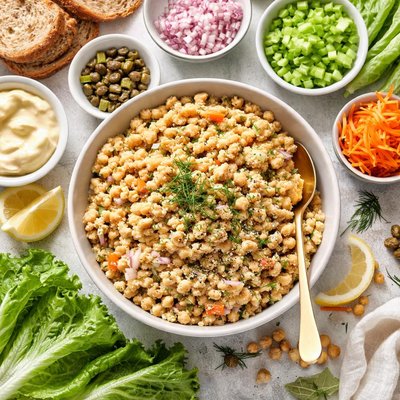
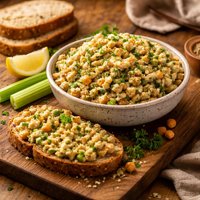
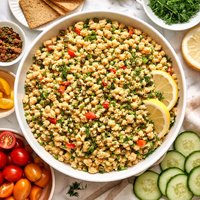
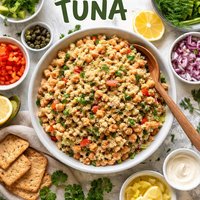
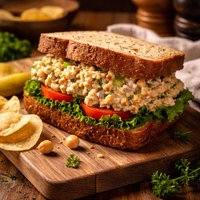
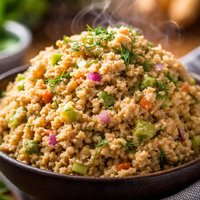
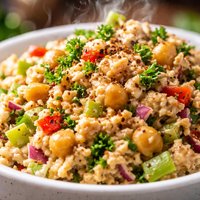
Looking for a plant-based twist on a classic favorite? This Mock Tuna Salad is the perfect vegan alternative, crafted with wholesome canned chickpeas for a protein-packed, fiber-rich base. Bursting with flavor, this easy no-cook recipe combines creamy vegan mayonnaise, tangy Dijon mustard, zesty lemon juice, and a medley of fresh ingredients like celery, red onion, and dill for irresistible crunch and brightness. With optional capers for a briny kick, this versatile salad comes together in just 15 minutes, making it an ideal choice for quick lunches, sandwiches, or an upgrade to your salad greens. Perfectly seasoned and packed with bold flavors, this dairy-free, egg-free dish is a healthy and satisfying way to enjoy a classic "tuna" experience without the fish!

Smart Nutrition Tracking with SnapCalorie

Recipe Information
Ingredients
- 1 can (15 ounces) canned chickpeas (garbanzo beans), drained and rinsed
- 3 tablespoons vegan mayonnaise
- 1 teaspoon dijon mustard
- 1 celery stalk, finely diced
- 0.25 small red onion, finely diced
- 1 pickle, finely diced
- 1 tablespoon lemon juice
- 1 teaspoon capers, chopped (optional)
- 1 teaspoon dill, finely chopped
- 0.5 teaspoon garlic powder
- 0.5 teaspoon salt
- 0.25 teaspoon ground black pepper
Instructions
In a large mixing bowl, add the drained and rinsed chickpeas.
Using a fork or potato masher, roughly mash the chickpeas until they are partially broken down. Leave some texture for a more authentic 'tuna salad' feel.
Add the vegan mayonnaise, dijon mustard, and lemon juice to the mashed chickpeas. Mix until combined.
Stir in the finely diced celery, red onion, pickle, chopped capers (if using), and fresh dill.
Season the mixture with garlic powder, salt, and ground black pepper. Mix well to evenly distribute the seasonings.
Taste and adjust seasoning as needed, adding more salt, pepper, or lemon juice to your preference.
Serve immediately as a filling for sandwiches, on crackers, or over a bed of salad greens. Refrigerate any leftovers in an airtight container for up to 3 days.
Nutrition Facts
Calories |
126 | ||
|---|---|---|---|
% Daily Value* |
|||
| Total Fat | 3.9 g | 5% | |
| Saturated Fat | 0.6 g | 3% | |
| Polyunsaturated Fat | 1.1 g | ||
| Cholesterol | 3 mg | 1% | |
| Sodium | 609 mg | 26% | |
| Total Carbohydrate | 18.7 g | 7% | |
| Dietary Fiber | 4.3 g | 15% | |
| Total Sugars | 2.9 g | ||
| Protein | 4.9 g | 10% | |
| Vitamin D | 0.0 mcg | 0% | |
| Calcium | 41 mg | 3% | |
| Iron | 1.7 mg | 9% | |
| Potassium | 213 mg | 5% | |
*The % Daily Value tells you how much a nutrient in a serving of food contributes to a daily diet. 2,000 calories a day is used for general nutrition advice.


