Cheap Vegetarian Tuna Salad
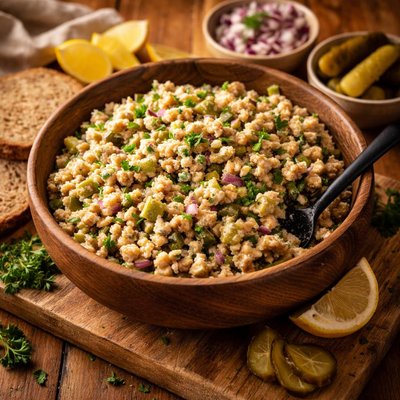
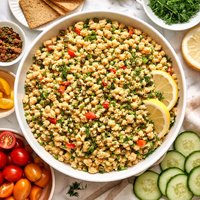
Transform your lunch game with this flavorful and budget-friendly Cheap Vegetarian Tuna Salad! Made with pantry staples like canned chickpeas and a touch of vegan mayonnaise, this recipe effortlessly mimics the texture and taste of traditional tuna salad without any seafood. The clever use of crumbled nori sheets adds a subtle ocean-like flavor, while ingredients like dill pickles, celery, and red onion provide vibrant crunch and tang. Ready in just 10 minutes and entirely plant-based, this protein-packed dish is perfect for sandwiches, wraps, or as a topping for crackers and salads. Quick, affordable, and delicious, it’s a must-try for meatless meal prep enthusiasts!
The Toxic-Free Cutting Board
Medical-grade titanium. No microplastics. No bacteria. No compromises.

Recipe Information
Ingredients
- 15 oz Canned chickpeas (drained and rinsed)
- 3 tbsp Vegan mayonnaise
- 1 tsp Dijon mustard
- 2 tbsp Dill pickle (finely chopped)
- 2 tbsp Celery (finely chopped)
- 2 tbsp Red onion (finely chopped)
- 1 tbsp Lemon juice
- 1 tsp Capers (optional, finely chopped)
- 1 Nori sheet (crumbled or cut into small strips)
- 0.5 tsp Salt
- 0.25 tsp Black pepper
Instructions
Drain and rinse the canned chickpeas, then transfer them to a medium-sized bowl.
Use a fork or potato masher to smash the chickpeas until they are broken down but still slightly chunky. You want a texture that mimics tuna flakes.
Add vegan mayonnaise, Dijon mustard, dill pickle, celery, red onion, lemon juice, and capers (if using) to the bowl with the mashed chickpeas.
Crumble or cut the nori sheet into small pieces and add it to the bowl. This provides the seafood-like flavor reminiscent of tuna.
Sprinkle in the salt and black pepper, adjusting seasoning to taste.
Mix everything together until well-combined. Taste and adjust lemon juice, salt, or pepper if needed.
Serve immediately as a sandwich filling, on crackers, or over a bed of greens. Store leftovers in an airtight container in the refrigerator for up to 3 days.
Nutrition Facts
Calories |
170 | ||
|---|---|---|---|
% Daily Value* |
|||
| Total Fat | 4.7 g | 6% | |
| Saturated Fat | 0.6 g | 3% | |
| Polyunsaturated Fat | 1.1 g | ||
| Cholesterol | 3 mg | 1% | |
| Sodium | 629 mg | 27% | |
| Total Carbohydrate | 25.8 g | 9% | |
| Dietary Fiber | 6.6 g | 23% | |
| Total Sugars | 5.0 g | ||
| Protein | 7.5 g | 15% | |
| Vitamin D | 0.0 mcg | 0% | |
| Calcium | 59 mg | 5% | |
| Iron | 1.8 mg | 10% | |
| Potassium | 341 mg | 7% | |
*The % Daily Value tells you how much a nutrient in a serving of food contributes to a daily diet. 2,000 calories a day is used for general nutrition advice.



