Tuna Panini
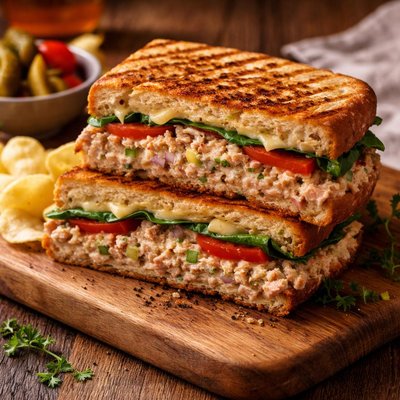
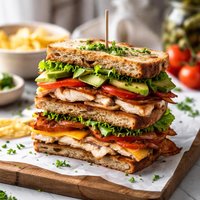
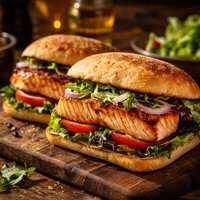
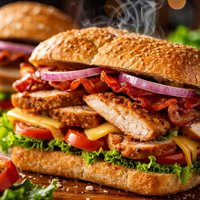
Take your sandwich game to the next level with this irresistible Tuna Panini recipe! Featuring a creamy, flavorful tuna salad made with Dijon mustard, crunchy celery, and red onion, this recipe is paired with fresh lettuce, juicy tomato slices, and gooey melted cheddar cheese, all wrapped in crisp, golden ciabatta rolls brushed with olive oil. Perfectly balanced with a delightful contrast of textures and flavors, this quick and easy panini is ready in just 15 minutes, making it the ultimate lunch or dinner option. Whether you're looking for a satisfying handheld meal or an upgrade to traditional tuna sandwiches, this Tuna Panini is sure to impress.

Smart Nutrition Tracking with SnapCalorie

Explore More
Recipe Information
Ingredients
- 200 grams canned tuna
- 60 grams mayonnaise
- 15 grams dijon mustard
- 30 grams red onion
- 30 grams celery
- 1 teaspoon salt
- 0.5 teaspoon black pepper
- 2 pieces lettuce leaves
- 1 piece tomato
- 4 slices cheddar cheese
- 2 pieces ciabatta rolls
- 2 tablespoons olive oil
Instructions
Drain the canned tuna and add it to a mixing bowl.
Finely chop the red onion and celery, then add them to the bowl with the tuna.
Add mayonnaise, Dijon mustard, salt, and black pepper to the tuna mixture. Stir well to combine.
Slice the ciabatta rolls in half. Layer each bottom half with a lettuce leaf.
Add an even layer of the tuna mixture over the lettuce on each roll.
Place slices of tomato on top of the tuna layer followed by two slices of cheddar cheese per sandwich.
Place the top half of the ciabatta on the sandwich, pressing down lightly.
Brush the outer sides of the ciabatta rolls with olive oil.
Preheat a panini press to medium-high heat. Place the sandwiches in the press.
Grill for about 3-5 minutes or until the bread is crispy and the cheese has melted.
Remove the paninis from the press, let them cool slightly, and serve warm.
Nutrition Facts
Calories |
849 | ||
|---|---|---|---|
% Daily Value* |
|||
| Total Fat | 55.4 g | 71% | |
| Saturated Fat | 14.8 g | 74% | |
| Polyunsaturated Fat | 0.0 g | ||
| Cholesterol | 96 mg | 32% | |
| Sodium | 2306 mg | 100% | |
| Total Carbohydrate | 43.2 g | 16% | |
| Dietary Fiber | 3.3 g | 12% | |
| Total Sugars | 3.3 g | ||
| Protein | 43.9 g | 88% | |
| Vitamin D | 4.7 mcg | 24% | |
| Calcium | 339 mg | 26% | |
| Iron | 4.1 mg | 23% | |
| Potassium | 584 mg | 12% | |
*The % Daily Value tells you how much a nutrient in a serving of food contributes to a daily diet. 2,000 calories a day is used for general nutrition advice.


