My Homemade Tartar Sauce
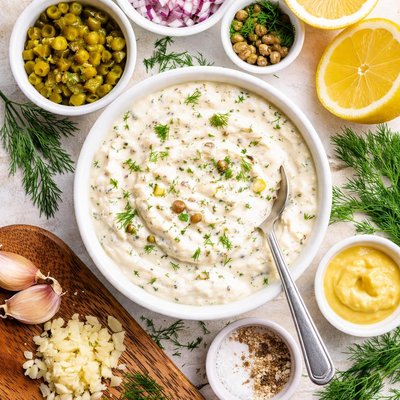
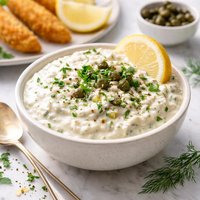
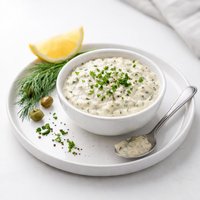
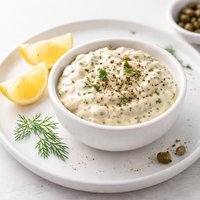
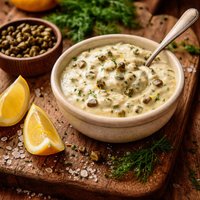
Creamy, zesty, and packed with flavor, My Homemade Tartar Sauce is the ultimate condiment to elevate your seafood dishes. This easy no-cook recipe comes together in just 10 minutes, blending a luscious base of mayonnaise with tangy pickles, briny capers, fresh parsley, and a bright burst of freshly squeezed lemon juice. A touch of Dijon mustard and a dash of garlic powder add depth, while salt and freshly ground black pepper complete the seasoning. Perfectly balanced and incredibly versatile, this tartar sauce pairs beautifully with everything from crispy fish and chips to roasted vegetables. Chill for 30 minutes to let the flavors meld, and enjoy a fresh, homemade alternative that outshines store-bought versions every time!

Smart Nutrition Tracking with SnapCalorie


Recipe Information
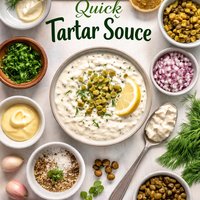
Ingredients
- 1 cup Mayonnaise
- 3 tablespoons Pickles (finely chopped)
- 1 tablespoon Capers (chopped)
- 1 tablespoon Fresh parsley (chopped)
- 1 tablespoon Lemon juice (freshly squeezed)
- 1 teaspoon Dijon mustard
- 0.5 teaspoon Garlic powder
- 0.25 teaspoon Salt
- 0.25 teaspoon Black pepper (freshly ground)
Instructions
In a medium-sized mixing bowl, add the mayonnaise as the base for your tartar sauce.
Finely chop the pickles, capers, and fresh parsley, and add them to the mayonnaise.
Squeeze fresh lemon juice into the bowl, making sure to remove any seeds.
Add Dijon mustard, garlic powder, salt, and freshly ground black pepper to the mixture.
Using a spoon or whisk, thoroughly mix all the ingredients until well combined and creamy.
Taste the tartar sauce and adjust the seasoning if needed, adding a little more salt, lemon juice, or pepper to achieve your desired flavor.
Cover the bowl with plastic wrap or transfer the sauce into an airtight container. Let it chill in the refrigerator for at least 30 minutes to allow the flavors to meld together.
Serve chilled with your favorite seafood dishes, fries, or vegetables. Enjoy!
Nutrition Facts
Calories |
210 | ||
|---|---|---|---|
% Daily Value* |
|||
| Total Fat | 22.8 g | 29% | |
| Saturated Fat | 3.5 g | 18% | |
| Polyunsaturated Fat | 0.0 g | ||
| Cholesterol | 11 mg | 4% | |
| Sodium | 354 mg | 15% | |
| Total Carbohydrate | 0.7 g | 0% | |
| Dietary Fiber | 0.2 g | 1% | |
| Total Sugars | 0.2 g | ||
| Protein | 0.3 g | 1% | |
| Vitamin D | 0.0 mcg | 0% | |
| Calcium | 6 mg | 0% | |
| Iron | 0.2 mg | 1% | |
| Potassium | 21 mg | 0% | |
*The % Daily Value tells you how much a nutrient in a serving of food contributes to a daily diet. 2,000 calories a day is used for general nutrition advice.


